
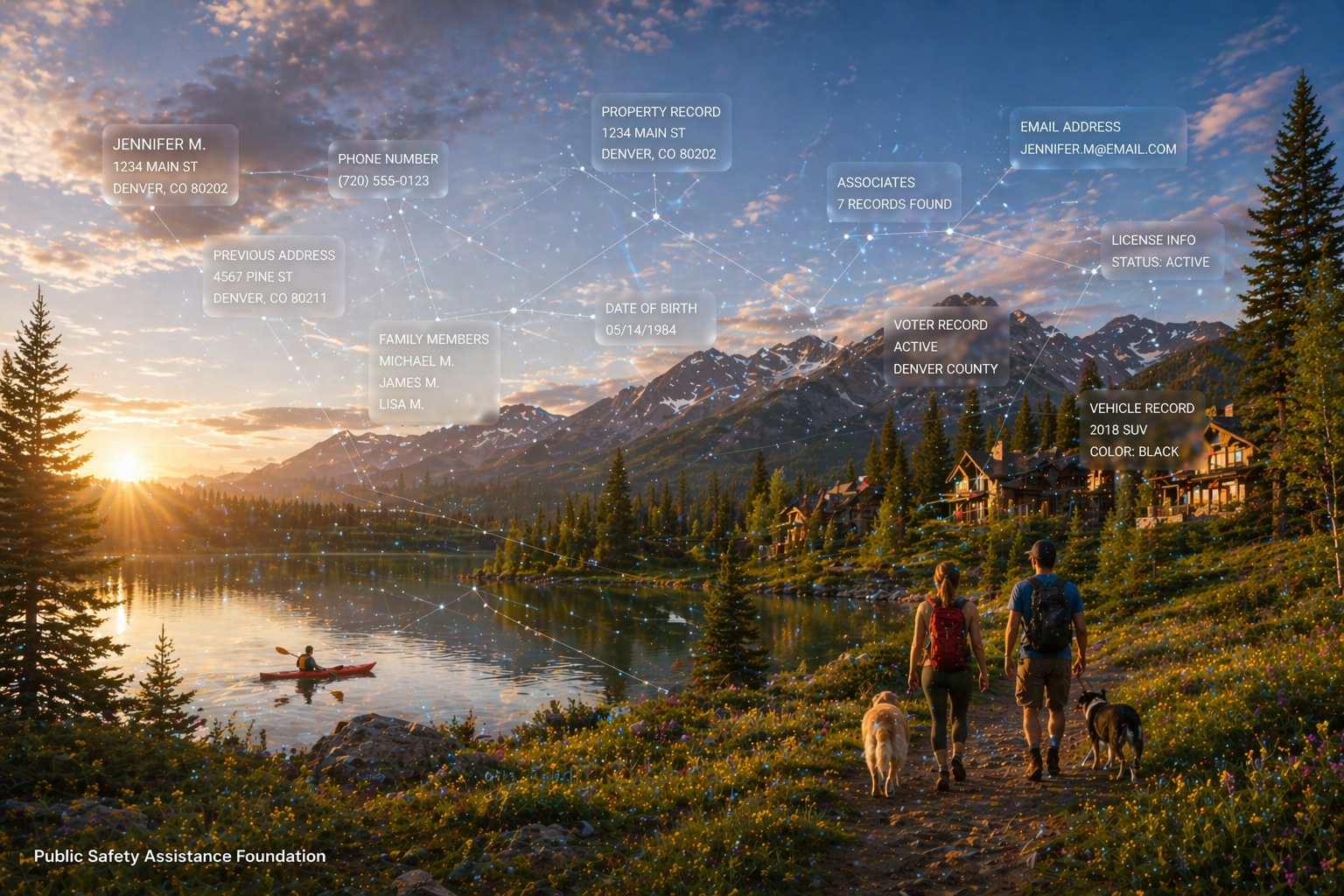
Protecting your digital footprint is just as important as protecting the world around you!
Every year, Earth Day encourages people to take a closer look at the world around them. It is a reminder to clean up what has been neglected, protect what matters, and think long-term about the environments we live in every day.
Most conversations focus on physical spaces: our neighborhoods, parks, oceans, and air. But there is another environment that often goes overlooked, even though it plays a growing role in personal safety and security:
Your digital environment.
For law enforcement officers and public officials, that environment is not just where information lives. It is where exposure begins.
And in many cases, it is already contaminated.
What Is Digital Pollution?
Digital pollution is not about smog or plastic waste. It is the uncontrolled spread of personal information across the internet—data that is copied, sold, reposted, and indexed without your awareness or consent.
Unlike a single post or profile, digital pollution builds over time.
It comes from multiple sources, including:
- Data broker and people-search websites
- Public record aggregators
- Old addresses and contact information
- Family member associations
- Social media activity, both past and present
Individually, these pieces of information may seem harmless. But when combined, they create a detailed and searchable profile of your life.
And once that information begins to spread, it rarely stays in one place.
It multiplies.
Digital pollution also has a compounding effect that is easy to underestimate. Once information appears on one site, it is often picked up by others through automated scraping tools and data-sharing agreements. What starts as a single listing can quickly multiply into dozens of entries across platforms you may have never visited or interacted with.
In many cases, this process happens in the background, without any notification. New listings can appear months or even years after the original data was first published, making it difficult to track where your information is coming from or how widely it has spread.
This is what makes digital pollution different from a one-time exposure. It is not just about what is visible today, it is about how that information continues to circulate, replicate, and resurface over time.
Your Online Environment Is an Ecosystem
Think of the internet as an ecosystem.
Information flows from one platform to another. Data is collected, shared, repackaged, and redistributed across hundreds of sites. A single listing can quickly appear in multiple locations, often without your knowledge.
For officers and public officials, this ecosystem presents a unique challenge.
Even if you are careful about what you share personally, your information can still appear online through:
- Third-party data collection
- Public records that are scraped and republished
- Other individuals posting or tagging you
- Automated data-sharing networks between websites
Over time, this creates a digital environment that is increasingly difficult to control.
Just like environmental pollution, the longer it is left unaddressed, the more widespread it becomes.
How Digital Pollution Impacts Officer Safety
For the general public, digital exposure can be an inconvenience. For law enforcement officers and public officials, it can be something more serious.
Online information does not exist in isolation. It connects directly to real-world access points, including:
- Home addresses
- Phone numbers
- Names of relatives and household members
- Previous residences tied to your identity
This creates a situation where personal information can be used to identify patterns, locate individuals, or build a broader picture of someone’s private life.
And importantly, this exposure does not just affect the individual.
It extends to families.
Spouses, children, and relatives can all become part of that searchable footprint, often without ever choosing to be online in that way.
That is where digital pollution shifts from being a privacy issue to a safety concern.
Another factor to consider is how quickly online information can be accessed and shared. What once required time and effort to locate can now be found in seconds, often from a mobile device. This accessibility changes how information is used, especially when it is aggregated into a single, easy-to-read profile.
For law enforcement officers and public officials, this creates an added layer of complexity. Exposure is no longer limited to isolated data points. It becomes a broader picture that can reveal routines, locations, and personal connections. Even small details, when combined, can provide more insight than intended.
It also means that exposure is not confined to one moment in time. Information can be saved, shared, and revisited long after it was first discovered. That persistence increases the importance of addressing what is available online, rather than assuming it will fade or become irrelevant on its own.
The Problem With “Set It and Forget It”
One of the biggest misconceptions about online privacy is that it can be handled once and then checked off a list.
In reality, the opposite is true.
Even if information is removed from one site, it can reappear on another. New listings are constantly created as databases update, merge, and resell information.
This means your digital environment is not static.
It is constantly changing.
Without ongoing attention, it can quickly become just as exposed as it was before, or even more so.
This is similar to environmental cleanup efforts. Removing waste from a single location does not prevent new waste from accumulating. It requires continuous monitoring and maintenance to keep the environment clean.
The same applies online.
Why Awareness Alone Is Not Enough
Awareness is often the first step in any kind of protection strategy. Earth Day itself is built on raising awareness about environmental impact.
But awareness alone does not remove pollution.
Knowing that your information exists online does not stop it from being copied, shared, or resurfacing in new places.
And for officers and public officials, the challenge is not just identifying where data exists. It is managing it across hundreds of platforms, many of which are designed to make removal difficult or time-consuming.
This is where many individuals find themselves stuck.
They understand the risk. They recognize the exposure. But addressing it manually becomes overwhelming.
Taking a More Proactive Approach to Your Digital Environment
If the internet is an ecosystem, then protecting your information requires more than a one-time cleanup. It requires a proactive approach that focuses on both removal and ongoing monitoring.
That includes:
- Identifying where personal information is currently published
- Removing listings from data broker and people-search sites
- Monitoring for new exposures as they appear
- Maintaining a lower digital footprint over time
For law enforcement officers and public officials, this kind of approach is not about convenience. It is about reducing unnecessary visibility in an environment that is constantly evolving.
Because once information is widely available, controlling who sees it becomes significantly more difficult.
A Different Way to Think About Earth Day
Earth Day is often framed around protecting the planet for future generations. It is about taking responsibility for the environments we influence and ensuring they remain safe and sustainable over time.
That same mindset can be applied to your digital presence.
Your online environment is not separate from your daily life. It is connected to where you live, who you know, and how easily that information can be accessed by others.
And just like any environment, it requires maintenance.
Left unchecked, it becomes harder to manage.
Addressed early, it becomes easier to control.
Turning Awareness Into Action
This Earth Day, the conversation does not have to stop at the physical world.
It can extend to the digital one as well.
Your information may already be circulating across multiple websites, building a profile that is more detailed than you realize. The longer it remains out there, the more it spreads—and the harder it becomes to contain.
Taking action now is not about reacting to a problem after it happens. It is about reducing exposure before it becomes something more.
That level of exposure is not something you have to manage on your own. As your digital environment continues to evolve, so does the amount of information tied to your name.
Privacy for Cops handles the process of identifying and removing that information, while continuously monitoring for new exposure over time.
🌳 This Earth Day, take a step toward reducing what is already out there and limiting what continues to spread.
Exclusive Privacy Plans