
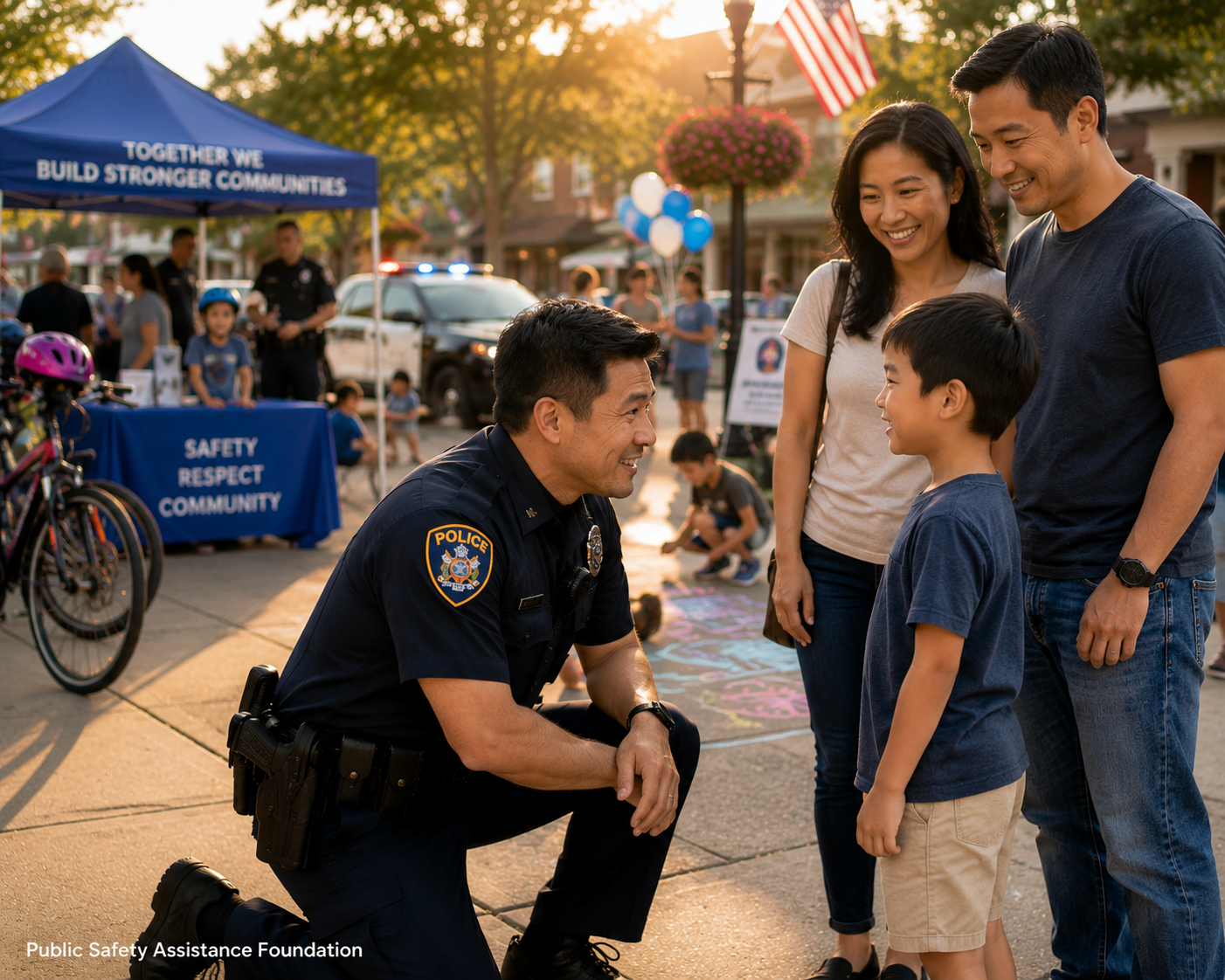
How Small Moments Between Officers and Children Can Leave a Lasting Legacy.
Most law enforcement officers can recall the calls that tested them.
The difficult conversations. The emergencies. The moments that demanded quick decisions under extraordinary pressure.
But if you ask an adult about the police officer they remember from childhood, the answer is often something entirely different.
→ They remember the officer who knelt down to speak with them after a frightening experience.
→ The deputy who handed them a sticker at a community event.
→ The school resource officer who learned everyone’s names.
→ The motorcycle officer who waved during a neighborhood parade.
→ The detective who took time to answer curious questions instead of rushing away.
Those moments may last only a few minutes, but they can shape a child’s perception of law enforcement for years or even a lifetime.
In a profession where public attention often focuses on crisis situations, it’s easy to overlook the countless positive interactions happening every day. Yet these simple conversations, gestures, and acts of kindness help build stronger communities while reminding children that the badge represents far more than enforcement alone.
Trust Begins Long Before an Emergency
Children begin forming opinions about authority figures long before they fully understand what those roles involve.
For many, their first encounter with a police officer doesn’t happen during an emergency. It happens at a school assembly, bicycle safety event, neighborhood festival, National Night Out celebration, library reading program, or local charity fundraiser.
Those interactions matter.
When officers take time to answer questions, share a smile, or simply make themselves approachable, they help replace uncertainty with familiarity.
That familiarity often grows into trust.
Years later, a child may not remember every detail of the event, but they’ll remember how an officer made them feel.
→ Safe
→ Respected
→ Heard
Those memories can influence how they respond during future emergencies and how they view law enforcement throughout their lives.
Small Moments Often Become the Biggest Memories
Officers rarely realize which interactions will stay with someone forever.
→ A child who was allowed to explore a patrol vehicle.
→ A family photo taken during a community event.
→ A brief conversation after a difficult call.
→ Helping a nervous student during a school lockdown drill.
→ Offering encouragement during a youth athletic program.
These aren’t headline-making moments.
They’re simply part of serving a community.
Yet years later, adults frequently recall these experiences with remarkable clarity because they happened during formative moments in their lives.
For officers, they may have been one interaction among hundreds that week.
For a child, it may have been unforgettable.
That’s one of the unique aspects of policing.
The greatest impact often comes through ordinary conversations rather than extraordinary events.
Community Policing Extends Beyond Enforcement
Modern policing involves far more than responding to calls for service.
Across the country, officers volunteer countless hours supporting youth mentorship programs, coaching sports teams, visiting classrooms, participating in safety fairs, reading to elementary school students, attending neighborhood gatherings, and partnering with community organizations.
These activities strengthen relationships before they’re ever needed during a crisis.
When children recognize an officer from positive experiences, barriers often disappear.
Questions become conversations.
Uncertainty becomes confidence.
Fear becomes familiarity.
Parents notice these moments as well.
Many families appreciate seeing officers interacting with children outside emergency situations because it reminds everyone that law enforcement is ultimately about serving people.
Those relationships don’t eliminate difficult calls or challenging circumstances.
But they do create a stronger foundation built on trust and mutual respect.
A Legacy That Extends Beyond the Uniform
Every officer leaves a legacy.
Sometimes it’s measured through arrests made or investigations completed.
Other times, it’s measured through lives quietly influenced along the way.
Many adults can point to a teacher, coach, mentor, or first responder who changed how they viewed the world.
Law enforcement officers often become part of that list.
Some inspire future police officers.
Others encourage careers in public service, emergency medicine, or military service.
Still others simply demonstrate what compassion, professionalism, and integrity look like under pressure.
Those examples matter.
Children watch far more than adults sometimes realize.
→ They notice patience
→ They notice fairness
→ They notice respect
Long after the uniform is gone, those qualities often remain the lasting memory.
Positive Visibility Still Creates a Digital Footprint
Ironically, many of these uplifting moments also contribute to an officer’s online presence.
A school newsletter featuring a classroom visit.
Photos from National Night Out.
Recognition during a charity fundraiser.
A local newspaper covering a bicycle rodeo.
A nonprofit highlighting volunteer work.
Community Facebook pages sharing pictures from holiday events.
None of these examples are negative.
In fact, they reflect the very community involvement many agencies encourage.
However, every public appearance, online photo, archived article, and community mention adds another layer to an individual’s digital footprint.
Over time, those layers accumulate.
One photo may identify an officer’s name.
Another may mention an agency.
A third may connect family members through community activities.
Years later, these seemingly unrelated references can still appear in search results alongside other publicly available information.
The positive contribution remains.
So does the digital record.
Protecting Privacy Doesn’t Mean Stepping Away
Some people mistakenly believe that protecting online privacy requires avoiding community involvement.
Nothing could be further from the truth.
Building relationships with children and families remains one of the most meaningful aspects of law enforcement.
The goal isn’t to become invisible.
The goal is to reduce unnecessary personal exposure while continuing to serve the community with confidence.
That’s an important distinction.
Officers shouldn’t have to choose between mentoring young people and protecting their families’ privacy.
Both priorities can exist together.
Supporting online privacy simply helps reduce the amount of personal information that accumulates across people-search websites and other online sources over time.
It allows the focus to remain where it belongs on service, leadership, and community impact.
The Badge They’ll Always Remember
Years from now, today’s children may forget the make of the patrol vehicle.
They may forget what event they attended or exactly how old they were.
But they’ll likely remember the officer who treated them with kindness.
→ The one who smiled
→ The one who listened
→ The one who took a few extra minutes to make a child feel seen
Those moments become part of an officer’s legacy.
They build stronger communities one conversation at a time.
The conversations you have today can leave a lasting impression for years to come. Privacy for Cops helps protect the people behind those moments by reducing personal information across hundreds of people-search websites while providing ongoing monitoring as new listings appear. That way, you can continue building trust in your community while helping protect the privacy of the family waiting for you at home.
About Us