
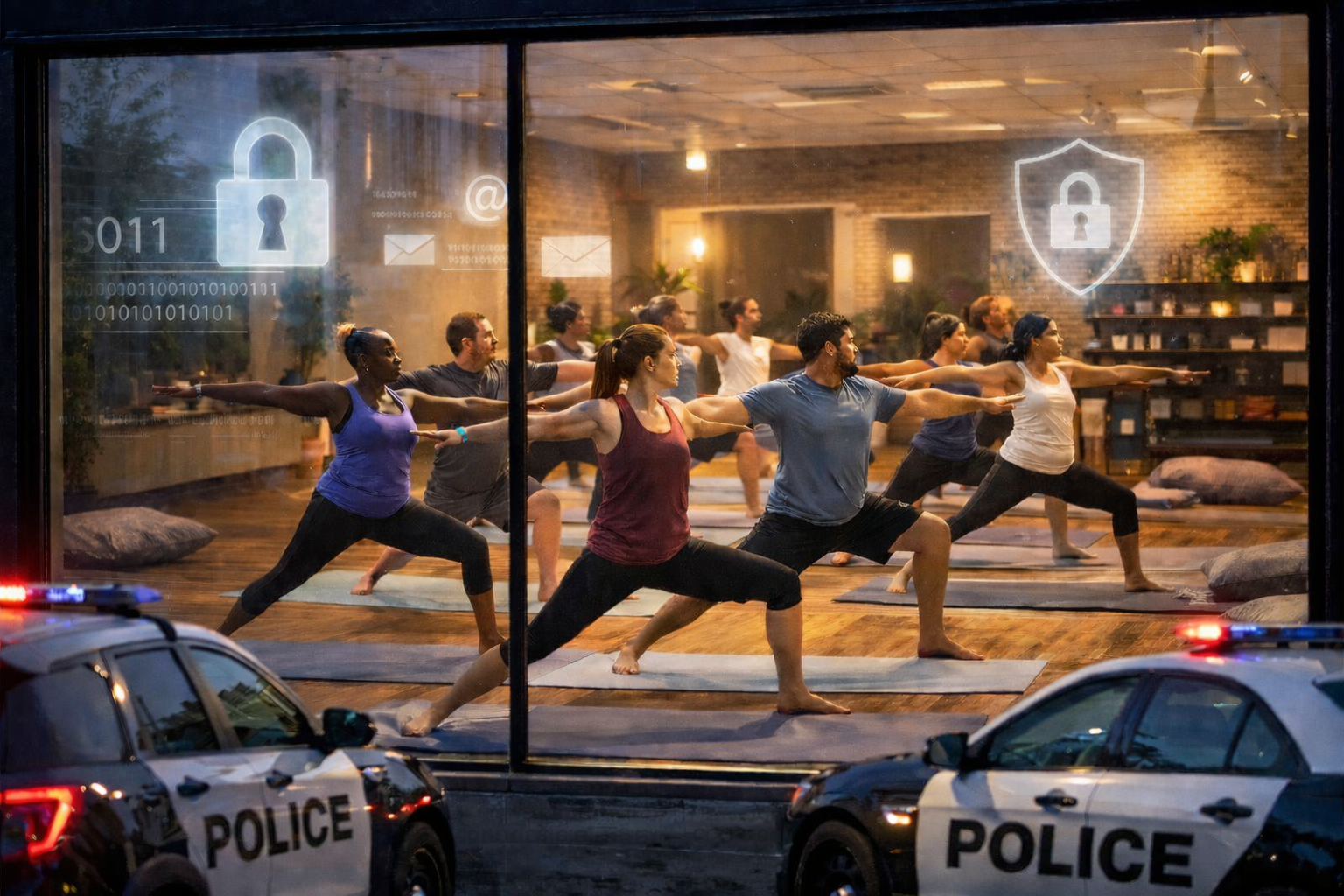
Across the country, police departments continue exploring new ways to connect with the communities they serve. One recent example comes from Ohio, where a police department launched a program called “Yoga with a Cop.” The initiative invites residents to participate in a yoga session alongside officers while discussing situational awareness, preparedness, and everyday safety.
At first glance, programs like this may seem like a simple community outreach effort. But they reveal something much deeper about the evolving role of law enforcement today.
Police officers are no longer seen only as emergency responders. They are educators, mentors, and community partners. Departments across the country now host fitness programs, community gatherings, youth mentorship activities, and informal meet-and-greet events designed to strengthen relationships with residents.
These initiatives represent a positive shift toward building trust and transparency.
However, as officers become more visible and accessible in their communities, a different challenge is emerging at the same time: the growing exposure of officers’ personal information online.
Community engagement may strengthen relationships, but it also increases the likelihood that someone will search for information about the officers they meet.
That reality makes online privacy an increasingly important part of officer safety.
The Expansion of Community Engagement
Community policing has long been a guiding philosophy for many departments.
The goal is simple: strong relationships between police officers and residents lead to safer neighborhoods.
Across the country, departments are launching programs that bring officers and residents together in non-enforcement settings.
These efforts include:
- Community fitness programs and wellness events
- “Coffee with a Cop” or similar meet-and-greet gatherings
- Youth mentorship and recreation programs
- Community safety workshops
- Public events designed to build trust and dialogue
Programs like these allow residents to see officers as people rather than uniforms.
For example, some departments organize outdoor workouts where officers and residents exercise together to promote both wellness and positive relationships.
Others host family-friendly community events with demonstrations, activities for children, and opportunities to interact with officers in a relaxed environment.
These initiatives can help break down barriers that sometimes exist between police and the communities they serve.
They also remind people of something important: officers are members of the community too.
But that increased familiarity can also extend beyond in-person interaction.
Visibility Extends Into the Digital World
In the past, a conversation with an officer at a community event ended when the event ended.
Today, that interaction often continues online.
Someone who meets an officer at a public event may later search their name on the internet. A photo taken at a community program may appear on social media. A conversation during a neighborhood meeting may lead someone to look up more information about the officer involved.
Most of the time, this curiosity is harmless.
But the internet does not distinguish between harmless curiosity and malicious intent.
A simple online search can reveal a surprising amount of personal information about nearly anyone, including law enforcement officers.
Depending on the websites involved, that information may include:
- Home addresses
- Phone numbers
- Email addresses
- Family member names
- Property records
- Past residences
- Social media accounts
For law enforcement officers, this level of exposure presents unique risks.
Unlike most professions, officers routinely interact with individuals who may harbor resentment or hostility after an arrest, investigation, or enforcement action.
When personal information is easily accessible online, the potential for targeting increases.
The Gap Between Physical Safety and Digital Exposure
Law enforcement agencies invest heavily in physical safety.
Officers receive training on defensive tactics, situational awareness, and protective equipment designed to reduce risks during dangerous encounters.
But digital exposure often receives far less attention.
An officer may take every precaution while on duty, yet still have their home address listed on multiple data broker websites. Their family members may be linked through public records. Their contact information may appear across dozens of people-search platforms.
In many cases, officers are unaware this information exists online.
Data broker websites collect and publish personal details from public records, marketing databases, and other sources. These sites often aggregate information into searchable profiles that can reveal significant details about someone’s personal life.
The information is not always perfectly accurate. But it is often accurate enough to create potential security concerns.
This creates a gap between traditional safety measures and the realities of the digital world.
Why Online Privacy Matters for Officer Families
Another reason this issue deserves attention is that online exposure rarely affects officers alone.
Law enforcement careers involve families as well.
Spouses and children share the pressures that come with the profession. They live with the irregular schedules, late-night calls, and uncertainty that can accompany public safety work.
When an officer’s personal information appears online, it can reveal details about the entire household.
A simple search might expose:
- The address where an officer’s family lives
- Names of relatives associated with the household
- Property ownership records
- Contact information linked to family members
While most people would never misuse that information, the possibility still exists.
For families connected to law enforcement, reducing unnecessary exposure is an important step toward protecting personal safety and peace of mind.
Awareness Is Increasing
Fortunately, awareness of digital exposure is beginning to grow within the law enforcement community.
Just as departments encourage physical safety practices, more officers are starting to recognize the importance of managing their digital footprint.
That awareness often begins with a simple question:
What personal information about me is already visible online?
For many officers, the answer is surprising.
Search engines and data broker websites can reveal addresses, relatives, and other details that were never intentionally shared.
Once information appears on these sites, it can spread quickly across multiple platforms.
Removing it manually often requires submitting dozens of individual removal requests.
Practical Steps Officers Can Take
While the internet makes personal information easier to find, officers can take several steps to better understand and reduce their online exposure.
Review Your Online Presence
Occasionally searching your own name and known addresses can help identify what information is currently visible online.
This simple step often reveals listings on data broker sites that many people never realized existed.
Invest in Privacy for Cops
Personal information frequently appears on people-search and data broker websites that compile records from a wide range of sources. Because this information can spread across dozens of platforms, identifying and addressing those listings often requires ongoing monitoring and coordinated removal efforts. Privacy for Cops helps law enforcement officers reduce that exposure by submitting and managing removal requests on their behalf.
Limit Public Sharing
Social media can unintentionally reveal details about routines, family members, or home locations.
Being mindful of what is shared publicly can help reduce long-term exposure.
Taken together, these steps can make it more difficult for someone to locate sensitive personal information online.
The Future of Officer Safety
Community engagement programs are an important part of modern policing.
Events that bring officers and residents together in positive, non-enforcement settings help build trust and communication. They remind people that public safety works best when police and communities collaborate.
But these same programs also highlight a reality that cannot be ignored.
Behind every uniform is a real person with a life outside the job.
As policing continues to evolve, officer safety must evolve as well.
Protecting law enforcement officers today means considering not only physical risks but also digital exposure.
Because in the modern world, personal information travels far beyond the neighborhoods officers patrol.
Take Control of Your Online Privacy
If you are a law enforcement officer, now is the time to understand what information about you may already be visible online.