
When a major incident unfolds, coordination becomes everything.
Picture a crowded city street during a large public event. Police vehicles line nearby intersections. Officers are directing foot traffic, communicating with supervisors, and monitoring activity across several blocks. Above the scene, a drone quietly hovers, transmitting live video. Just around the corner sits a large, specialized vehicle unlike any patrol car.
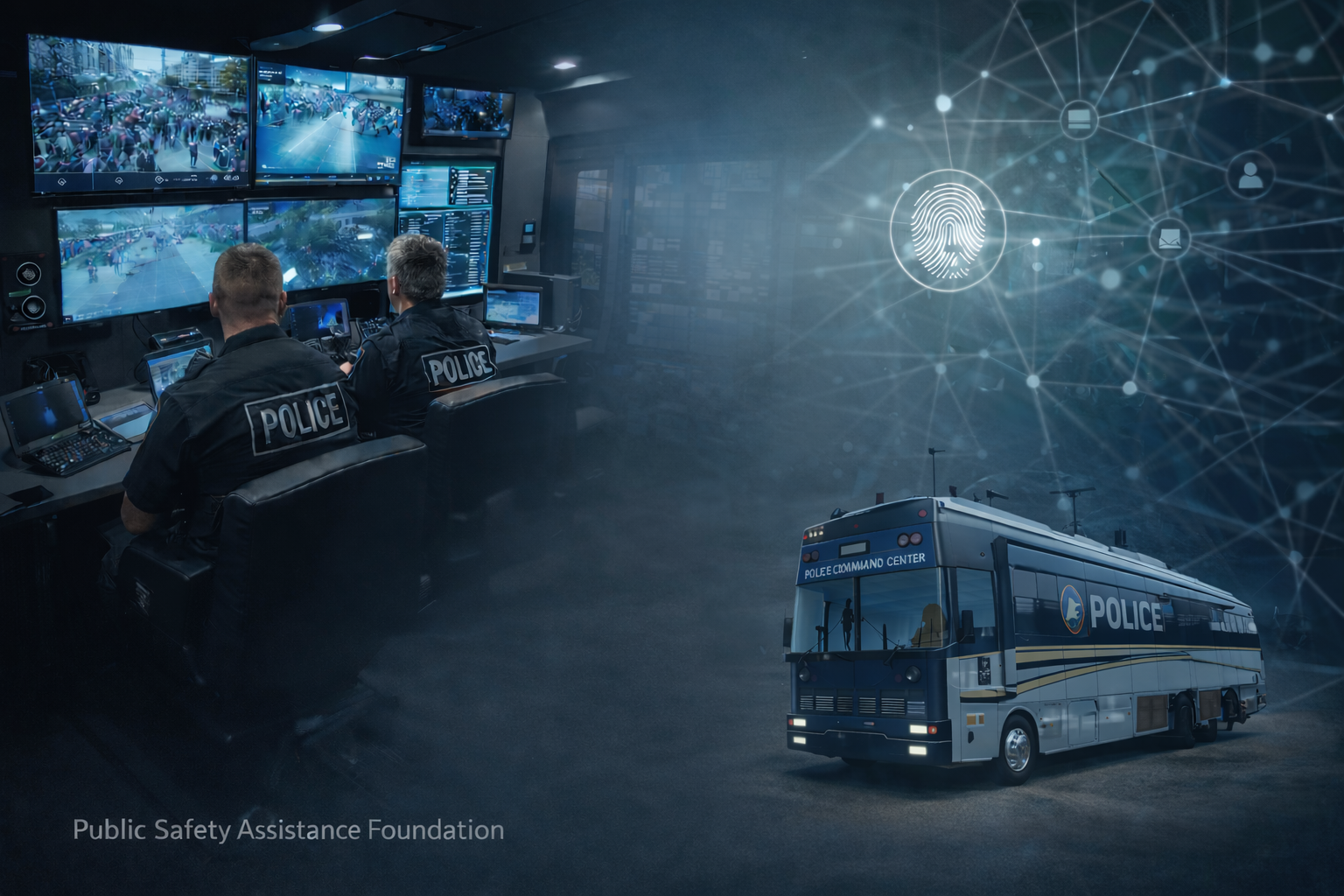
Inside that vehicle, commanders and analysts are watching multiple screens, monitoring radio traffic, reviewing live camera feeds, and coordinating resources across the city. Officers on the street receive updated instructions in real time. The entire response becomes more organized, more efficient, and more informed.
This is the role of the modern mobile command post.
Recently, the Kansas City Police Department unveiled a new state-of-the-art mobile command post bus designed to support large-scale incidents and major public events. The vehicle represents a significant leap forward in technology, replacing a command unit that had served the department for nearly three decades.
The new bus includes integrated radios, multiple cameras, satellite connectivity, advanced lighting systems, and even tethered drones equipped with night vision and thermal imaging. The system can be deployed quickly and can support a large team of personnel during complex operations.
Departments across the country are investing in similar technology. Mobile command centers have become an essential part of large-scale policing operations, allowing agencies to coordinate responses with greater precision than ever before.
But while law enforcement agencies continue upgrading technology to improve operational awareness, another type of exposure is quietly growing in the background.
And it follows officers home.
The Rise of High-Tech Policing
Modern policing has entered an era where information moves instantly.
Mobile command centers are one example of how departments are adapting to increasingly complex public safety challenges. These units function as mobile headquarters, bringing together surveillance feeds, mapping systems, radio communications, and intelligence resources in one place.
During major incidents, they allow decision-makers to maintain a real-time understanding of the situation on the ground.
Instead of relying on scattered information from separate patrol units, commanders can watch events unfold across multiple camera angles, coordinate personnel movements, and deploy specialized resources quickly.
Technology such as:
- Aerial drone surveillance
- Live camera networks
- Digital mapping and geospatial analysis
- Integrated communication systems
- Remote command coordination
all contribute to a clearer operational picture.
For officers working large-scale events or emergency situations, this technology can improve safety and effectiveness.
Information that once took minutes to relay through radio channels can now appear instantly on a screen.
And that matters when seconds count.
The Visibility Problem Officers Cannot Control
However, there is a different kind of visibility that technology cannot fix.
While agencies invest millions of dollars to improve situational awareness in the field, many officers remain personally exposed online in ways they do not fully realize.
A simple internet search can often reveal:
- Home addresses
- Personal phone numbers
- Family member names
- Property ownership records
- Email addresses
- Social media accounts
- Date of birth information
Much of this information appears through data broker websites, which collect and sell personal records gathered from public databases, marketing lists, and other aggregated sources.
These platforms make it surprisingly easy for anyone to locate personal information about individuals, including law enforcement officers.
Unlike a patrol car or command bus, these exposures exist entirely outside the control of the department.
And once information appears online, removing it becomes significantly more difficult.
Operational Protection vs Personal Protection
The new command post bus in Kansas City represents the best of modern policing technology.
It allows officers to monitor environments, detect threats earlier, and coordinate responses more effectively. It enhances awareness and supports safer operations.
But technology like this focuses primarily on external threats.
It helps agencies understand what is happening in the streets, at events, or during critical incidents.
What it does not address is the growing reality that officers themselves have become targets in the digital environment.
In recent years, individuals with harmful intent have increasingly used the internet to search for personal information about public officials, including law enforcement officers.
Sometimes this information is used to harass or intimidate officers online. In other cases, it can be shared publicly in an attempt to expose personal details.
Even when no malicious activity occurs, the fact that sensitive personal information remains widely accessible online can create unnecessary risk.
The shift toward digital transparency has brought many benefits to society, but it has also created new vulnerabilities for those who serve in public roles.
Why Proactive Online Privacy Matters
One of the biggest misconceptions about online exposure is that it only becomes a problem after something happens.
In reality, personal information about officers often circulates online long before anyone realizes it.
Data broker sites routinely collect and republish information from a variety of sources, including:
- Property tax records
- Voter registration databases
- Utility listings
- Commercial marketing databases
- Historical public records
Once compiled, these sites package the information into searchable profiles that anyone can access.
Removing this information typically requires individual opt-out requests submitted to dozens of different websites.
Even after removal requests are processed, the information may reappear later as databases refresh or new sites publish similar records.
This is why proactive monitoring and removal efforts have become increasingly important.
Just as departments invest in protective equipment and training for field operations, protecting personal information requires a similar level of preparation.
The Shift Toward Digital Officer Safety
Officer safety has traditionally focused on physical environments.
Protective equipment, tactical training, and situational awareness are essential elements of policing. These safeguards are designed to help officers manage risk while performing their duties.
But the digital landscape has introduced a new layer of exposure.
An officer might finish a shift and leave the station, yet their personal information may remain widely available online.
Unlike a patrol assignment, this exposure does not end when the workday ends.
The internet operates continuously, and information posted online can circulate indefinitely.
For this reason, more agencies and organizations have begun emphasizing the importance of online privacy protection for law enforcement officers.
Reducing the availability of personal information online helps limit unnecessary exposure and supports officer safety beyond the workplace.
Taking Control of Your Digital Footprint
While officers cannot control every piece of information that exists online, they can take steps to reduce unnecessary exposure.
Three Practical Actions Officers Can Take Today:
1. Reviewing Your Online Presence
Conducting periodic searches of your name and known addresses can reveal what information is currently visible online.
2. Monitoring Data Broker Sites
Many personal information websites allow individuals to request removal of their listings.
3. Limiting Public Sharing
Being mindful of how personal information is shared on social media can help reduce unintended exposure.
These services help reduce the time and effort required to manage the process individually.
Technology Protects the Scene. Privacy Protects the Officer.
The mobile command post unveiled in Kansas City reflects a broader trend in modern policing.
Departments are adopting advanced tools to improve coordination, communication, and situational awareness during critical incidents.
These technologies are valuable and necessary. They help agencies respond effectively in high-pressure situations.
But while departments invest heavily in protecting officers during operations, protecting officers personally often requires a different strategy.
Technology can help monitor the streets.
Online privacy protection helps protect the people behind the badge.
Take the First Step Toward Protecting Your Information
Law enforcement officers dedicate their careers to protecting the public. Taking steps to protect personal information online is an important part of protecting themselves and their families.
If you have never reviewed what personal information about you appears online, now is the time to start.
Visit Privacy for Cops to see how proactive online privacy protection can help identify exposed information and submit removal requests on your behalf.
Your department may invest in advanced technology to support operations.
Make sure you are also investing in protecting your own digital footprint.
About Us