
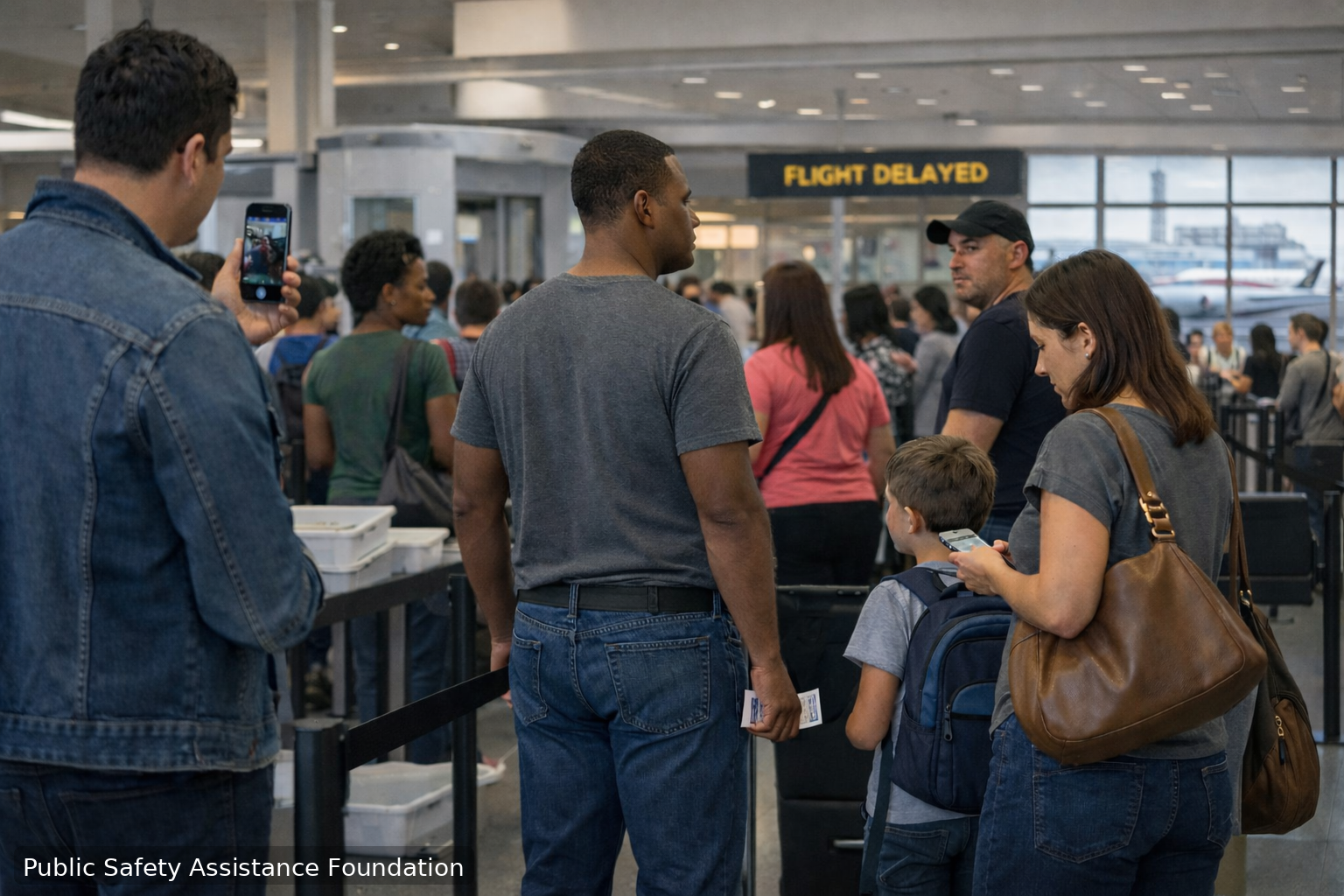
Air travel has always come with a level of unpredictability. Delayed flights, long security lines, and crowded terminals are nothing new. But recently, reports of Transportation Security Administration (TSA) staffing shortages have added another layer of disruption, creating longer wait times and more congested airport environments across the country.
For most travelers, this is simply an inconvenience. It means arriving earlier, standing in longer lines, and adjusting expectations.
But for law enforcement officers, public officials, and their families, these delays can quietly introduce something more serious: increased exposure
What often goes unnoticed is how extended time in public spaces, combined with today’s digital landscape, can elevate personal risk. The longer you are visible, the more opportunities exist for your identity to be observed, recognized, or recorded. And in a world where personal information is widely accessible online, even small moments of exposure can have lasting consequences.
This is where travel, staffing shortages, and online privacy intersect in ways that deserve closer attention.
When Delays Become Exposure Windows
TSA staffing shortages do not just slow down the screening process. They increase the amount of time travelers spend in highly public, highly visible environments.
Think about what that looks like in real terms:
- Standing in a packed security line for an extended period
- Sitting at a crowded gate area with limited space
- Navigating terminals filled with people, cameras, and constant movement
Each of these moments increases visibility. And visibility, over time, creates opportunity.
Airports are unique environments.
People are observing their surroundings, using their phones, taking photos, and sharing updates in real time.
A name spoken out loud, an ID briefly visible, or a recognizable face can be enough to spark curiosity.
Under normal circumstances, that might not matter. But when personal information is already available online, it does.
The Overlooked Risk of Being Identified While Traveling
For law enforcement officers and public officials, being recognized off-duty is not always rare. Travel adds another layer to that reality.
In an airport setting, identification can happen in subtle ways:
- A name visible on a boarding pass or luggage tag
- A conversation overheard in line or at a gate
- A familiar face recognized from prior interactions or public exposure
- Family members addressed by name in public settings
None of these situations may seem significant on their own. But combined, they can provide enough information for someone to begin connecting dots.
And today, connecting those dots takes only seconds.
From a Name to an Address in Minutes
Once a name is known or even suspected, the next step is often a quick online search. This is where the real risk begins to take shape.
Data broker websites and public record aggregators have made it easy to access personal details that were once difficult to obtain.
With minimal effort, someone can uncover:
- Home addresses
- Phone numbers
- Names of relatives and known associates
- Previous residences
- Links to social media profiles
What started as a brief moment in an airport can quickly turn into a detailed profile of someone’s personal life.
This is the critical shift that many people underestimate.
Exposure is not just about being seen. It is about what can be discovered after that moment passes.
When information is readily available online, visibility becomes actionable.
Why Travel Amplifies Predictability
Beyond individual moments of exposure, travel also introduces patterns.
And patterns create predictability.
For many law enforcement officers and public officials, travel often follows consistent routines:
- The same departure airports
- Similar flight times
- Repeat destinations for training, conferences, or family visits
While these routines are practical, they can also become predictable over time. When combined with publicly available personal data, patterns can offer insight into when someone is away from home, when they are likely to return, and who may be traveling with them.
TSA delays only increase this exposure window. More time in the airport means more opportunities for observation, more chances for interaction, and more potential for information to be shared, intentionally or unintentionally.
This is not about assuming worst-case scenarios. It is about recognizing how small pieces of information can build into a clearer picture when they are combined.
The Family Factor: Exposure Beyond the Individual
Travel rarely involves just one person. Family members are often part of the experience, whether it is a vacation, a visit, or a quick trip.
That adds another layer of consideration.
Children, spouses, and relatives may not think about what information they are sharing in public. A casual comment, a visible name on a device, or a social media post can reveal more than intended.
In crowded airport environments, where attention is divided and stress levels are higher due to delays, these small moments are easy to overlook.
But for those paying attention, they can be valuable pieces of information.
Protecting online privacy is not just about the individual. It extends to everyone connected to them.
From Physical Presence to Digital Footprint
One of the most important concepts to understand is how quickly physical exposure can transition into digital exposure.
A person does not need much to begin searching. A first name, a last name, or even partial information can be enough. From there, search engines and data broker platforms fill in the gaps.
This is where the concept of a digital footprint becomes critical.
If your personal information is widely available online, it does not take much effort for someone to move from recognition to identification. And once identification happens, access to additional details becomes significantly easier.
That is why online privacy is not just a passive concern. It is an active component of personal safety.
Practical Steps to Reduce Travel-Related Exposure
While travel will always involve some level of visibility, there are practical steps that law enforcement officers, public officials, and their families can take to reduce unnecessary exposure.
- Review Your Online Presence Before You Travel
Before your next trip, take a few minutes to search your name and city online. See what information appears and how easily it can be accessed.
Understanding your current digital footprint is the first step in managing it.
- Be Intentional About What You Share in Real Time
It can be tempting to share updates while traveling, especially during long delays. However, real-time posts about your location or travel plans can increase visibility.
Consider waiting until after you have reached your destination to share photos or updates. This simple adjustment can reduce the likelihood of your movements being tracked in real time.
- Reduce Your Exposure on Data Broker Websites
One of the most effective ways to limit risk is to remove or reduce the amount of personal information available online.
Data broker websites are a primary source of publicly accessible personal details. Taking steps to opt out of these platforms can significantly reduce what others can find about you.
This is not a one-time task. It requires ongoing attention to ensure information stays removed and does not reappear.
Travel Should Not Increase Your Exposure
Air travel will always come with challenges. Delays, long lines, and staffing shortages are part of the experience, and they are not likely to disappear anytime soon.
But while these issues may seem like temporary inconveniences, the exposure they create can have longer-lasting implications if left unaddressed.
For law enforcement officers, public officials, and their families, online privacy plays a critical role in reducing that risk. It helps ensure that a moment of visibility does not turn into a pathway to personal information.
Taking proactive steps to understand and manage your digital footprint can make a meaningful difference. It shifts the focus from reacting after exposure occurs to preventing it in the first place.
Before your next trip, take a moment to see what others can already find about you online.
Travel may be temporary, but your digital footprint is not.
Learn more about Privacy for Cops and let us do all the heavy lifting.
We’ll identify and remove your online personal information and help you take control of your online exposure before it follows you wherever you go.
About Us