
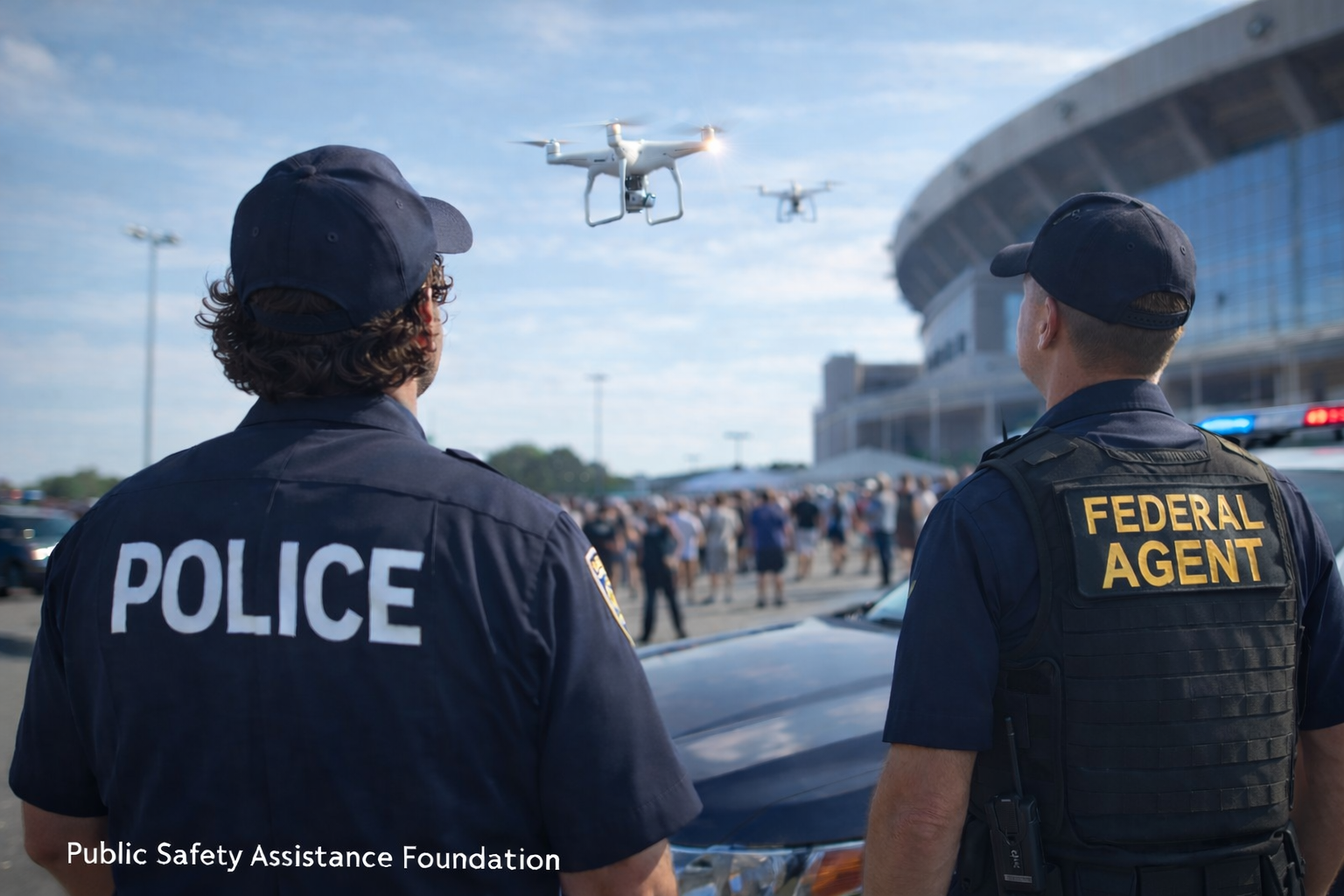
In January 2026, the Department of Homeland Security announced the launch of a new office dedicated to advancing drone and counter-drone technology. The federal government is accelerating investments in unmanned aircraft systems and the tools designed to detect, track, and neutralize them.
For many, this announcement signals progress. It reflects preparation for large-scale public events, critical infrastructure protection, and evolving national security concerns.
But for law enforcement officers and public officials, this development represents something more personal.
As aerial technology expands, so does the surface area for exposure.
And exposure, when unmanaged, creates risk.
The Rapid Rise of Drone Technology
Drones are no longer niche devices used only by hobbyists. They are widely available, increasingly affordable, and capable of capturing high-resolution images and video from significant distances. Many models can hover quietly, transmit footage in real time, and map precise geographic coordinates.
Government agencies are responding appropriately. Counter-drone systems are being developed to identify unauthorized aerial activity, especially during major public events. Investments in detection radar, radio frequency monitoring, and mitigation tools are growing.
From a public safety perspective, these advancements make sense.
However, the broader expansion of drone capability also introduces new layers of complexity for officers who live and work in the public eye.
The Expanding Definition of Surveillance
When most people think about surveillance risks, they picture data breaches, social media oversharing, or identity theft. Those remain valid concerns. But drone technology changes the conversation.
A drone does not need to hack into a database to gather information. It does not need a password. It simply needs airspace and a camera.
Consider what is visible from above:
- Residential neighborhoods
- Driveways and vehicle license plates
- Backyard layouts
- Entry and exit routines
- Family gatherings
- Children playing outside
For a law enforcement officer whose home address is already searchable online, aerial observation adds another dimension. It can provide visual confirmation of information that was previously just text on a data broker site.
Digital exposure and physical visibility begin to intersect.
That intersection is where vulnerability increases.
Major Events and Increased Airspace Activity
The new DHS office is focused in part on preparing for major public events, including international sporting events and national celebrations. These high-visibility gatherings draw large crowds, media attention, and increased drone usage.
When officers are assigned to protect these events, they are already operating under heightened scrutiny. Their presence is visible on the ground and, potentially, from the sky.
Unauthorized drones at public gatherings can pose safety risks. That is why counter-drone systems are essential. Yet the normalization of aerial recording at large events also conditions the public to expect constant overhead surveillance.
Images captured during public operations can be posted online instantly. Faces, name tags, patrol vehicles, and staging locations can all become part of a permanent digital record.
For officers who value operational security, this reality reinforces an important truth.
You cannot fully control what is recorded. But you can control what information is easily found.
From Physical Surveillance to Digital Exposure
Here is where the conversation connects directly to the work we do at Privacy for Cops.
Drone technology expands the ability to observe. Data broker websites expand the ability to identify.
When someone can pair aerial footage with a searchable name, home address, and family member details, risk escalates.
Imagine this scenario:
A police officer works a high-profile event. A drone operator captures footage of the officer directing crowd movement. The video is uploaded to social media. The officer’s name is visible on a uniform patch. A viewer pauses the video and conducts a quick online search.
Within minutes, the officer’s home address, estimated property value, relatives, and previous addresses appear through people-search platforms.
The drone did not create the vulnerability.
The publicly accessible data did.
Technology layers risk. It does not operate in isolation.
The Psychological Impact on Officers and Families
Law enforcement officers accept professional risk. What becomes harder to accept is risk that follows them home.
When aerial technology becomes more common, families may begin to question ordinary occurrences. Is that drone flying overhead just recreational? Is someone recording? Is it random, or targeted?
Most drone activity is benign. But uncertainty itself can create stress.
For spouses and children, knowing that personal information is widely available online already introduces concern. Adding visible, physical surveillance into the equation can amplify that anxiety.
Officer safety is not limited to the patrol shift. It extends to peace of mind at home.
Protecting digital privacy helps reduce the compounding effect of these stressors.
Counter-Drone Technology and Its Limits
The federal government’s investment in counter-drone capabilities is an important step forward. Detection and mitigation tools can help identify unauthorized aircraft near sensitive sites or large events.
However, counter-drone authority is limited to specific environments and circumstances. It does not extend to routine residential airspace in most cases. It does not erase previously recorded footage. It does not remove personal data from online databases.
Operational tools address immediate threats.
Privacy protection addresses persistent exposure.
Both are necessary, but they serve different purposes.
The Longevity of Digital Information
One of the least understood aspects of digital exposure is permanence.
Images captured today can remain searchable for years. Public records can be aggregated, repackaged, and redistributed indefinitely. Once personal details are indexed by multiple data brokers, they often spread across dozens of sites.
Drone footage from a public event may fade from headlines, but the officer’s personal information remains searchable.
That is the long-term risk.
While agencies invest millions into aerial defense systems, individual officers must consider their own defensive strategy in the digital environment.
Why Online Privacy Protection Is Now a Strategic Priority
The expansion of drone and counter-drone initiatives signals something larger. It shows that government leaders recognize how rapidly technology evolves and how quickly threat landscapes shift.
Law enforcement officers should apply that same awareness to personal privacy.
Technology will continue to advance. Cameras will improve. Airspace will become busier. Data aggregation will grow more sophisticated.
Waiting for exposure to become a problem is not a strategy.
Proactive privacy protection is.
Removing personal information from data broker sites reduces the ability of bad actors to connect names to locations. It creates friction. It increases the effort required to identify and target an officer’s home or family.
In security planning, friction matters.
It discourages opportunistic behavior and complicates malicious intent.
Connecting National Security and Personal Security
The DHS announcement underscores a national commitment to anticipating threats before they escalate. Counter-drone offices are not reactive measures. They are proactive investments.
The same philosophy applies at the individual level.
Law enforcement agencies train officers to observe patterns, identify vulnerabilities, and mitigate risk early. Digital exposure deserves the same discipline.
Personal information published online is not harmless. It can be combined with emerging technologies in ways that increase visibility and vulnerability.
By reducing what is publicly accessible, officers regain a measure of control.
That control supports not only individual safety, but family stability and career longevity.
Practical Steps Officers Can Take Today
While federal agencies focus on aerial systems, officers can focus on digital systems.
Here are foundational steps:
- Sign up for service with Privacy for Cops. We submit structured removal requests on your behalf and continuously monitor for reappearance.
- Conduct a search of your full name and city to assess visible data.
- Avoid posting identifiable home details on public social media accounts.
- Monitor periodically for reappearance of removed data.
Privacy maintenance is not a one-time event. Data frequently resurfaces as sites update their databases.
Consistent monitoring ensures exposure remains limited.
The Broader Cultural Shift
We are entering an era where observation is normalized. Drones, security cameras, live streams, and social media have created an always-recording culture.
For law enforcement officers, who already operate in high-visibility roles, this environment requires a layered approach to protection.
Physical training, tactical awareness, and operational planning remain essential.
Digital hygiene must join that list.
Privacy is not secrecy. It is strategic discretion.
And discretion strengthens resilience.
The Bottom Line
The creation of a federal drone and counter-drone office is a clear signal that technology-driven threats are evolving. The skies are becoming more active. Surveillance tools are becoming more capable.
As government agencies invest in protecting airspace, officers should invest in protecting their personal information.
You cannot control every camera.
You cannot eliminate every drone.
But you can reduce what someone finds when they search your name.
That step alone can significantly lower exposure risk.
🛡️Your badge represents service. Your home should represent safety.
If you are a law enforcement officer or public official and have not assessed your digital footprint recently, now is the time.
Take control before someone else does.
Exclusive Privacy Plans