
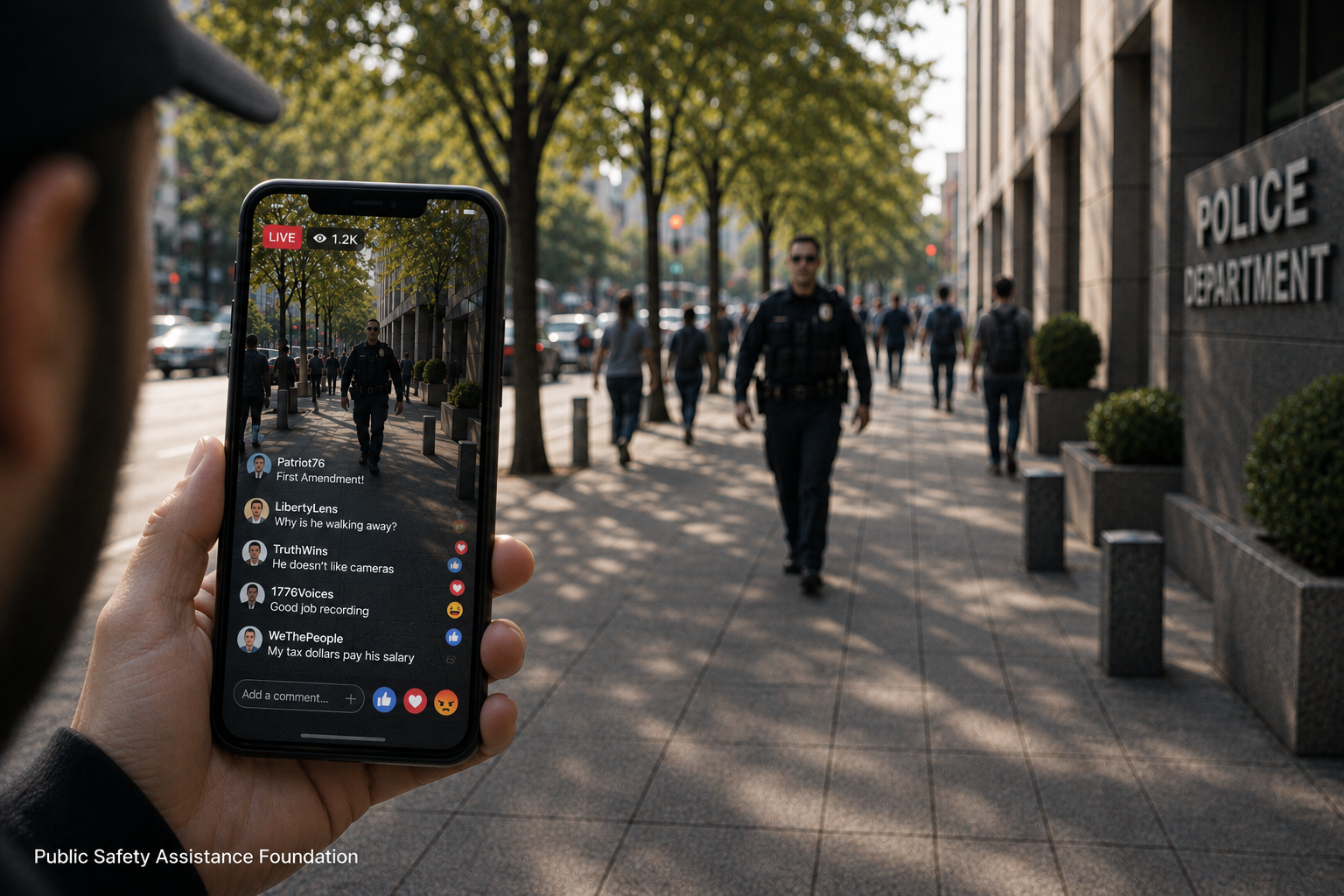
Across the country, law enforcement officers are increasingly encountering individuals recording public interactions for social media, livestreams, and so-called “First Amendment audit” channels. Public recording in public spaces is broadly protected under the Constitution, and many agencies now train officers specifically for these encounters.
But while the legal right to record may be well understood, a larger issue has quietly emerged alongside it:
📲 what happens after those recordings are uploaded online?
Because today, a public encounter rarely stays in the moment.
A single interaction can be filmed, posted, clipped, reposted, analyzed, and archived online within minutes. And once identifying details begin spreading across the internet, the conversation often moves far beyond the original encounter itself.
For many law enforcement officers, the concern is no longer simply being recorded in public.
It is being found online afterward.
The Rise of First Amendment Audit Culture
First Amendment audit videos have become a major category of online content over the last several years. Many creators intentionally record in public spaces to test whether government employees and law enforcement officers understand constitutional rights involving photography and recording.
Some of these encounters remain calm and uneventful. Others are designed to provoke reactions that generate views and engagement online.
For agencies, these encounters create operational and reputational challenges. Officers are expected to remain professional, understand legal boundaries, and avoid escalating situations unnecessarily. Training on constitutional rights and public recording has become increasingly important for departments nationwide.
At the same time, officers are navigating a reality where a single encounter may be viewed by hundreds of thousands of people online.
That creates pressure many people outside the profession may not fully appreciate.
An officer is no longer interacting solely with the individual standing in front of them.
They may also be interacting with:
- a livestream audience
- future viewers
- social media commentary
- repost accounts
- edited clips
- reaction channels
- online investigators attempting to identify them
The encounter itself may last ten minutes.
The online footprint may last forever.
Public Encounters Now Live Forever Online
One of the biggest differences between modern policing and policing from even ten years ago is permanence.
A single interaction can now exist online indefinitely:
- YouTube uploads
- TikTok clips
- Facebook reposts
- screenshot accounts
- livestream archives
- reaction videos
- discussion forums
- searchable databases
Even when an encounter is relatively routine, portions of the interaction may spread far beyond the original audience. A clip recorded in one city can be viewed across the country within hours.
And once content begins circulating online, context can disappear quickly.
A short clip may not include the full call details. A screenshot may not explain what happened before recording began. A viral post may prioritize engagement over accuracy. Regardless of intent, officers increasingly operate in an environment where isolated moments can become permanent digital records.
That reality changes the conversation entirely.
The issue is no longer simply:
“Can someone record this?”
The larger concern has become:
“What happens after the recording is uploaded?”
The Internet Connects Information Faster Than Ever
Many officers understand they may appear in public recordings. What is less expected is how quickly online users can connect those videos to personal information.
A name tag.
A badge number.
A patrol vehicle.
A department patch.
A recognizable location.
A social media mention.
Small pieces of information can quickly lead people down a digital trail.
Modern search tools, social media platforms, and people-search websites make it easier than ever for individuals to gather personal information about others online. In many cases, it does not require advanced technical skill. A determined person can often move from a video clip to a searchable name in minutes.
From there, exposure can expand:
- home addresses
- phone numbers
- relatives
- property records
- social media accounts
- spouse information
- neighbors
- past addresses
This is where the conversation moves beyond public recording and into online privacy and safety concerns.
Most people who record public encounters may never intend harm. But the internet does not always distinguish between curiosity, outrage, harassment, or obsession. Once identifying information spreads online, officers lose control over where it travels next.
Accountability and Exposure Are Not the Same Thing
One of the most important distinctions in this conversation is understanding that accountability and exposure are not identical.
Public transparency matters. Professional conduct matters. Constitutional rights matter.
But online exposure creates a separate layer of risk that often extends beyond accountability itself.
There is a difference between:
- documenting public interactions
and - attempting to identify where an officer lives
There is a difference between:
- recording an encounter
and - spreading family information online
There is a difference between:
- posting public footage
and - encouraging harassment or targeting
Unfortunately, the internet can blur those lines quickly.
Once an officer’s name becomes searchable online, unrelated personal information may surface almost instantly through public databases and people-search websites. In some cases, family members who had nothing to do with the original encounter can also become exposed.
That is where many officers begin realizing the issue is larger than a single video clip.
The Screenshot Problem Never Really Ends
One of the most difficult realities about online exposure is that information rarely disappears completely once it spreads.
Even if a video is deleted:
- screenshots remain
- reposts continue
- clips survive on other platforms
- cached information lingers
- archived pages may still exist
The internet rewards duplication.
A single image or identifying detail can spread across multiple websites within hours. And unlike traditional media cycles, online content can resurface months or years later through searches, algorithms, or viral reposts.
For officers, this creates long-term exposure concerns that extend far beyond one shift or one incident.
A moment captured publicly today may still appear in search results years later.
Why Online Privacy Matters More Than Ever
This is why online privacy work has become increasingly important for law enforcement officers and public officials.
The reality is simple:
Most people cannot control whether someone records them in public.
But they can take steps to reduce how much personal information is easily accessible online afterward.
That distinction matters.
Reducing unnecessary online exposure can help limit how quickly strangers connect public interactions to private lives. Removing personal information from data broker and people-search websites helps reduce the amount of searchable information available to anyone attempting to dig deeper online.
No system eliminates all risk entirely. But proactive online privacy efforts can make it significantly harder for personal information to spread quickly after a public encounter gains attention online.
And in today’s digital environment, slowing down that exposure matters.
The Conversation Has Changed
Public recording is not disappearing.
Smartphones are everywhere.
Livestreams happen instantly.
Viral clips move faster than ever.
Law enforcement officers understand that public encounters increasingly unfold in front of cameras.
But the larger issue facing many officers today is not simply being filmed.
It is being found online afterward.
The modern internet has created an environment where moments do not stay contained to one location, one audience, or one day. Public interactions can rapidly evolve into broader online exposure involving personal information, families, and long-term digital visibility.
That reality has fundamentally changed how officers think about privacy and safety in the digital age.
Turning Awareness Into Action
Most officers cannot control whether they are recorded in public. But they can take proactive steps to reduce how much personal information is easily accessible online afterward. Because today, online safety is not only about what happens during a public encounter.
It is also about what happens after someone starts searching online.
The internet may move fast, but proactive online privacy protection can still make a meaningful difference.
To learn more about our services or sign up for online protection, visit Privacy for Cops’ Exclusive Privacy Plans.
Exclusive Privacy Plans