

Across the country, weather has dominated the news cycle. Winter storms, ice, heavy snow, flooding, and extreme cold have prompted advisories and warnings in region after region. Meteorologists issue forecasts days in advance. Emergency officials urge people to prepare, adjust plans, and stay alert.
Most people understand the difference between a forecast and a warning.
A forecast tells you conditions may be developing.
A warning tells you those conditions are imminent or already happening.
The important part is not the terminology. It is how people respond. Those who take forecasts seriously prepare early. Those who wait for warnings often have fewer options.
This distinction offers a useful lens for understanding online personal safety, especially for law enforcement officers, public officials, and their families. Digital threats follow a similar pattern. The signs are often visible long before an incident occurs. The difference lies in whether action is taken early or delayed until damage is already underway.
Understanding the Forecast
Weather forecasts do not predict certainty. They identify conditions. Atmospheric pressure, temperature changes, moisture, and wind patterns indicate what may be coming. A clear sky today does not mean risk is absent tomorrow.
Online exposure works the same way.
Data brokers, public records databases, social media platforms, and third-party websites continuously collect and share personal information. Names, addresses, phone numbers, family relationships, and employment details are aggregated quietly and persistently.
For law enforcement officers and public officials, this exposure is often greater due to the public nature of their roles. That does not mean an incident will occur. It does mean the conditions exist.
A forecast does not cause the storm. It simply reveals the environment in which one could form.
Why Warnings Come Too Late for Many
When severe weather warnings are issued, people scramble. Roads close. Supplies disappear. Travel becomes dangerous. Options narrow quickly.
Online safety incidents follow a similar pattern. Doxxing, impersonation, harassment, and targeted threats often escalate rapidly once they begin. By the time someone realizes their personal information has been misused, the information is already circulating.
Removing it becomes harder. Containing the impact becomes more complex. Stress increases, and families are often pulled into the situation.
Warnings matter, but they are not the ideal starting point. Preparedness is.
How Online Exposure Develops Over Time
Online exposure rarely appears overnight. It builds gradually through everyday activity:
- Public records tied to home ownership, vehicle registration, or licensing
- Social media accounts created years ago and forgotten
- Data broker listings populated automatically from public and commercial sources
- Professional profiles that connect names, titles, and locations
None of these actions are reckless on their own. Over time, however, they form a detailed profile that others can access with little effort.
This is the forecast phase. The conditions exist long before a storm forms.
The Role of Visibility in Public Service
Law enforcement officers and public officials operate in highly visible roles. Transparency is essential to public trust, but it also changes the risk landscape.
Visibility increases predictability. Predictability increases vulnerability.
Online exposure can allow someone to map routines, identify family members, or connect professional roles to personal addresses. In most cases, no one is paying attention. In some cases, someone is.
The challenge is that there is rarely a clear signal that attention has shifted from benign to malicious until after the fact.
Weather Teaches Us to Prepare Early
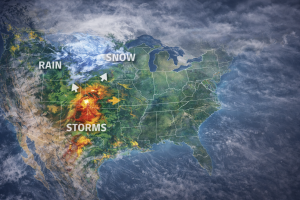 People do not wait for a blizzard warning to buy winter coats. They prepare before the season begins. They check heating systems, clear gutters, and review emergency plans.
Online personal safety benefits from the same mindset.
Preparation might include:
- Reviewing what personal information appears in common online searches
- Identifying which data broker sites list addresses or phone numbers
- Strengthening account security with unique passwords and multi-factor authentication
- Separating professional and personal online identities
- Considering how family members’ information may be linked
These steps do not eliminate risk entirely. They reduce exposure before conditions worsen.
When Conditions Change Quickly
Weather can shift unexpectedly. A minor system can intensify. A forecast can escalate to a warning within hours.
Online conditions can change just as fast.
A high-profile incident, policy decision, media coverage, or viral post can increase attention overnight. Officers and officials who were previously anonymous online can become visible quickly.
During these moments, existing exposure matters. Information that has been publicly available for years can suddenly be used in new ways.
Preparedness determines how resilient someone is when conditions change.
Families Are Part of the Forecast
Weather planning often includes checking on family members, securing homes, and ensuring everyone knows what to do. Online safety is no different.
Families are frequently affected by online exposure, even when they have no public role. Spouses and children may appear in public records. Social media connections can reveal relationships and locations.
When online incidents occur, families often feel the impact first. They receive messages, see posts, or notice changes before the officer or official does.
Protecting personal privacy is not only about the individual. It is about the household.
The Cost of Waiting for Warnings
Waiting for a warning feels rational. It avoids unnecessary effort. It delays action until risk feels real.
The problem is that online warnings often arrive after exposure has already occurred. Information has been copied, shared, or archived. Removing it becomes a process rather than a solution.
In weather terms, it is the difference between reinforcing your roof before the storm and trying to repair it while rain is pouring in.
Preparedness Is Not Paranoia
Taking forecasts seriously does not mean assuming the worst. It means acknowledging reality and acting thoughtfully.
Online personal safety does not require fear. It requires awareness.
Preparedness allows people to respond calmly rather than react under pressure. It preserves options. It reduces disruption.
For law enforcement officers and public officials, it supports long-term well-being in roles that already carry significant demands.
Learning From the Weather Playbook
Weather preparedness has clear principles:
- Monitor conditions
- Act early
- Protect what matters most
- Adjust as circumstances change
These principles translate well to online safety.
Monitoring means understanding where information appears. Acting early means reducing unnecessary exposure. Protecting what matters includes families and personal boundaries. Adjusting means revisiting practices as technology evolves.
None of this requires constant vigilance. It requires intentional habits.
Why This Matters Now
The conversation around extreme weather is a reminder that risk is not always dramatic or immediate. Often, it builds quietly until conditions align.
Online exposure operates in much the same way. The absence of an incident today does not mean risk is absent. It means conditions have not yet converged.
For those who serve in visible roles, recognizing this pattern is critical. Safety planning that focuses only on physical environments misses an increasingly important dimension of modern life.
Preparedness is not about predicting the storm. It is about being ready when conditions change.
Looking Ahead with Confidence
Weather will continue to change. Technology will continue to evolve. Public service will remain visible.
The goal is not to control every variable. It is to reduce avoidable risk and strengthen resilience.
When people respect forecasts, they make better decisions. When they prepare early, warnings are less disruptive.
The same is true for online personal safety.
Learn More About Proactive Privacy Protection
At Privacy for Cops, our work is focused on helping law enforcement officers, public officials, and their families understand online exposure and take proactive steps to reduce it. We believe privacy protection is an essential part of modern safety, not an afterthought.
Learn more about who we are, why we were founded, and how proactive privacy protection supports those who serve. Our Exclusive Privacy Plans can help!
Exclusive Privacy Plans