
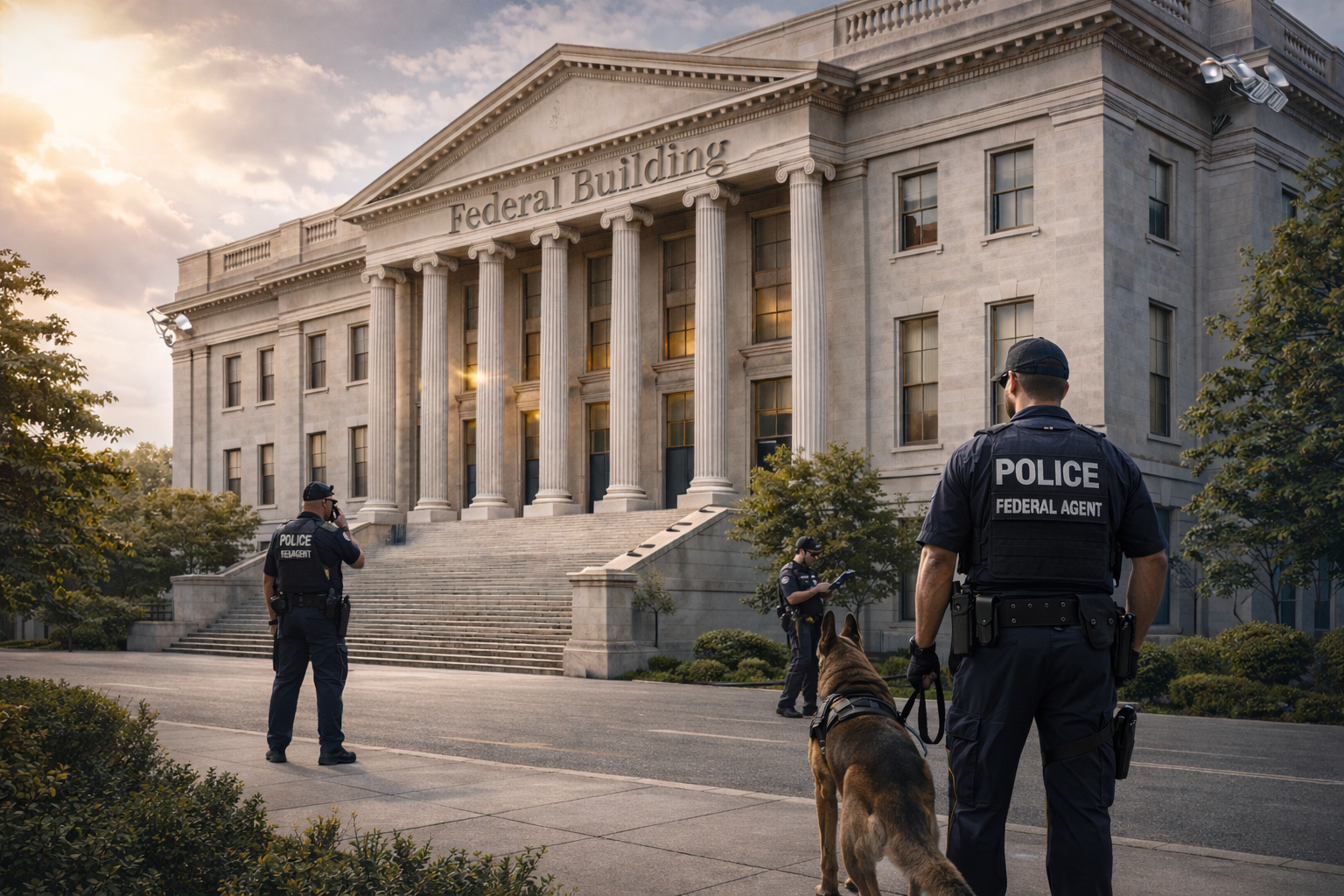
Federal Building Safety Risks and What They Mean for Public Safety
A recent federal inspector general report has raised serious concerns about health and safety conditions inside federal buildings across the United States. The findings point to hazards ranging from fire protection failures and malfunctioning alarm systems to unsafe working conditions and delayed responses to known risks.
While the report focuses on physical conditions inside government facilities, it highlights a broader truth about modern public safety: risk often exists where it is least visible. Just as unsafe infrastructure can go unnoticed until something fails, personal information can quietly circulate online, creating vulnerabilities that surface without warning.
For law enforcement officers, emergency responders, and public officials, this reality extends beyond the buildings they enter for work. Public records, data broker sites, and online databases routinely publish personal details such as home addresses, phone numbers, family names, and workplace information. These exposures create real-world safety risks that mirror the unseen hazards identified in the federal building report.
What the Report Revealed
 According to the inspector general’s findings, multiple federal facilities were found to have unresolved health and safety risks. These issues were not isolated incidents, but recurring problems tied to oversight gaps, inconsistent enforcement of safety standards, and breakdowns in communication.
Some facilities experienced battery system failures that led to hazardous material leaks and fires. These failures created dangerous conditions that put employees, contractors, and visitors at risk. Hazardous materials can compromise air quality, damage infrastructure, and expose occupants to serious health effects.
In other locations, inspectors identified fall hazards due to missing or inadequate rooftop safety systems. Workers performing routine inspections or maintenance at heights were exposed to unnecessary danger without proper protective equipment. These conditions increase the likelihood of severe injury and place additional strain on emergency response resources.
Perhaps most concerning were failures involving emergency detection and alarm systems. In at least one documented case, building personnel routinely bypassed fire alarm monitoring systems. Audible and visual alerts were disabled, and gas leak detection sensors remained unrepaired. These breakdowns significantly reduced situational awareness and delayed response during emergencies.
Occupants were also not always informed promptly about known environmental or health risks, despite internal policies requiring disclosure. Without timely communication, individuals were left unaware of conditions that could directly affect their safety.
Taken together, these findings show how quickly environments assumed to be secure can become hazardous when risks are overlooked or deferred.
Hidden Hazards Extend Beyond Physical Spaces
Many of the issues identified in the report were not immediately visible. They were hidden behind walls, embedded in systems, or buried in procedures. This is where the report offers an important parallel to another category of risk facing public officials today: online data exposure.
In many ways, publicly available personal data functions like a disabled safety system. It may not be noticeable on a daily basis, but when accessed by the wrong person, the consequences can escalate rapidly.
Law enforcement officers and public officials often assume their personal information is protected or difficult to locate. In reality, data broker websites collect information from public records, commercial sources, and online activity, then aggregate and sell it. With minimal effort, someone can locate an officer’s home address, phone number, relatives’ names, past residences, and more.
Like a malfunctioning fire alarm, this vulnerability often goes unnoticed until it is exploited.
Why These Findings Matter to Law Enforcement and Public Officials
Federal buildings are commonly viewed as controlled, secure environments. Officers and responders often assume that safety systems in these facilities are reliable and fully operational. The report challenges that assumption.
Law enforcement officers are frequently required to enter federal buildings while responding to calls, attending hearings, conducting investigations, or coordinating with partner agencies. If fire detection systems, alarms, or safety protocols are compromised, officers may unknowingly enter hazardous environments.
The same principle applies to digital exposure. Officers may be unaware that their personal data is readily accessible online until it is used to harass, intimidate, or target them or their families.
These off-duty risks can quickly become on-duty concerns. Harassment and threats can affect focus, sleep, decision-making, and emotional well-being. In high-stress professions, these impacts matter.
Safety risks do not end when a shift ends. Digital exposure follows officers home.
Safety Is Multi-Dimensional
The federal building report reinforces a critical concept: safety cannot be addressed in isolation. Physical hazards, procedural failures, and digital vulnerabilities often intersect and amplify one another.
A broken fire alarm is a physical risk. Failure to notify occupants is a procedural risk. Publicly accessible personal information about officers and public officials working in that building introduces a digital risk. Each one compounds the others.
Modern public safety requires a comprehensive view of risk, one that considers not only the environments officers enter, but also the information connected to their identities online.
Ignoring any one of these elements leaves gaps that can be exploited.
The Human Cost of Overlooked Risk
Behind every report finding is a person. A federal employee working in an unsafe building. A contractor exposed to hazardous conditions. A responder entering an environment under false assumptions of safety.
The same is true with online exposure. Behind every data listing is a real person with a family, a home, and a life outside of work.
When personal information is easily accessible online, it can be used to escalate conflict, fuel intimidation, and blur the line between professional duties and private life. These experiences contribute to burnout, stress, and long-term safety concerns that extend beyond any single incident.
Public safety depends on people being able to do their jobs without constant fear of personal exposure.
How This Connects to the Work at Privacy for Cops
At Privacy for Cops, we focus on reducing one of today’s most overlooked public safety risks: the widespread availability of personal data online.
We help law enforcement officers and public officials remove personal information from data broker sites and online databases. This includes home addresses, phone numbers, relatives’ names, and other identifying details that can be misused by bad actors.
This work is not about convenience or comfort. It is about risk reduction.
Just as unsafe building conditions increase physical risk, unchecked online exposure increases personal risk. Removing this data helps reduce the likelihood of off-duty targeting, harassment, and intimidation. It supports officer safety, family security, and peace of mind.
When officers are not worried about their home address being searchable online, they are better able to focus on the responsibilities of the job.
Privacy protection should be viewed as part of responsible safety planning, not an optional add-on.
Preparedness Requires a Broader Lens
The findings in the inspector general report highlight the dangers of fragmented safety planning. Addressing physical hazards without addressing digital exposure leaves critical gaps.
True preparedness requires asking broader questions:
- Are the environments our personnel enter properly maintained and monitored?
- Are safety systems functional and reliable?
- Are communication channels clear and timely?
- Are we taking proactive steps to limit how much personal information about officers is available online?
Risk evolves, and preparedness must evolve with it.
Lessons for Public Safety Leadership
There are several key takeaways from this report for leaders in law enforcement and public safety.
First, assumptions must be challenged. Just because a building or system is labeled secure does not mean it is free from risk. The same is true of personal privacy.
Second, transparency matters. Delayed communication about hazards, whether physical or digital, undermines trust and increases vulnerability.
Third, prevention is more effective than reaction. Identifying and addressing risks early reduces harm and strengthens confidence in safety systems.
Finally, protecting infrastructure without protecting people leaves safety strategies incomplete.
Take the Next Step in Protecting What Matters Most
Reports like this one remind us that risks often exist quietly, whether inside a building or online. The most effective protection comes from identifying vulnerabilities before they are exploited.
For law enforcement officers and public officials, reducing personal digital exposure is one proactive step that supports overall safety and preparedness. Limiting the availability of personal information online helps reduce the risk of harassment, intimidation, and off-duty targeting.
Privacy for Cops offers exclusive privacy plans designed specifically for those who serve in high-visibility public roles. These plans focus on removing personal information from data broker sites and online databases, helping create an added layer of protection beyond the workplace.
🔵 Learn more about our exclusive privacy plans at:
https://www.privacyforcops.org/exclusive-privacy-plans/
Protecting those who protect our communities requires awareness, preparation, and action.
Exclusive Privacy Plans