
Conversations around law enforcement safety often focus on what happens in the field.
Training. Equipment. Backup. Situational awareness.
These are all essential. They save lives.
But today, officer safety extends far beyond physical encounters. It now includes something less visible, yet just as impactful: digital exposure.
A recent statement from the National Association of Police Organizations emphasized that officer safety risks can become overshadowed by broader public debates and operational complexity. The organization warned that amid heightened attention on federal immigration enforcement, the safety of officers themselves must remain a central priority.
That message is important. Not because of the politics surrounding any specific issue, but because it highlights a consistent truth:
When visibility increases, risk increases.
And today, that visibility doesn’t just happen in person. It happens online.
The Expanding Definition of Officer Safety
Historically, officer safety meant preparing for the unknown during a call.
Who is inside the house?
What is their intent?
Are there weapons present?
Now, there is a new set of questions:
- What personal information about this officer is already online?
- Can someone identify them outside of uniform?
- Are their home address, phone number, or family members easily accessible?
These are not hypothetical concerns.
In today’s digital environment, vast amounts of personal data are collected, aggregated, and sold through public records databases and data broker websites. Names, addresses, relatives, and even behavioral patterns can be pieced together in minutes.
This means that an officer’s exposure does not end when the shift ends.
It follows them home.
When Public-Facing Roles Become Personally Identifiable
Increased visibility can come from many sources:
- High-profile operations
- Public interactions caught on camera
- News coverage or viral social media moments
- Participation in joint federal, state, or local initiatives
Even routine enforcement actions can become widely shared online within hours.
And once an officer’s image or name becomes public, it often doesn’t take long for someone to begin searching for more information.
That’s where the risk shifts.
Because while an officer may be trained to manage threats in uniform, they are far more vulnerable when they are off duty, at home, or with their family.
The Digital Trail Most People Don’t Realize Exists
One of the most misunderstood aspects of online exposure is how easily information can be found.
Many officers assume:
“I don’t post much online, so I’m fine.”
But the majority of personal data online does not come from social media.
It comes from:
- Data broker websites
- Public records databases
- Marketing and background check platforms
- Aggregated search sites
These platforms collect and publish:
- Full names
- Current and past addresses
- Phone numbers
- Known associates and relatives
- Property ownership details
All without the individual ever actively sharing it.
In many cases, this information is accurate, up-to-date, and searchable within seconds.
That means someone with minimal effort can build a detailed profile of an officer’s personal life.
Why This Matters More Than Ever
The environment surrounding law enforcement has changed.
Public awareness is higher.
Interactions are more frequently recorded.
Information spreads faster than ever before.
At the same time, tensions in certain situations can escalate quickly, especially when operations draw public attention or scrutiny.
While the vast majority of interactions remain lawful and professional, it only takes one individual with bad intent to turn publicly available information into a real-world threat.
That threat may not appear during the incident itself.
It may appear days later.
At home.
Online.
Or directed at family members.
The Overlooked Vulnerability: Life Outside the Badge
Officer safety conversations often stop at the end of the shift.
But that is where a different type of vulnerability begins.
Consider this:
An officer involved in a visible enforcement action is identified online.
Their name is shared.
From there, their personal data is located through common search sites.
Within minutes, someone may have access to:
- Their home address
- Names of family members
- Contact information
- Property details
This is not a breach.
It is legal, publicly available data.
And that is what makes it so concerning.
Because it doesn’t require hacking, insider access, or advanced skills.
Just a search bar.
Information Sharing vs. Information Exposure
The statement from NAPO also highlights the importance of collaboration and information sharing between agencies to support public safety.
That type of information sharing is essential for effective law enforcement.
But there is a clear difference between:
- Professional information sharing (within agencies, for safety and operations)
- Uncontrolled public exposure (available to anyone, anywhere)
The first strengthens officer safety.
The second can undermine it.
And right now, the second is happening at scale.
A New Layer of Officer Safety: Digital Awareness
If officer safety is evolving, then protection strategies must evolve with it.
That includes recognizing that:
- Online data is part of the modern threat landscape
- Personal information can be accessed without direct interaction
- Exposure can occur without the officer’s knowledge
This is why digital awareness is no longer optional.
It is part of being proactive.
Just like checking surroundings.
Just like wearing protective gear.
Just like calling for backup when needed.
Practical Steps to Reduce Online Exposure
While the digital landscape can feel overwhelming, there are clear, actionable steps that can significantly reduce risk:
1. Review Your Online Presence
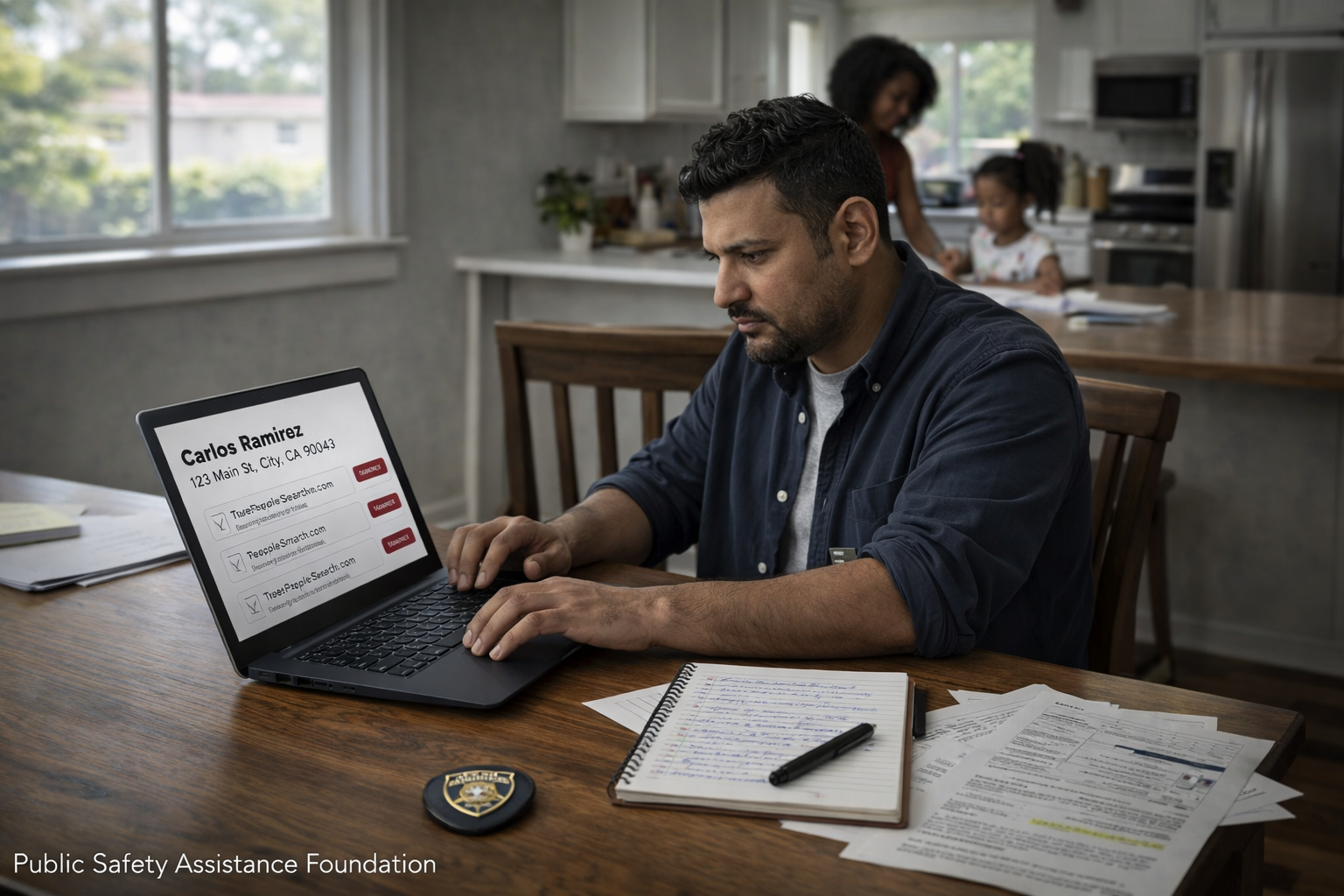
Search your name, phone number, and address to see what information is currently visible.
You may be surprised by how much appears!
2. Identify Data Broker Listings
Locate websites that display your personal information. These are often the primary source of exposure.
3. Address Data Broker Listings
Removing personal information from data broker sites is not a one-time task. It requires repeated requests, tracking, and ongoing monitoring. Privacy for Cops is designed specifically to manage this process for law enforcement officers and public officials, helping reduce exposure and prevent information from reappearing.
4. Limit Public Sharing
Be mindful of what is shared online, including location-based posts and identifiable details.
5. Monitor Regularly
Even after removal, information can reappear. Ongoing monitoring is key.
These steps can make a meaningful difference.
But they also require consistency, time, and attention to detail.
Why Proactive Protection Matters
One of the most important lessons in officer safety is this:
It is always better to prevent a threat than to respond to one.
The same applies to online exposure.
Once personal information is widely available, it becomes significantly more difficult to control.
Proactive removal and monitoring help reduce the chances of that information being used in harmful ways.
This is not about fear.
It is about preparation.
The Reality: Exposure Is Increasing, Not Decreasing
Technology continues to evolve.
Data collection continues to expand.
New platforms continue to emerge.
That means the amount of personal information available online is not shrinking.
It is growing.
And with that growth comes increased accessibility, faster searches, and more detailed profiles.
For law enforcement officers and public officials, this creates a unique challenge.
Because their roles inherently involve visibility.
Turning Awareness Into Action
Officer safety has always required adapting to changing environments.
Today, that environment includes the digital world.
Understanding the risks is the first step.
Taking action is what makes the difference.
If you are a law enforcement officer, public official, or family member, now is the time to ask:
- What information about me is currently online?
- How easy is it to find?
- What steps have I taken to remove it?
At Privacy for Cops, we focus specifically on helping law enforcement officers, public officials, and their families reduce their online exposure by submitting removal requests to data broker sites and continuously monitoring for reappearances.
You don’t have to navigate this process alone.
Take a moment to look yourself up online. What you find may be more than you expected.
The question is not whether your information is out there, but who can access it.
Start by reviewing what is currently visible, then take the next step toward removing it and keeping it from coming back with ongoing support designed specifically for law enforcement officers, public officials, and their families.
Join Us!
Exclusive Privacy Plans