
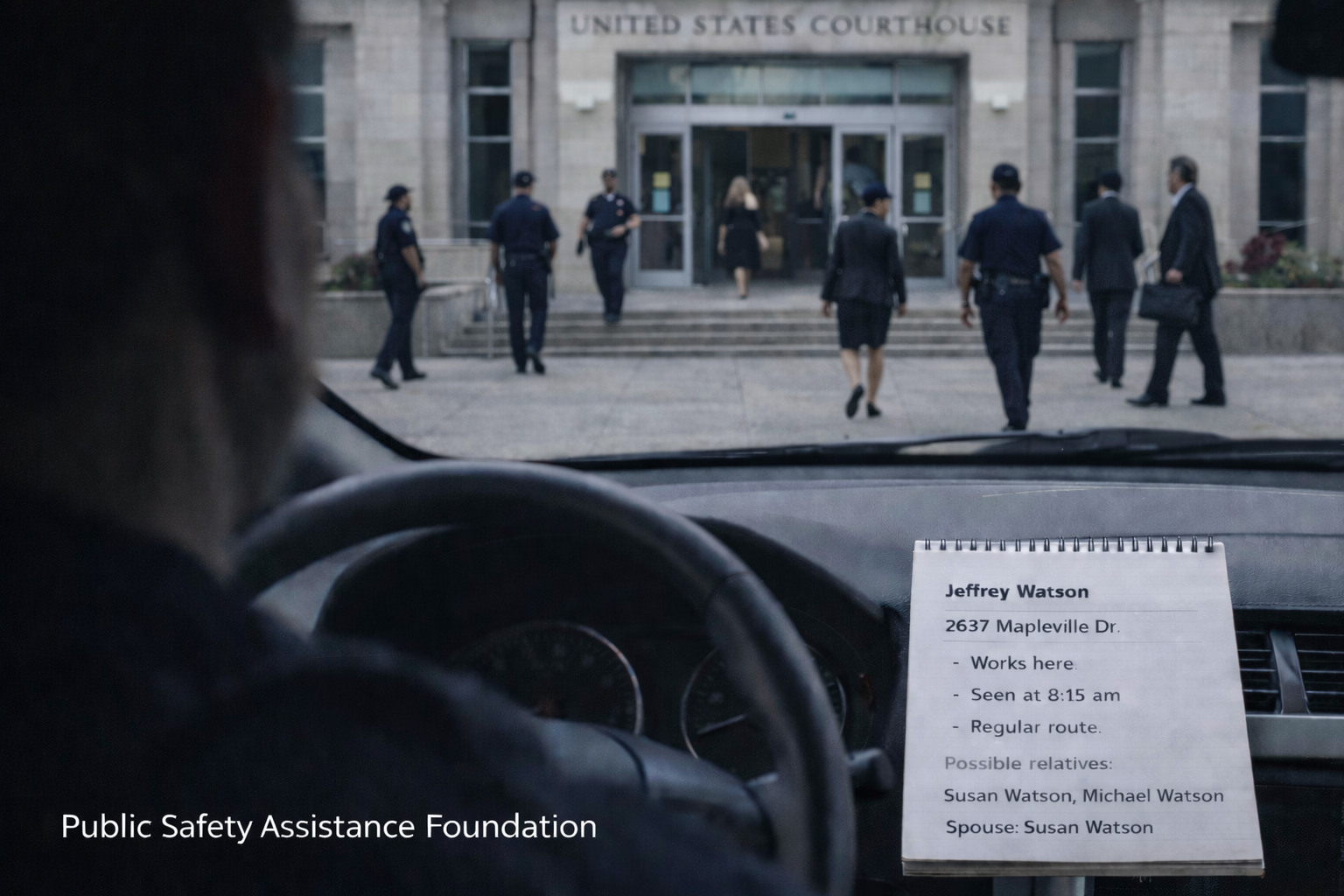
It didn’t start with a confrontation.
There was no traffic stop. No call for service. No face-to-face encounter that escalated into something dangerous.
It started quietly.
Behind a screen.
With names, posts, and pieces of information that were already out there.
By the time federal charges were filed against a Minnesota man accused of cyberstalking and making violent threats toward federal law enforcement officers, the situation had already crossed a critical line. Investigators allege that he didn’t just express anger online. He identified targets. He shared information. He encouraged harm.
And that distinction matters.
Because it highlights something that is becoming increasingly clear across the country:
The threat is no longer just the person.
It’s the access.
The Part Most People Miss
When stories like this make headlines, the focus usually lands on the charges.
Cyberstalking. Threatening communications. Federal prosecution.
All important. All serious.
But there’s a deeper question that often gets overlooked:
How did the targeting begin in the first place?
Because before anyone can threaten, track, or harass a law enforcement officer, they need one thing:
Access to information.
Not classified data. Not restricted files.
Just enough publicly available detail to connect the dots.
A name.
A department.
A city.
A family member.
A home address tied to a people-search site.
That’s all it takes to move from general frustration to specific targeting.
And in today’s environment, that information is often easier to find than most people realize.
The Digital Front Door No One Sees
For years, officer safety conversations have focused on what happens in the field.
Positioning. Awareness. Communication. Backup.
Those fundamentals still matter. They always will.
But what this case underscores is that a different kind of exposure is happening long before any call for service ever comes in.
It’s happening online.
Search a name, and multiple profiles can appear.
Click a link, and an address may be listed.
Follow a trail, and family members, phone numbers, and past locations can surface within minutes.
This isn’t hacking.
It isn’t advanced surveillance.
It’s aggregation.
Data broker sites and public-facing platforms collect, compile, and display personal information in ways that make it easy for anyone to build a profile on someone else.
That means the “front door” isn’t always your home address.
Sometimes, it’s your digital footprint.
When Frustration Becomes Focused
Most people who vent online never take it further.
But the risk isn’t measured by what most people do.
It’s measured by what one person decides to act on.
In the Minnesota case, prosecutors allege that the individual moved beyond general commentary and began directing attention toward specific law enforcement officers. The behavior reportedly included identifying individuals and encouraging others to engage in harmful actions.
That shift, from general to specific, is where the danger increases.
Because once a person becomes the focus, the barrier to action lowers.
Instead of:
“I’m upset about this agency…”
It becomes:
“This is the person.”
And when that happens, the situation changes.
Now there’s a name attached.
A potential location.
A connection point.
And in many cases, those details didn’t come from inside sources.
They came from the internet.
The Gap Between Awareness and Exposure
There’s a growing disconnect that cases like this bring into focus.
Many law enforcement officers are highly aware of situational threats in the field. They are trained to read environments, anticipate movement, and respond under pressure.
But far fewer have a clear picture of what their online presence actually looks like to someone else.
Not just what they’ve posted.
But what exists about them across dozens or even hundreds of third-party sites.
Information that may include:
- Full names tied to current and past addresses
- Phone numbers associated with personal accounts
- Relatives and known associates
- Property records and geographic history
- Links between social media and real-world identity
Individually, each piece might seem minor.
Together, they form a map.
And that map doesn’t just point to an officer.
It can point to a home.
A routine.
A family.
Off-Duty Doesn’t Mean Off the Radar
One of the most important shifts in this conversation is where the risk shows up.
Historically, threats were often tied to professional encounters. A call gone wrong. An arrest that escalated. A courtroom interaction that carried over.
Now, the exposure exists independently of any one incident.
Which means the risk can follow someone beyond the job.
At home.
At the grocery store.
While traveling.
While family members go about their day.
Not because of something that just happened.
But because of information that has been sitting online, quietly accessible, waiting for the wrong person to find it.
The Speed of Information Changes Everything
What used to take time now takes minutes.
In the past, identifying someone required effort. Research. Physical presence. Asking questions.
Today, the process is often digital and immediate.
Search engines surface results instantly.
People-search platforms organize data automatically.
Social media connects names, images, and networks in seconds.
That speed matters.
Because it compresses the timeline between curiosity and action.
There’s less friction.
Fewer barriers.
More opportunity for someone with intent to move quickly.
Why This Case Matters Beyond One Arrest
It would be easy to look at this situation as an isolated incident.
One individual. One set of charges. One outcome.
But that would miss the larger point.
Cases like this are examples of a broader trend:
Online exposure is becoming a starting point for real-world targeting.
Not always. Not in every situation.
But often enough that it can’t be ignored.
And importantly, the exposure doesn’t require wrongdoing by the individual being targeted.
It doesn’t require oversharing.
It doesn’t require a mistake.
In many cases, it simply exists because data about individuals is collected, sold, and displayed across the internet.
The Part That’s Still Within Your Control
The reality is this:
You can’t control what someone else chooses to do.
You can’t predict who might come across your name or why.
But you can reduce what they find.
You can limit the amount of information that is easily accessible.
You can shrink the digital footprint that creates that initial point of access.
And that matters more than ever.
Because while the threat may begin with a person, it often starts with information.
Turning Awareness Into Protection
Awareness is important. It’s the first step.
But awareness alone doesn’t remove information from the internet.
It doesn’t take down listings.
It doesn’t stop data from reappearing.
It doesn’t monitor new exposures over time.
That’s where the gap exists.
And it’s exactly where most individuals don’t have the time, tools, or resources to keep up.
Because managing online exposure isn’t a one-time task.
It’s ongoing.
A Different Approach to Staying Ahead
The goal isn’t to disappear.
It’s to reduce visibility where it matters.
To remove unnecessary exposure from the sites that make personal information easy to access.
To monitor what resurfaces.
To stay ahead of the next search, not react after it happens.
That’s not something most people can realistically manage on their own.
And they shouldn’t have to.
Before It Becomes Personal, Make It Private
In this case, the threat didn’t start with proximity.
It started with access.
And once that access existed, everything else became easier.
The most effective way to stay ahead of that risk is to remove the information that creates it in the first place.
Privacy for Cops handles the process of identifying, removing, and continuously monitoring your personal data across the sites that make targeting possible, so you don’t have to.
How it Works