
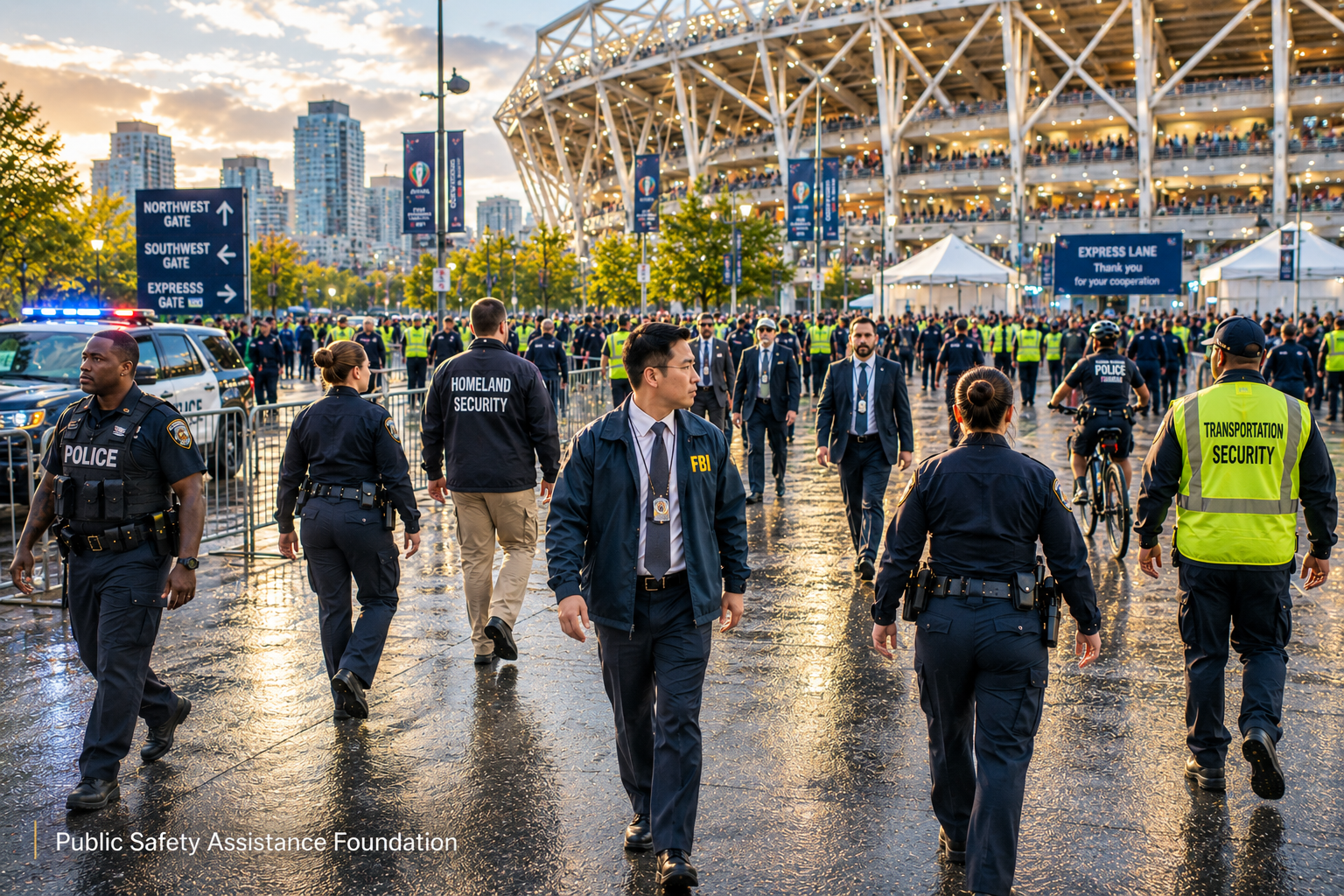
As the world prepares for the arrival of the FIFA World Cup 2026 in the United States, much of the attention will understandably focus on the athletes, stadiums, fans, and celebrations surrounding one of the largest sporting events in the world.
Millions of people will travel across cities to attend matches, concerts, watch parties, and public events connected to the tournament. Cameras will capture unforgettable moments. Social media feeds will be filled with highlights, reactions, livestreams, and behind-the-scenes footage from nearly every angle imaginable.
But behind every major international event is another operation most people rarely think about. An enormous network of:
- Law enforcement officers
- Federal agents
- Emergency management teams
- Transportation personnel
- Venue security professionals
- Public officials
They work quietly in the background long before the first fans ever enter a stadium.
Large events require large-scale coordination.
That preparation includes far more than visible patrols or security checkpoints. It involves months, and sometimes years, of planning surrounding communications systems, crowd management, transportation logistics, emergency response strategies, staffing operations, and real-time coordination between agencies.
For many of the agents and officers involved, the work begins long before the public realizes preparations are underway.
And in today’s environment, one reality has become impossible to ignore:
Major events create major visibility.
Public Events Operate in a Constantly Filmed Environment
Years ago, large events were certainly public. News crews covered major moments. Fans brought cameras. Media outlets documented the experience.
Today, however, nearly every person attending a major event carries a high-definition camera connected directly to the internet.
Every interaction has the potential to be recorded, uploaded, reposted, analyzed, or discussed online within minutes.
That reality changes the environment for everyone involved in public safety operations:
- An officer directing traffic outside a venue may appear in dozens of livestreams.
- A transportation checkpoint could be photographed repeatedly throughout the day.
- A routine perimeter patrol may unintentionally become part of a viral social media post.
Even ordinary moments can spread far beyond their original setting.
In many cases, this content is harmless.
Fans naturally want to document their experiences during memorable public events.
Large gatherings have always generated photos, videos, and stories people want to share.
But the scale and speed of online sharing has changed dramatically.
Information now moves instantly.
And when millions of people gather for a global event, the amount of digital visibility surrounding security operations increases significantly.
The Public Rarely Sees the Full Scope of Preparation
One of the most overlooked aspects of major events is how much preparation happens quietly behind the scenes.
Long before opening ceremonies or kickoff matches begin, planning teams are already coordinating countless operational details:
- Agencies communicate across jurisdictions.
- Emergency response systems are reviewed and tested.
- Transportation routes are evaluated.
- Communication systems are rehearsed.
- Venue access procedures are refined.
- Contingency plans are updated repeatedly.
In many situations, local law enforcement officers work alongside federal agencies, transit authorities, fire departments, medical teams, and public officials responsible for infrastructure and event operations.
These efforts are rarely visible to attendees.
Most people simply experience the final result: organized entry points, visible security presence, controlled traffic flow, and rapid response capabilities if issues arise.
But behind that visible layer is an enormous amount of preparation designed to help large public gatherings operate safely and efficiently.
That balance matters.
Major events are meant to bring communities together. Public safety operations are designed to support that experience while reducing unnecessary disruption and maintaining order in environments involving massive crowds and rapidly changing conditions.
Visibility Extends Beyond the Venue
One challenge law enforcement officers face is that visibility no longer ends when a shift is over. The internet has expanded the reach of exposure far beyond the physical event itself.
A single online post can unintentionally reveal:
- names
- faces
- locations
- staffing observations
- patrol patterns
- vehicle identifiers
- transportation routes
- hotel locations
- operational routines
Sometimes information is shared intentionally.
Sometimes it appears unintentionally in the background of photos or videos.
And sometimes information spreads simply because people are documenting what they see around them in real time.
This becomes especially important during high-profile international events that attract global attention.
Increased visibility often leads to increased online discussion.
Social media users may speculate about security operations, post observations about venue procedures, or share videos that unintentionally expose operational details.
Most of this activity is not malicious.
But it demonstrates how quickly information can now spread online and how difficult it can be to control once it begins circulating.
For law enforcement officers and public officials working major events, that visibility can continue long after the crowds leave and the tournament ends.
The Human Side of Large Event Operations
It is easy to view major event security only through the lens of uniforms, barricades, checkpoints, and visible patrols.
But behind those operations are real people managing long shifts, complicated logistics, and high-pressure environments.
Many officers and personnel assigned to major events spend extended hours away from home during preparation periods and active operations.
Some travel from other jurisdictions to assist with staffing.
Others work unfamiliar schedules for weeks at a time.
Meanwhile, their families continue living normal lives away from the event itself.
Children still attend school.
Spouses still go to work.
Families continue sharing milestones and moments online, often without realizing how interconnected digital visibility has become.
In an environment where information spreads rapidly, even small details can contribute to broader online exposure.
That does not mean families should avoid social media or stop sharing meaningful experiences.
It simply reinforces the importance of awareness and reasonable digital boundaries, particularly for officers and officials working in highly visible public-facing roles.
Crowd Management Has Changed in the Social Media Era
Another major shift affecting public events is how quickly situations can evolve online.
In previous decades, crowd movement and public reaction were shaped primarily by visible activity, announcements, or traditional media reporting.
Today, social media can influence crowd behavior in real time.
Rumors spread quickly.
Videos circulate instantly.
False information can gain traction before facts are confirmed.
A misleading post or inaccurate rumor can create confusion among thousands of attendees within minutes.
Because of this, public safety planning increasingly includes digital communication and monitoring strategies alongside physical security operations.
Agencies may monitor public information channels to identify developing concerns, crowd issues, or misinformation that could affect public safety operations.
This reflects how deeply connected digital environments have become to real-world event management.
The online world and physical world no longer operate separately.
They influence each other constantly.
Professionalism Often Goes Unnoticed
One reason major public events operate successfully is because of the professionalism of the personnel working behind the scenes.
Most attendees may never realize how many small issues are resolved before they ever become visible to the public:
- Traffic flows, because officers are coordinating movement continuously.
- Emergency systems function because teams prepared in advance.
- Crowds remain organized because personnel are monitoring conditions in real time.
- Public events often succeed, not because problems never arise, but because officers and teams are prepared to manage situations calmly and effectively when they do.
That preparation deserves recognition.
It also deserves support.
Conversations surrounding law enforcement and public safety often focus only on moments captured online. Much less attention is given to the planning, communication, and professionalism required to safely manage gatherings involving tens of thousands of people.
Major events place enormous responsibility on the individuals working them.
And in today’s digital environment, that responsibility often comes with increased visibility as well.
Preparation Now Includes Digital Awareness
As cities continue preparing for future international events, conversations about readiness will understandably focus on staffing, infrastructure, transportation systems, emergency planning, and crowd management.
Those discussions are important.
But digital awareness has also become part of modern preparation.
Today’s environment requires recognizing how quickly information can spread online and how visibility extends far beyond physical locations.
For law enforcement officers, federal agents, public officials, and other personnel, reducing online exposure can help create stronger boundaries between work and personal life.
That is not about secrecy.
It is about balance.
Officers working high-profile public events should not have to worry that personal information, family details, or unnecessary exposure will continue circulating online long after an assignment ends.
The internet has changed how visibility works.
Preparation has changed with it.
Supporting the Professionals Behind the Scenes
When millions of people gather for a major event, most attention naturally focuses on the experience itself.
The fans.
The competition.
The excitement.
But behind every successful event are professionals quietly managing the details that help keep everything operating safely.
Law enforcement officers, transportation personnel, emergency management teams, venue security professionals, and public officials often begin preparing long before crowds arrive and continue working long after the event ends.
Their coordination helps create environments where communities can gather safely and confidently during some of the world’s largest public events.
Supporting the professionals who help manage large public events should extend beyond the visible work happening on the ground.
In today’s digital environment, reducing online exposure has become another important part of protecting law enforcement officers, federal agents, public officials, and their families.
As global events continue bringing international attention to cities across the United States, maintaining stronger digital boundaries can help create greater peace of mind. Privacy for Cops continues working to help support those officers through ongoing online privacy protection and monitoring services designed to reduce exposure in an increasingly connected world.
Exclusive Privacy Plans