
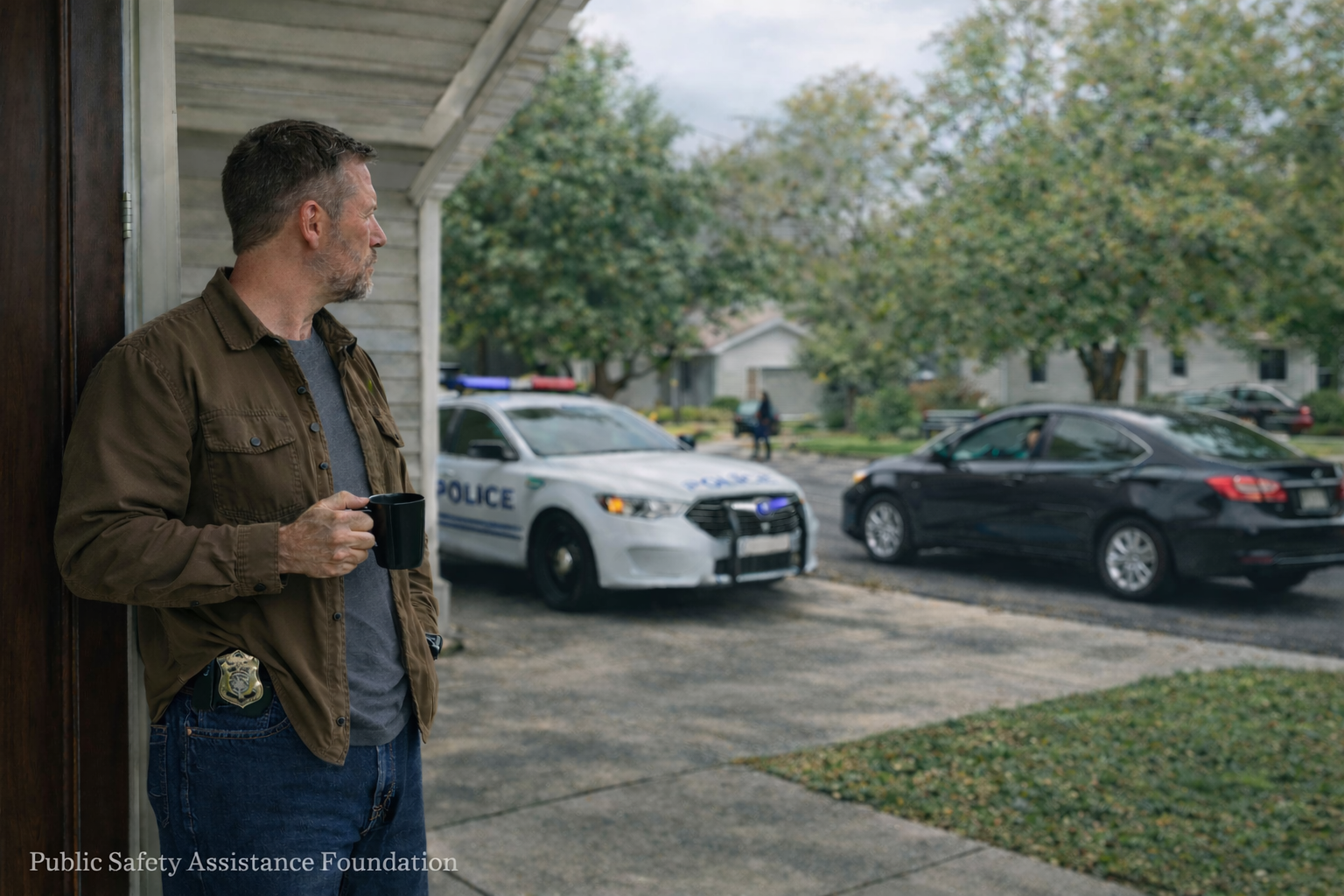
The shift ends, but your mind doesn’t always follow.
You drive home, pull into your driveway, and scan your surroundings out of habit. A passing car slows down just a little too long. A stranger walks by while glancing toward your house. Nothing is necessarily wrong, but your instincts remain active.
For law enforcement officers, vigilance is part of the job. It is what keeps you safe, aware, and prepared for the unexpected.
But what happens when that vigilance follows you home?
Recent discussions in law enforcement wellness highlight an important distinction: the difference between vigilance and hypervigilance. Vigilance is controlled awareness. It is intentional and situational. Hypervigilance, on the other hand, is when that awareness becomes constant, overwhelming, and difficult to turn off.
And for many officers, that line is becoming harder to manage.
The Weight of Always Being “On”
Vigilance is necessary in law enforcement. It allows officers to read situations, detect threats, and respond quickly.
But hypervigilance is different. It does not switch off when the uniform comes off.
It shows up as:
- Constant scanning, even in safe environments
- Heightened startle responses
- Difficulty relaxing off duty
- Increased anxiety or irritability
Over time, this state can shrink life outside of work.
Officers may find it harder to fully engage with their families, enjoy downtime, or feel present in everyday moments. Even routine activities like sitting in a restaurant, attending a child’s event, or relaxing at home can feel different when the mind remains on alert.
Prolonged hypervigilance can also contribute to fatigue, disrupted sleep, and increased stress levels. Left unchecked, it can impact both physical health and personal relationships.
The profession demands alertness. But it also requires recovery.
And that is where a critical, often overlooked factor comes into play: online privacy.
Why Turning Off Is So Difficult
There is a reason many officers struggle to decompress after a shift.
Your brain is trained to identify risk. It is conditioned through repetition and experience to recognize patterns, anticipate threats, and stay one step ahead.
But in today’s environment, the threat is no longer limited to what you can see.
It exists online.
Personal information that used to require effort to obtain is now easily searchable. Home addresses, phone numbers, family member names, and property records can appear within seconds.
This creates a new layer of awareness:
Not just “What’s happening around me?”
But “Who can find me, and how easily?”
Even when nothing is happening physically, the knowledge that your personal information is publicly accessible can keep your mind engaged. It introduces a constant “what if” factor that is difficult to ignore.
That is not paranoia. It is a reasonable response to a modern reality.
When Awareness Becomes a Burden
Training emphasizes the importance of maintaining vigilance on duty while also learning how to decompress off duty.
But decompression becomes significantly harder when exposure follows you home.
Consider this:
- You know your home address is searchable online
- You know your name is connected to your profession
- You understand how quickly information can spread
That awareness does not disappear when your shift ends.
Instead, it lingers in the background. It influences how you perceive your environment, even when there is no immediate threat.
Over time, that background awareness can become a burden. It adds to the mental load officers already carry and makes it more difficult to fully relax.
This is how hypervigilance can quietly take hold, not because of what is happening around you, but because of what could happen.
Online Exposure Extends the Job Beyond the Shift
Law enforcement officers are trained to manage risk in the field.
But digital exposure introduces a different kind of risk. It is passive, persistent, and often invisible.
Unlike a call for service, you cannot close it out.
Unlike a scene, you cannot secure it and move on.
Your information remains accessible at all hours.
That means the job does not fully end when the shift does.
And that has real consequences for mental well-being.
When exposure is constant, the mind has fewer opportunities to fully disengage. Even in safe environments, there can be an underlying sense of awareness tied to that exposure.
This is one of the less discussed contributors to ongoing stress in today’s law enforcement environment.
Privacy as a Form of Recovery
When we talk about officer wellness, the conversation often focuses on:
- Physical fitness
- Mental health resources
- Peer support
- Time off
All of these are important.
But there is another layer that deserves more attention: reducing unnecessary exposure.
Because the less exposed you are, the easier it becomes to relax.
Online privacy is not just about protection. It is about creating space.
Space to:
- Feel comfortable at home
- Disconnect from the job
- Spend time with family without underlying concern
- Mentally reset between shifts
When your personal information is harder to find, the mental load decreases. There are fewer unknowns to account for, fewer “what if” scenarios running in the background.
And that creates room for recovery.
The Goal Is Balance, Not Fear
This is not about increasing anxiety.
It is about reducing it.
The goal is not to make officers more aware of threats. That awareness already exists through training and experience.
The goal is to remove unnecessary ones.
Vigilance is part of the profession. It should remain on duty where it serves a purpose.
But hypervigilance does not have to define life off duty.
By limiting how easily personal information can be accessed online, officers can begin to draw a clearer boundary between work and home.
That boundary is not just helpful. It is essential.
A Practical Step Toward Control
Awareness is the first step. Action is the next.
Online privacy fits directly into that process.
Awareness means understanding what information about you is publicly available. Many officers are surprised by how much can be found with a simple search.
Action means taking steps to remove or reduce that exposure.
This is not about eliminating risk entirely. That is not realistic.
But it is about regaining control over what can be controlled.
And control is one of the most effective ways to reduce stress and improve peace of mind.
Why This Matters More Than Ever
Information moves quickly.
Data broker sites collect, package, and distribute personal information at scale. Once it appears online, it can spread across multiple platforms in a short amount of time.
That means exposure is not static. It grows.
For law enforcement officers, this is more than an inconvenience. It has real-world implications.
It affects how you feel at home.
It affects how your family feels.
It affects your ability to disconnect from the job.
Reducing that exposure is not just a security measure.
It is a quality-of-life decision that supports long-term wellness.
Bringing It Back to What Matters Most
Every officer understands the importance of staying alert when it matters.
But no one is meant to stay in that state indefinitely.
Recovery is not optional. It is necessary for longevity in this profession.
Online privacy supports that recovery by removing one of the most persistent and modern sources of stress.
It helps create an environment where it is easier to step out of that constant state of awareness and into something more sustainable.
Because one question matters more than most:
“Can I truly relax at home?”
Take Back Control of Your Off-Duty Time
You cannot control every risk.
But you can control how accessible your personal information is.
That is where Privacy for Cops comes in.
We help law enforcement officers identify and remove personal information from data broker sites, reducing online exposure and helping create a safer, more private off-duty environment.
Because your shift should have an end.
And your home should feel like it.