
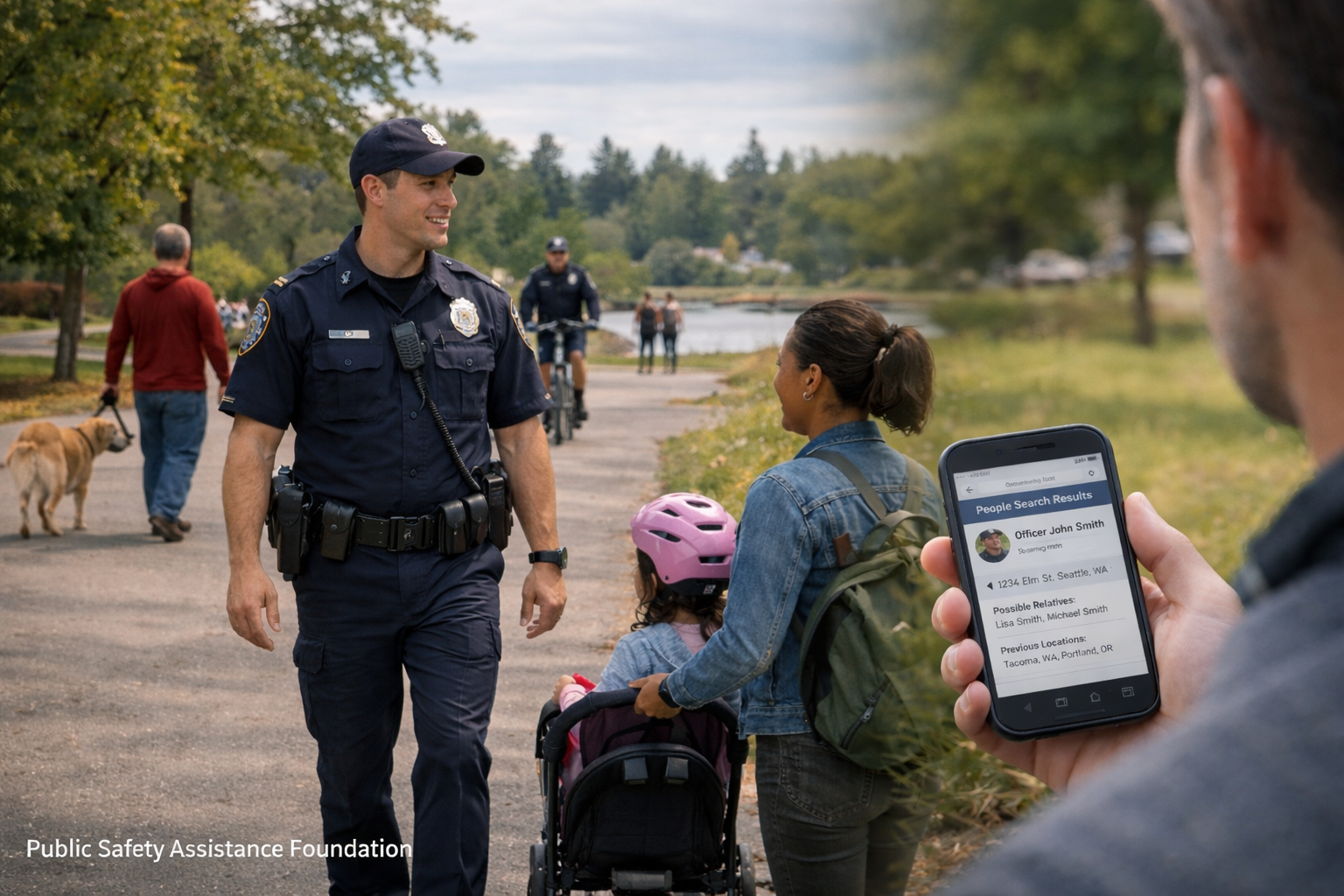
The Hidden Risk Behind Community Policing
Across the country, law enforcement agencies are returning to a familiar strategy with renewed focus: community policing.
In cities like Seattle, departments are assigning dedicated officers to specific neighborhoods, parks, and public spaces. These officers are not just responding to calls. They are walking the area, learning routines, building relationships, and identifying concerns before they escalate into incidents.
It is a shift toward proactive policing. One that emphasizes presence, trust, and prevention.
At first glance, the results are encouraging. Increased visibility has been linked to reductions in crime, improved communication with residents, and a stronger sense of safety within the community.
But there is an important question that often goes unasked:
What happens when visibility extends beyond the neighborhood?
The Return to Relationship-Based Policing
Community policing is not new, but its renewed emphasis reflects a broader understanding of what effective law enforcement looks like today.
Rather than operating as a reactive force, officers are being positioned as consistent, recognizable figures within a defined area. In practice, that means:
- Walking foot patrols instead of staying in vehicles
- Engaging directly with residents, business owners, and visitors
- Observing patterns and behaviors over time
- Addressing small issues before they grow into larger ones
This model creates familiarity. Residents begin to recognize officers. Officers begin to understand the unique dynamics of the area they serve.
That familiarity leads to trust. And trust often leads to cooperation, information sharing, and ultimately, safer communities.
It is a strategy rooted in presence. And it works.
Why Visibility Matters
There is a reason departments are investing in this approach.
When officers are visible, several things happen:
- Individuals are less likely to engage in criminal behavior
- Community members feel more comfortable reporting concerns
- Officers gain real-time awareness of developing issues
- Response times improve because officers are already nearby
Visibility becomes a form of prevention.
Instead of responding after something happens, officers are positioned to influence outcomes before they occur.
This is the essence of proactive policing.
However, visibility also creates something else that is less often discussed: recognition.
When Recognition Extends Beyond the Street
In a neighborhood setting, recognition is a benefit. It helps officers connect with the community and perform their role more effectively.
But recognition does not stay confined to a park, a street corner, or a designated patrol area.
Today, recognition can follow an officer home.
A brief interaction in a public space can quickly turn into something more:
- A name is overheard or seen on a uniform
- A quick online search is conducted
- Personal details begin to surface
Within minutes, information that has nothing to do with the officer’s role in that neighborhood can become accessible.
This is where the conversation shifts.
Because while physical visibility is controlled and intentional, digital visibility often is not.
The Digital Landscape Has No Boundaries
Unlike a patrol area, the internet does not operate within defined borders.
An officer may be assigned to a specific park or neighborhood, but their online presence exists everywhere at once.
Personal information can appear across:
- Data broker websites
- People-search platforms
- Public records databases
- Aggregated online profiles
These sites often compile and display details such as:
- Full name
- Current and previous addresses
- Phone numbers
- Known relatives
- Age and date of birth
In many cases, this information is available without the individual ever knowingly providing it to those platforms.
And unlike a physical environment, there is no patrol strategy that limits who can access it.
Visibility and Vulnerability Are Now Connected
The same visibility that strengthens community relationships can unintentionally increase exposure.
When an officer becomes a recognizable presence in a neighborhood, it becomes easier for someone to:
- Identify them by name
- Search for them online
- Connect that identity to personal information
This does not require advanced tools or technical expertise. It often starts with a simple search.
From there, information spreads quickly across multiple sites.
The result is a new kind of vulnerability. One that is not tied to where an officer is working, but to what is accessible about them online.
The Off-Duty Reality
Community policing focuses heavily on what happens during a shift.
But risk does not end when the shift does.
In many cases, exposure becomes more relevant off-duty:
- At home
- With family members
- During everyday activities like travel or errands
An officer may leave their assigned neighborhood, but their personal information does not stay behind.
If that information is publicly accessible, it can be used in ways that extend far beyond the original interaction.
This is the gap that often goes unaddressed.
Departments can assign patrol areas. They can increase visibility. They can strengthen relationships.
But they cannot control how personal data appears online or how it is accessed.
Two Sides of Proactive Safety
The concept of proactive policing is built on anticipation and prevention.
That same mindset can be applied to online privacy.
Consider the parallel:
- In the field, officers monitor their environment
- Online, information should be monitored and managed
- In the field, officers work to prevent incidents
- Online, exposure should be reduced before it becomes a problem
- In the field, visibility is strategic
- Online, visibility should be intentional and limited
Both require awareness. Both require action before something goes wrong.
Yet one side of this equation is often overlooked.
The Information You Cannot See
One of the most challenging aspects of online exposure is that it is largely invisible.
An officer can see what is happening in their assigned area. They can observe behavior, assess risk, and respond accordingly.
But they cannot easily see:
- Who is searching their name
- What information appears in those search results
- How many websites are displaying their personal details
- How often that information is being accessed
This lack of visibility creates a false sense of security.
If there is no immediate sign of a problem, it is easy to assume there is none.
But in reality, exposure can exist quietly and continuously in the background.
Why This Conversation Matters Now
As departments continue to invest in community-based strategies, the role of the officer is becoming more visible than ever.
That visibility is intentional. It is designed to build trust, improve communication, and enhance safety.
But the environment officers operate in has changed.
Information moves faster. Access is easier. And the line between public and personal has become increasingly blurred.
What used to be limited to a physical interaction can now extend into a digital footprint that is difficult to control without the right approach.
Recognizing this shift is essential.
Because effective safety today is not limited to what happens in a neighborhood. It includes what exists online as well.
Where Your Safety Strategy Needs to Expand
Community policing represents a meaningful step forward in how law enforcement agencies approach safety.
It reinforces the importance of presence, connection, and proactive engagement.
But it also highlights a new reality.
Being visible in the community should not mean being exposed everywhere else.
As strategies evolve, so should the way personal information is managed and protected.
Taking steps to reduce online exposure is not about limiting an officer’s effectiveness. It is about supporting it.
Because safety is no longer defined by geography alone.
It is shaped by what can be seen, what can be found, and what can be accessed.
Your information may already be visible, whether you realize it or not.
Visit Privacy for Cops and take the first step toward having it professionally removed and continuously monitored.
Exclusive Privacy Plans