
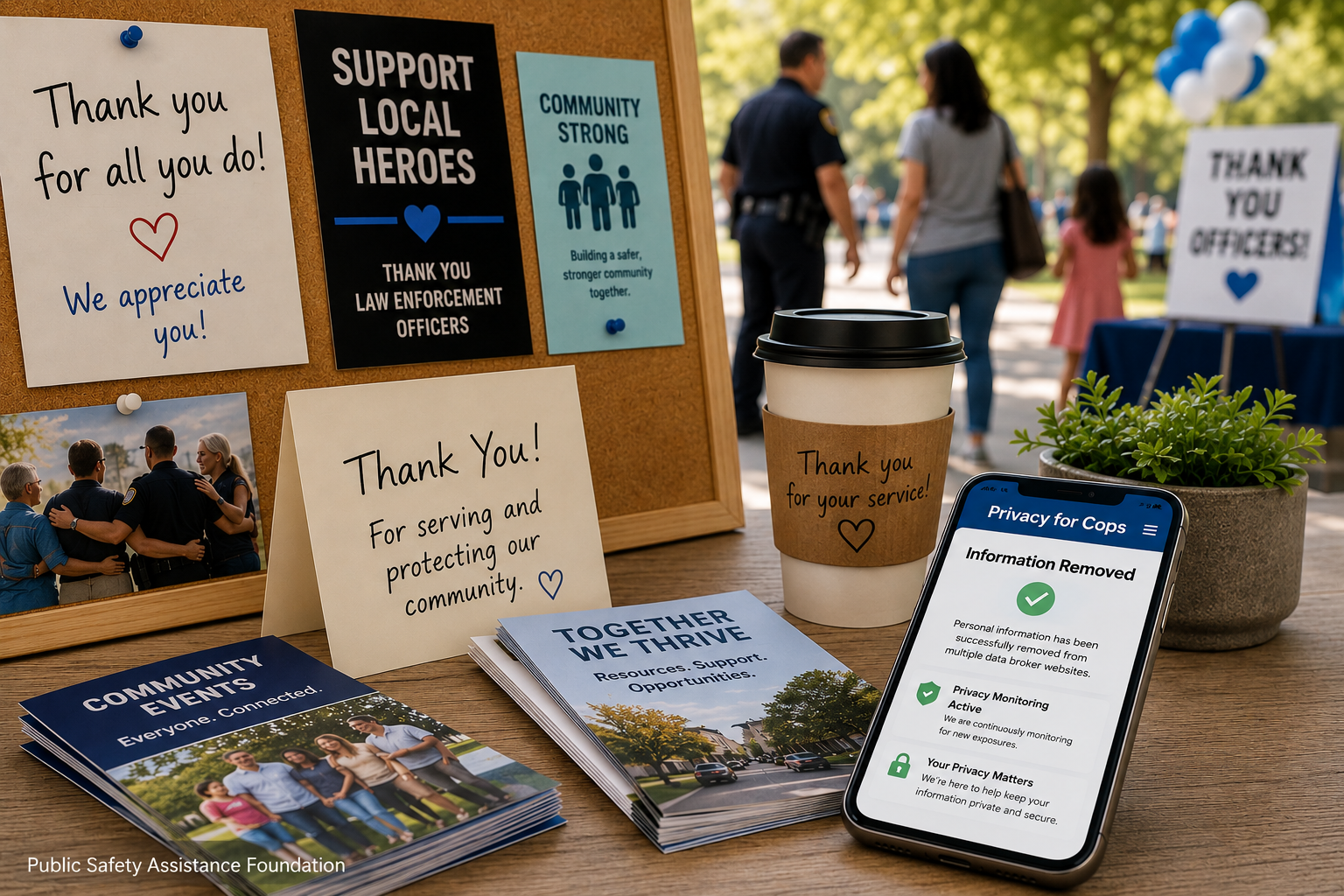
Communities across the country often ask an important question:
How can we better support law enforcement officers?
For many people, the answer immediately brings to mind public gestures of appreciation. Community events. Thank-you cards. Memorial ceremonies. Support ribbons. Positive conversations. Showing kindness during difficult interactions.
All of those things matter.
But meaningful support for law enforcement officers often goes far beyond public displays. In many cases, the strongest forms of support happen quietly through everyday actions that help officers and their families feel safer, respected, and supported both on and off duty.
Today’s law enforcement officers face challenges that extend far beyond what happens during a shift. Alongside the demands of the profession, many officers are also navigating a digital world where personal information can be widely shared, stored, and accessed online in ways most people never think about.
That is why conversations about supporting law enforcement officers should also include conversations about protecting their privacy, their families, and their personal information online.
Because supporting those who protect the community should not stop when the workday ends.
The People Behind the Profession
It can be easy to think about law enforcement officers only through the lens of the job itself. Patrol vehicles, emergency calls, investigations, and uniforms are often what people see first.
But behind every badge is a person with a life outside of work.
Many officers are parents, spouses, neighbors, volunteers, coaches, and active members of the communities they serve. They attend school functions, travel with family, shop at local businesses, and try to enjoy personal time just like everyone else.
The difference today is that technology has made it easier than ever for personal information to appear online.
Addresses, phone numbers, family connections, property records, and social media accounts can often be gathered from data broker and people-search websites within minutes. In many cases, information does not remain limited to one website. It can spread across multiple databases and continue circulating online long after it was originally posted.
For law enforcement officers, that level of exposure can create understandable concerns.
Supporting officers today includes recognizing that online privacy is no longer simply about convenience. For many families, it has become an important part of feeling secure outside of work.
Community Support Starts with Respect
Healthy communities are built on trust, professionalism, and mutual respect.
While conversations surrounding law enforcement can sometimes become emotional online, most communities still share the same goal: creating safer environments where people feel protected, heard, and respected.
One important part of that conversation is remembering that professional disagreements should never cross into someone’s personal life.
In today’s digital environment, it can be surprisingly easy for personal details to spread online through screenshots, reposts, searchable databases, and public records websites. Many people do not realize how quickly information can travel once it becomes publicly accessible online.
Supporting law enforcement officers includes respecting personal boundaries beyond the uniform.
When officers feel safer outside of work, it can positively impact wellness, morale, and long-term community relationships. Reducing unnecessary online exposure helps relieve one more layer of stress that officers and their families may otherwise carry home with them.
Support Looks Different Today
Years ago, conversations about supporting law enforcement officers primarily focused on physical safety, equipment, training, and public appreciation.
Those things still matter deeply.
But technology has changed how information moves and how quickly personal details can spread online.
A single screenshot can be copied and shared repeatedly. Public records may appear across multiple websites. Search engines can connect scattered details together into surprisingly complete profiles.
Many officers are unaware of just how much information about them may already be available online through people-search websites and data broker platforms.
Even after information is removed from one source, copies may continue appearing elsewhere through reposts, archives, or secondary databases.
That is one reason online privacy has become an increasingly important topic within the law enforcement community.
Protecting personal information online is not about hiding from the public. It is about reducing unnecessary exposure, and helping officers and their families maintain a greater sense of privacy and peace of mind.
Practical Ways Communities Can Help
People often wonder what meaningful support truly looks like.
Sometimes, it is simpler than they think.
Supporting law enforcement officers can include:
- Encouraging respectful dialogue
- Supporting officer wellness programs
- Recognizing the human side of the profession
- Avoiding the spread of personal information online
- Being thoughtful about screenshots and reposts
- Respecting family privacy
- Promoting safer online habits
- Supporting organizations focused on proactive privacy protection
Small actions can have a lasting impact.
When communities and officers work toward mutual respect and understanding, it helps strengthen trust on all sides.
The goal is not separation between law enforcement and the communities they serve.
The goal is building healthier relationships rooted in professionalism, communication, and respect.
Helping Officers Protect Their Privacy Online
One area of support that is often overlooked is helping law enforcement officers reduce unnecessary online exposure.
Today, countless websites collect and distribute personal information through searchable online databases. Addresses, phone numbers, associated relatives, and other identifying details can quickly spread across hundreds of platforms.
For officers and their families, that exposure can become overwhelming.
That is why proactive online privacy protection matters.
Professionally removing exposed information from data broker and people-search websites can help reduce visibility across many of the platforms that store and share personal data online. Ongoing monitoring also helps address new listings that may appear over time.
Online privacy protection is rarely a one-time process. Information can reappear, spread to additional websites, or remain accessible through copied records and secondary databases.
Reducing exposure over time helps officers and their families maintain greater control over their personal information online.
Supporting the Families Behind the Badge
When people think about law enforcement safety, the focus naturally centers on officers themselves.
But online exposure can affect entire families as well.
Spouses, children, and extended family members may also appear in searchable records connected to addresses, phone numbers, and public databases. Many law enforcement families have become increasingly mindful about what they share online and how personal information is displayed publicly.
Helping reduce unnecessary online exposure supports more than just individual officers. It supports the families who stand beside them every day.
That support matters.
Behind an officer is a family trying to live a normal life while balancing the realities that can come with public-facing work. Helping create safer boundaries online can provide greater peace of mind away from the job.
Supporting Those Who Serve the Community
Law enforcement officers spend their careers serving communities during difficult and unpredictable moments. They respond to emergencies, help people during crises, and work under constant public visibility.
Supporting those officers can take many forms.
Sometimes it is a simple thank-you.
Sometimes it is patience during a difficult moment.
Sometimes it is choosing not to share personal information online.
And sometimes it is helping officers and their families reduce unnecessary exposure before problems arise.
Supporting officers does not always require a public gesture. Sometimes it means helping protect their privacy, their families, and their peace of mind outside of work. That is why Privacy for Cops helps law enforcement officers and public officials reduce online exposure through professional privacy removal services and ongoing monitoring.
Because today, supporting those who protect the community also means helping protect their privacy beyond the badge.
About Us