
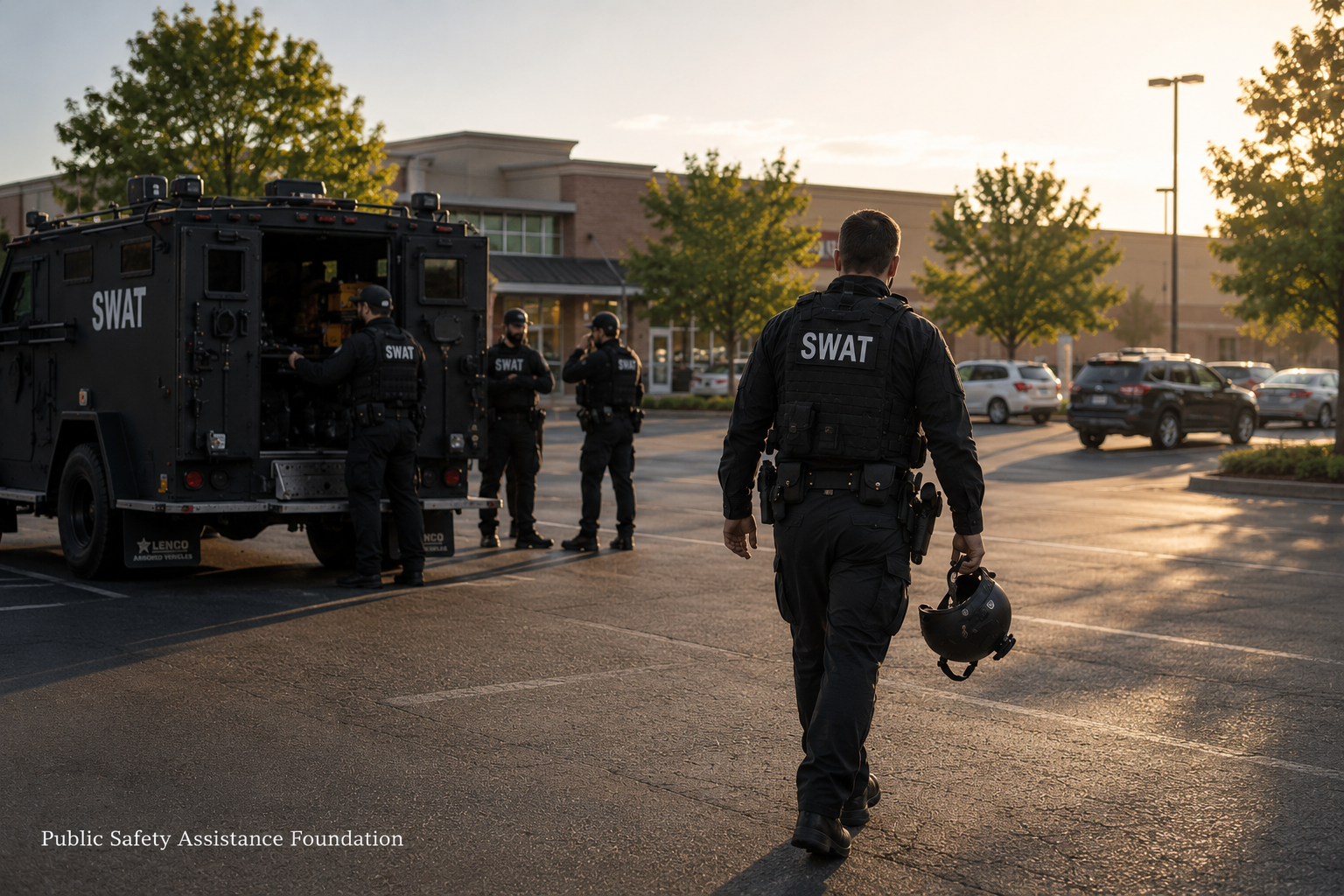
Every SWAT operation begins long before officers arrive at the scene.
Equipment is inspected. Intelligence is gathered. Roles are assigned. Contingency plans are discussed. Team members train repeatedly for situations they hope never occur but must be prepared to face. Success depends on careful preparation, coordination, and attention to detail.
That mindset is one of the defining characteristics of tactical teams. Preparation isn’t viewed as optional, it’s part of the mission.
The same philosophy can apply to online privacy.
While tactical officers dedicate countless hours to preparing for physical threats, digital exposure often develops quietly over time without attracting the same level of attention. It doesn’t happen because of a single mistake or one careless decision. More often, it grows through years of public records, archived webpages, community involvement, professional accomplishments, and countless other pieces of information that gradually become connected online.
Just as SWAT teams prepare before they’re needed, protecting personal information is most effective before a problem develops.
Preparation Is a Professional Mindset
SWAT officers understand that waiting until a crisis unfolds is rarely the best time to begin planning.
Every exercise, every briefing, and every rehearsal is built around reducing uncertainty before action becomes necessary. The goal isn’t to predict every possible outcome. It’s to be ready for whatever unfolds.
Online privacy follows a similar principle.
Many people think about protecting their personal information only after discovering their home address on a people-search website or learning that family members appear in online searches. By then, the information has often existed online for months or even years.
Preparation doesn’t eliminate every risk.
It helps reduce online exposure before someone else has the opportunity to assemble it.
Digital Exposure Rarely Begins in One Place
When people imagine online privacy risks, they often picture one website publishing sensitive information.
In reality, that’s rarely how a digital footprint develops.
Information accumulates across dozens of sources over time.
An academy graduation announcement.
A local newspaper article recognizing a community event.
A charity fundraiser.
A professional association directory.
A race registration.
A public meeting agenda.
An archived social media post.
A people-search website.
Individually, each piece may seem harmless.
Together, they begin telling a much larger story.
The internet doesn’t organize information the way people remember their lives. It organizes information by collecting, preserving, and connecting details from countless sources.
What feels like isolated moments to an individual can become a surprisingly complete profile when viewed through the lens of online search.
The Mission Ends. The Exposure Doesn’t.
One of the defining characteristics of tactical operations is that they eventually conclude.
The scene is secured.
The equipment is packed away.
Reports are completed.
Officers return home to their families.
Digital information doesn’t operate on the same timeline.
An article published years ago may still appear in search results.
An old organization directory may remain accessible long after memberships have changed.
Archived webpages often continue existing even after original websites have been updated or removed.
Public records may be copied across multiple databases.
Information shared once can continue circulating long after the original purpose has disappeared.
While a tactical assignment has a beginning and an end, a digital footprint often continues growing unless steps are taken to reduce its visibility.
High-Visibility Careers Often Leave High-Visibility Footprints
SWAT officers frequently participate in specialized training, certifications, competitions, community demonstrations, and agency events.
Many serve as instructors.
Others receive awards or recognition for exceptional service.
Some volunteer within their communities or participate in nonprofit organizations.
These accomplishments deserve recognition.
Unfortunately, they can also contribute additional pieces to an officer’s public online presence.
The concern isn’t that officers should avoid serving their communities or celebrating professional achievements.
The concern is understanding how information accumulates over time.
One event rarely creates meaningful exposure.
Years of public information from many different sources often do.
Family Information Can Become Part of the Picture
Digital footprints rarely stop with one person.
Family members naturally create their own online presence through school activities, athletics, volunteer organizations, professional careers, neighborhood groups, and social media.
None of these activities are inherently problematic.
In fact, they’re part of everyday life.
The challenge is that search engines and data brokers don’t distinguish between information gathered for completely different purposes.
Instead, they assemble connections.
Addresses become associated with names.
Relatives become connected through public databases.
Past addresses remain linked to current ones.
Pieces collected from unrelated sources begin forming a much larger picture than anyone intentionally shared.
That’s why online privacy isn’t simply about one individual.
It’s often about helping reduce information that connects entire households.
Small Details Become Larger Patterns
One of the greatest misconceptions about online privacy is that risk comes from one major disclosure.
More often, it comes from accumulation.
A neighborhood name.
A property record.
A race registration from several years ago.
An archived biography.
A volunteer recognition.
A business listing.
A family member’s public profile.
Each detail appears insignificant on its own.
Together, they create patterns.
The internet excels at recognizing patterns because it never forgets the individual pieces.
That’s why reducing online exposure isn’t about hiding from the world.
It’s about making those patterns more difficult to assemble.
Preparation Doesn’t Mean Expecting the Worst
SWAT officers don’t train because they assume every call will become a crisis.
They train because preparation increases confidence, improves decision-making, and helps reduce avoidable risks.
Online privacy deserves the same perspective.
Choosing to reduce personal information online isn’t an expression of fear.
It’s a proactive decision based on the understanding that information accumulates whether we notice it or not.
Just as tactical preparation happens before a mission begins, online privacy is most effective before personal information spreads across hundreds of searchable websites.
Waiting until information becomes widely available often makes the process far more difficult.
An Ongoing Process, Not a One-Time Task
Unlike changing a password or updating a security setting, online privacy isn’t something that’s completed once and forgotten.
People-search websites regularly refresh their databases.
New public records are published.
Archived information resurfaces.
Additional websites copy existing information from other sources.
As one listing disappears, another may appear somewhere else.
That’s why protecting online privacy isn’t simply about removing information once.
It’s about continuing to monitor what appears over time and addressing new exposure as it develops.
Just as SWAT teams continually train throughout their careers rather than relying on a single academy experience, maintaining online privacy requires ongoing attention.
Preparation Has Always Been Part of Officer Safety
Law enforcement has long recognized that preparation is one of the most effective tools available.
- Training
- Planning
- Communication
- Situational awareness
Each contributes to helping officers perform their jobs safely and effectively.
The same philosophy applies beyond the call.
Personal information doesn’t have to remain easily accessible simply because it has appeared online before. Taking proactive steps to reduce that information can make it more difficult for someone to assemble detailed personal profiles over time.
Preparation has never been about expecting the worst.
It’s about being ready before circumstances demand it.
Privacy for Cops helps reduce personal information from hundreds of people-search websites while providing ongoing monitoring as new listings appear. By making personal information more difficult to assemble over time, officers can extend the same mindset they bring to tactical preparation into another important area of personal safety. If you’d like to learn more about our privacy plans, we invite you to explore our website and discover how proactive online privacy can become part of your overall safety strategy.
Exclusive Privacy Plans