
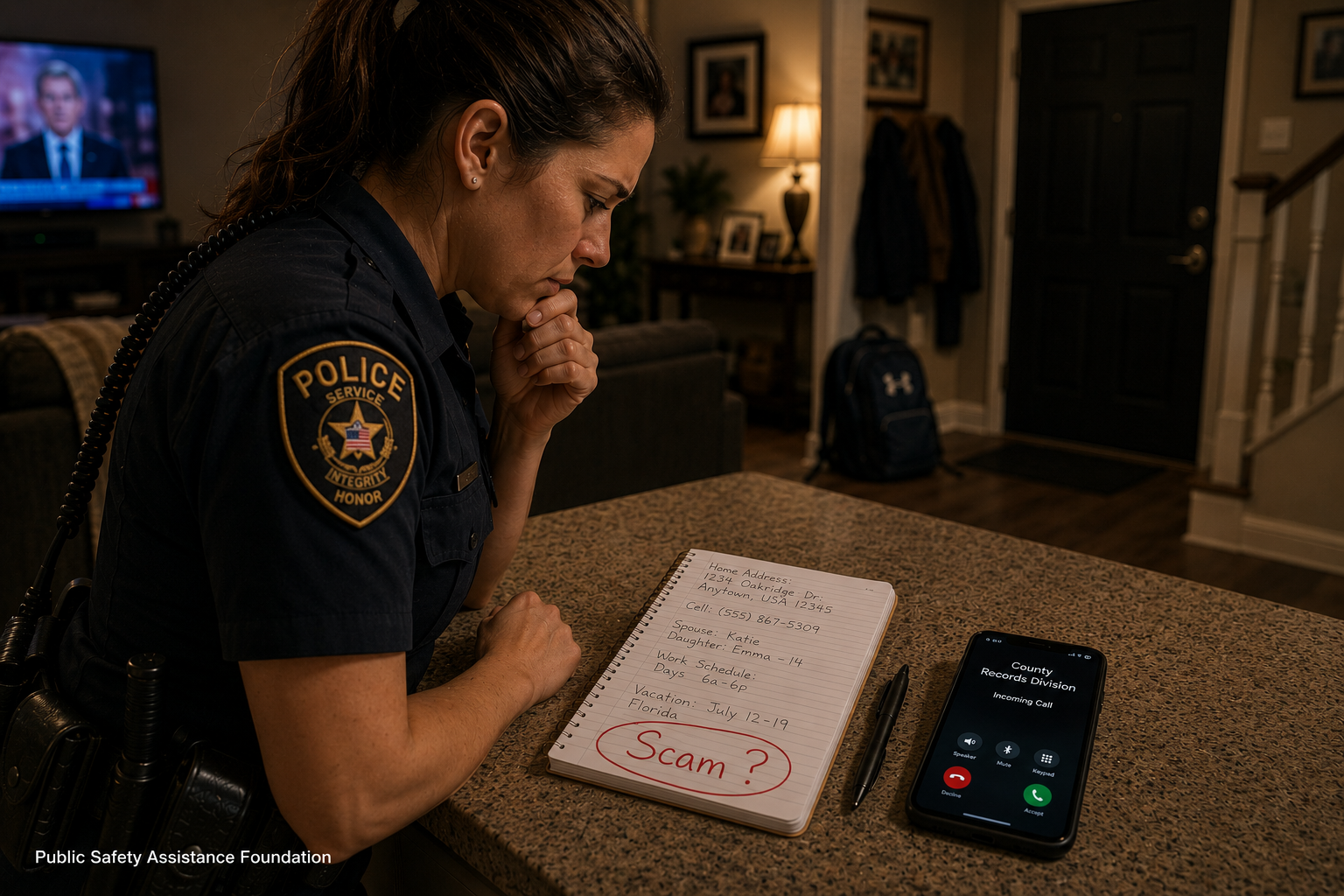
There was a time when scams were easy to spot.
Misspelled emails. Poor grammar. Obvious fake websites. Strange overseas phone numbers. Most people could recognize the warning signs almost immediately.
That is no longer the reality.
Today’s scams are becoming increasingly believable because criminals no longer rely on randomness alone. Instead, they use personal information, emotional pressure, urgency, and technology to create situations that feel legitimate.
Across the country, police departments and government agencies are warning the public about a growing wave of scams involving impersonation, threats, spoofed phone numbers, and highly convincing tactics designed to create panic before a victim has time to think clearly.
And in many cases, the difference between a scam that gets ignored and one that succeeds comes down to one thing:
How much information the scammer already knows.
That should concern everyone.
But it should especially concern law enforcement officers and public officials.
Why These Scams Feel More Real Than Ever
Modern scams are no longer built around obvious deception. They are built around credibility.
A criminal may already know:
- your full name
- your home address
- the names of relatives
- where you work
- your phone number
- vehicles connected to your household
- previous addresses
- social media activity
- professional affiliations
When someone contacts a target using information that appears accurate, the interaction immediately feels more legitimate. People naturally lower their guard when details sound familiar.
That is exactly what makes these scams dangerous.
The caller may claim to be:
- a law enforcement agency
- a court representative
- a government office
- a financial institution
- a utility company
- a delivery service
- a technical support representative
Sometimes the phone number itself appears legitimate because scammers use spoofing technology to make calls look local or official. In other situations, criminals reference personal details during the conversation to create trust and establish authority.
The goal is not always immediate financial theft. Sometimes the goal is intimidation, panic, manipulation, or gathering even more information.
And increasingly, criminals are becoming better at sounding believable.
The Psychology Behind Fear-Based Scams
Most successful scams rely on emotion before logic.
Criminals understand that when people feel stressed, embarrassed, rushed, or afraid, they are more likely to react impulsively. That is why many scams involve threats, urgency, or warnings of immediate consequences.
Victims may be told:
- a warrant has been issued
- an account has been compromised
- a family member is in trouble
- suspicious activity has been detected
- payment is required immediately
- personal information has been exposed
- legal action is pending
The pressure is intentional.
The scammer wants the target focused on solving the “problem” quickly instead of slowing down to verify whether the situation is real.
For law enforcement officers and public officials, these tactics can become even more concerning because criminals may intentionally use profession-related fears to sound convincing.
An officer may receive a call claiming to involve an internal investigation, subpoena issue, or administrative matter. A family member may receive a threatening message that references the officer’s name, agency, or work history.
Even when the information is publicly available online, hearing it repeated by a stranger can feel deeply personal.
That emotional reaction is exactly what scammers are counting on.
Public Information Has Changed the Scam Landscape
One of the biggest differences between scams today and scams from years ago is the amount of personal information now available online.
People-search websites, public databases, social media platforms, and data brokers have created an environment where criminals can often build a profile on someone before making contact.
A scam no longer starts with a random phone call.
It often starts with research.
A criminal may spend only a few minutes online gathering:
- phone numbers
- addresses
- relatives
- employment history
- property records
- email addresses
- social media photos
- usernames
- vehicle information
Small pieces of information can quickly create a much larger picture.
That information then becomes a tool.
The more details a scammer knows, the more believable the interaction becomes.
This is especially important for law enforcement officers and public officials because their professions can already place them in more visible positions. Exposure tied to employment, public records, licensing databases, campaign materials, union directories, or news coverage can unintentionally create additional layers of accessibility online.
Many people assume scams succeed only because victims are careless.
In reality, many scams succeed because the criminal sounds informed.
When Exposure Reaches the Family
One of the most overlooked parts of modern scams is how often family members become involved.
A spouse, child, parent, or relative may receive a message referencing the officer or public official by name. In some situations, criminals use family information to create fear or urgency. Even if the threat itself is false, the emotional impact can be very real.
This is where online exposure becomes more than a privacy issue.
It becomes a safety issue.
When personal information is widely accessible online, it becomes easier for bad actors to connect relationships, identify households, and target people emotionally. A scammer does not need access to classified systems or private databases to sound convincing anymore. Sometimes publicly available information alone is enough.
And because scams are increasingly designed around emotional manipulation rather than technical sophistication, even highly aware individuals can momentarily feel caught off guard.
That is what makes this problem so difficult.
The scam may not look suspicious at first.
It may look familiar.
Why Verification Matters More Than Ever
One of the best ways to disrupt a believable scam is simple:
Pause before reacting.
Scammers succeed when people feel pressured to act immediately. Slowing down creates space to verify information independently instead of relying on the claims being presented during the interaction.
That may mean:
- hanging up and calling an official number directly
- contacting a known agency independently
- verifying suspicious emails through separate channels
- refusing to provide information during unsolicited calls
- discussing unusual requests with trusted family members
- avoiding impulsive payments or disclosures
But awareness alone is no longer enough.
As scams become more sophisticated, reducing unnecessary online exposure becomes increasingly important as well. The less information criminals can easily gather online, the harder it becomes for them to create convincing narratives around a target’s life, family, workplace, or routines.
That matters.
Because credibility is often the foundation of the scam itself.
The New Reality of Online Exposure
For years, people viewed online privacy as mostly an inconvenience issue.
Today, the conversation is changing.
Exposed information can now contribute to:
- impersonation scams
- targeted harassment
- social engineering attempts
- swatting incidents
- identity-related fraud
- stalking concerns
- family intimidation
- reputation risks
The problem is not simply that information exists online.
The problem is how easily it can be connected, weaponized, and used to create believable situations.
That is why more law enforcement officers are beginning to rethink how much personal information should remain publicly accessible in the first place.
Because in today’s environment, criminals do not always need sophisticated hacking skills to create fear.
Sometimes they just need a name, a phone number, and a convincing story.
Turning the Volume Down on Exposure
The most believable scams are often the ones built on real information.
That is why reducing unnecessary online exposure matters long before a suspicious phone call or threatening message ever happens. When personal details become harder to locate across people-search websites and public databases, it becomes more difficult for criminals to build the kind of credibility these scams rely on.
Our focus is simple: make it harder for strangers online to build a profile around your life, family, and routines.
One conversation.
One spoofed phone number.
One publicly available detail repeated back at the right moment.
Sometimes that is all it takes for a scam to feel believable.
Reducing online exposure cannot stop every threat, but it can help limit the amount of information strangers can easily access, connect, and use to create fear, urgency, or emotional pressure around you and your family.
Taking steps now to reduce exposed personal information online can make it harder for scammers and bad actors to turn your information into believable threats later.
Exclusive Privacy Plans