
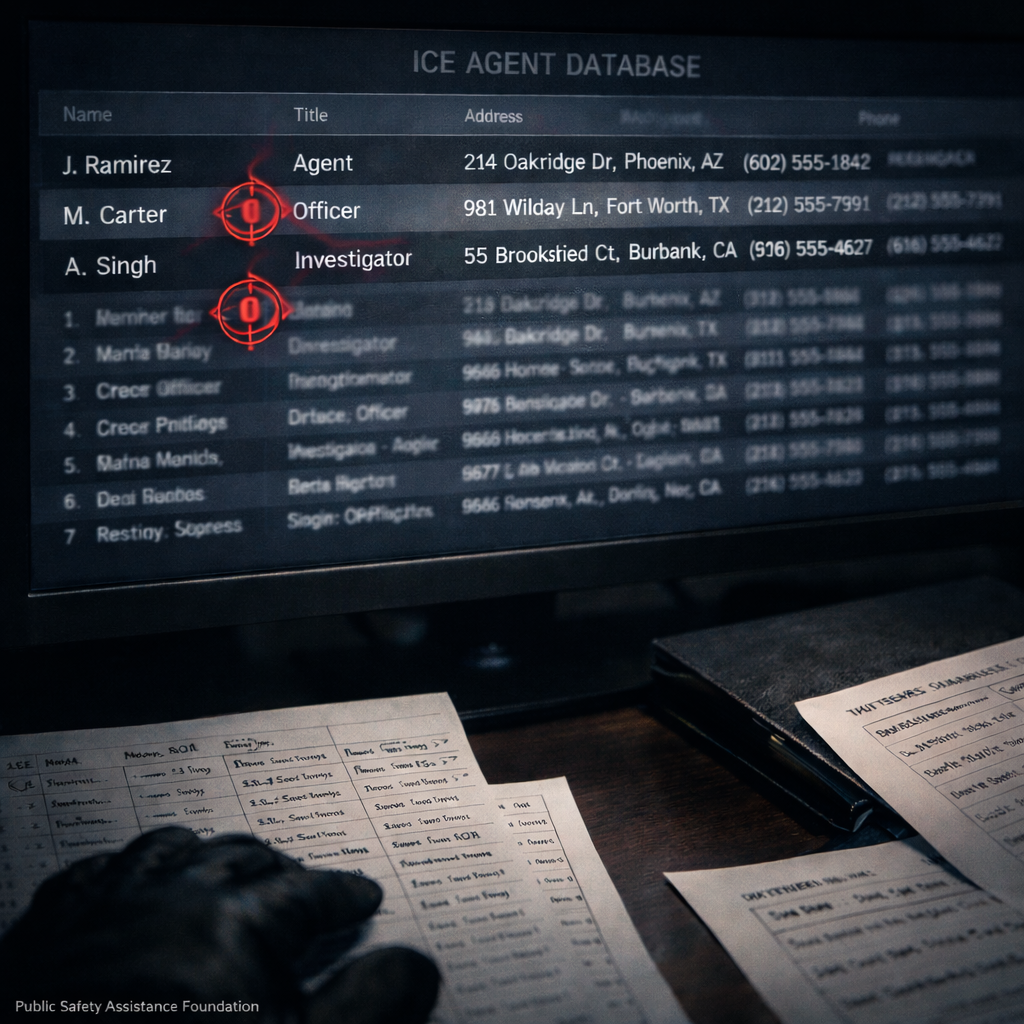
Earlier this year, a troubling report surfaced: personal information belonging to thousands of federal law enforcement personnel had been leaked online.
According to multiple reports, the identities and personal details of approximately 4,500 employees connected to the Department of Homeland Security, including Immigration and Customs Enforcement agents, were allegedly shared with a website dedicated to publishing information about immigration enforcement personnel.
The data reportedly included names, phone numbers, job titles, and other identifying information connected to frontline agents and support staff.
Whether the information came from a whistleblower, scraped public data, or internal records is still being debated. But one thing is clear: once the information appeared online, it became accessible to anyone in the world.
For law enforcement officers, this incident highlights a growing reality.
Your personal information may already be online. And in the wrong hands, it can quickly become a roadmap to your home, your family, and your daily life.
The Modern Doxxing Environment
Doxxing is not new. But it has evolved dramatically.
In the past, targeting a law enforcement officer required significant effort. Someone would need to dig through physical records, spend time researching addresses, and verify information manually.
Today, technology has changed the equation.
Entire profiles can be assembled in minutes using:
- People-search websites
- Property records databases
- Voter registration files
- Social media profiles
- Data broker marketplaces
A person with basic internet skills can now piece together information that once required investigative resources.
The alleged leak involving thousands of federal agents shows how quickly exposure can escalate. A single dataset uploaded to a website can instantly place thousands of law enforcement officers into a searchable database.
For individuals who already oppose policing or specific enforcement actions, those databases can become something far more dangerous.
They can become target lists.
Why Law Enforcement Officers Are Unique Targets
Not every profession faces the same level of risk when personal data appears online.
Law enforcement officers face several unique vulnerabilities.
First, officers regularly interact with individuals who may have strong motivations for retaliation. Arrests, investigations, and enforcement actions can create lasting resentment.
Second, officers are often identifiable in public settings. Uniforms, patrol vehicles, court appearances, and media coverage make it easier for someone to connect a name to a face.
Third, family members are frequently visible online through school activities, sports teams, and community events.
When personal data becomes public, these pieces can connect quickly.
An online name can lead to:
- A home address
- Property ownership records
- Family members’ names
- Phone numbers
- Social media accounts
Within minutes, a complete picture can emerge.
And that picture can spread rapidly through online communities.
How Exposure Happens Without a “Leak”
One of the most important lessons from incidents like this is that exposure does not always require a breach.
Often, the information already exists online.
Data broker websites collect and package personal information from thousands of public and commercial sources. These sites build profiles that may include:
- Current and previous addresses
- Phone numbers
- Relatives
- Age and date of birth
- Employment information
Many of these profiles appear automatically.
Most people never create them intentionally. Instead, the data is pulled from records such as:
- Property tax filings
- Vehicle registrations
- Business licenses
- Utility records
- Marketing databases
Once aggregated, the information becomes searchable by anyone willing to pay a small fee.
Some sites allow users to search by name. Others allow searches by address, phone number, or email.
For someone attempting to identify a law enforcement officer, these tools can drastically simplify the process.
The Viral Amplification Problem
Another risk highlighted by the ICE agent data exposure is scale.
In the past, someone might target one officer.
Today, online platforms allow information to spread to thousands or millions of people almost instantly.
Once a list of names appears online, it can be:
- Shared across social media
- Republished on new websites
- Downloaded and archived
- Distributed in online forums
Even if the original source removes the information, copies may remain.
This is why proactive privacy protection is becoming a critical part of officer safety conversations nationwide.
The goal is not simply reacting after exposure occurs.
The goal is reducing the amount of personal information available in the first place.
Real-World Consequences of Officer Doxxing
When a law enforcement officer’s personal information spreads online, the risks extend beyond inconvenience.
In documented cases across the country, doxxing has led to:
- Harassment calls to officers’ homes
- Threatening messages directed at family members
- Protesters appearing outside residences
- False emergency reports (swatting incidents)
- Online impersonation
Even when threats never materialize into physical harm, the stress placed on families can be significant.
Spouses may worry about strangers knowing where they live.
Children may be warned not to reveal their parent’s occupation.
Routine activities suddenly require additional caution.
These are not theoretical concerns.
They are realities that many law enforcement families already face.
Why Traditional Privacy Advice Falls Short
Many officers believe they are protected because they avoid social media or limit what they post online.
While those steps help, they address only a small part of the exposure problem.
Most personal data online does not come from social media.
It comes from:
- Public records databases
- Data brokers
- Marketing lists
- Background check platforms
Even individuals who rarely use the internet may still appear on dozens of data broker sites.
And each listing increases the chances that someone can locate them.
Without proactive removal efforts, those profiles can remain visible indefinitely.
The First Line of Defense: Reducing Your Digital Footprint
Protecting personal information online requires a strategy similar to other forms of officer safety.
You reduce risk wherever possible.
For online privacy, that means limiting the amount of information that can be easily found about you and your family.
Key steps include:
- Identify where your data appears
Start by searching your own name online. Look beyond the first page of results and examine people-search websites.
You may be surprised by how much information appears.
- Submit removal requests
Many data broker websites allow individuals to request the removal of their personal information.
However, each site has its own process, and new listings can reappear as databases update.
- Monitor regularly
Online data ecosystems change constantly. A removal request submitted today may need to be repeated months later.
Regular monitoring helps ensure profiles do not quietly return.
Because hundreds of data broker sites exist, managing removals individually can be time-consuming. That’s where we come in! Privacy for Cops specializes in identifying and removing personal information from these databases on an ongoing basis.
For many law enforcement officers, this approach offers the most practical long-term protection.
A Wake-Up Call for the Law Enforcement Community
The exposure of thousands of federal agents serves as a reminder that personal information security is no longer just an IT issue.
It is an officer safety issue.
While agencies can work to protect internal databases, the broader internet ecosystem remains outside their control.
Data brokers will continue collecting information.
Public records will remain searchable.
Online communities will continue sharing information.
Because of this reality, officers must think about privacy the same way they think about situational awareness.
Preparation matters.
Prevention matters.
And the earlier steps are taken, the easier it is to reduce exposure.
The Internet Does Not Forget
Once personal information appears online, removing it becomes significantly more difficult. That is why proactive protection is far more effective than reacting after exposure occurs.
Law enforcement officers should not have to wonder whether their personal information is circulating online. Yet incidents like the recent ICE data leak show how quickly personal details can become public.
Privacy for Cops helps law enforcement officers take back control of their online footprint. Our team works to identify and remove personal information from hundreds of data broker and people-search websites that make it easier for strangers to locate you and your family.