
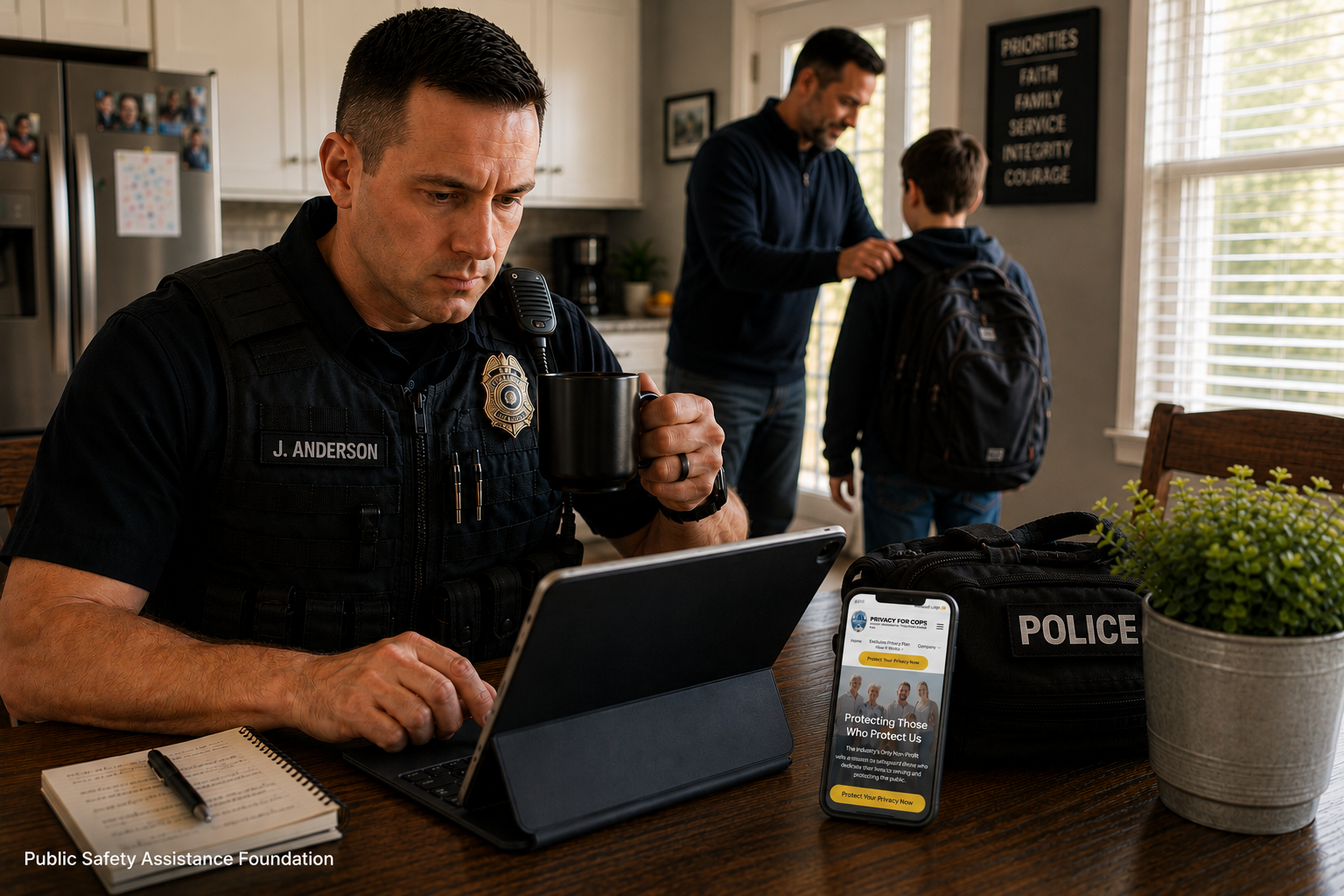
The most experienced law enforcement officers know something that often goes unnoticed outside the profession.
Good preparation rarely looks dramatic.
It happens quietly, consistently, and long before a problem appears.
- It is the officer who checks equipment before the shift starts
- The deputy who parks strategically without thinking twice about it
- The investigator who notices small details others overlook
- The supervisor who plans ahead before a major event ever begins
Preparation is part of the culture of public safety, because experience teaches an important lesson:
The best outcomes are often the result of actions taken early.
That mindset has traditionally focused on physical safety, tactical awareness, and operational readiness. But today, many law enforcement officers, federal agents, judges, prosecutors, and public officials are recognizing that preparation also needs to include something else.
Online privacy.
Not because every officer is facing an immediate threat. Not because every situation turns dangerous.
But, because preparation has always been about reducing unnecessary risk before it grows into something larger.
And increasingly, that includes digital exposure.
The Nature of the Job Has Changed
Law enforcement officers and public officials have always carried unique responsibilities. But technology has changed how easily personal information can spread online.
Years ago, maintaining separation between professional responsibilities and private life was often much simpler. Today, search engines, people-search websites, data brokers, social media platforms, and public databases can make personal details surprisingly accessible.
Home addresses, relatives, phone numbers, property records, and historical information can appear across dozens of websites without someone ever intentionally publishing that information themselves.
For many people outside public safety, this may simply feel intrusive.
For law enforcement officers and public officials, it can feel different.
The concern is not always about a specific threat.
Often, it is about awareness.
Officers understand how quickly emotions can escalate during difficult interactions.
Public officials understand that visibility sometimes attracts unwanted attention.
That does not mean living in fear.
It means recognizing that preparation still matters.
And more professionals are beginning to understand that online privacy protection is part of that preparation.
Preparation Is Not Paranoia
One of the biggest misconceptions about proactive privacy protection is the idea that only people experiencing active threats should care about online exposure.
In reality, many officers who take online privacy seriously are simply applying the same mindset they already use every day in their careers.
- They prepare early
- They think ahead
- They reduce unnecessary vulnerabilities where possible
No officer waits until after a dangerous encounter to start wearing protective equipment.
No department waits until after an emergency to create response plans.
Strong preparation has never been about assuming the worst will happen.
It is about recognizing that prevention matters.
The same principle applies online.
Reducing searchable information, monitoring exposure, and professionally removing personal data from people-search websites are proactive steps designed to strengthen privacy before larger issues develop.
That approach is becoming increasingly common among law enforcement officers and their families, because digital exposure often grows quietly over time.
And the earlier someone starts addressing it, the easier it becomes to manage.
The New Generation of Officers Understands This Differently
Many younger officers entered the profession already understanding how permanent online visibility can become.
- They grew up with social media
- They understand digital footprints
- They have seen how quickly information spreads online and how difficult it can be to fully remove once it circulates across multiple platforms
Because of that, many newer officers are approaching privacy protection earlier in their careers.
Not after a major incident.
Before one.
They are thinking differently about:
- searchable information
- family exposure
- social media visibility
- online boundaries
- long-term digital footprints
That shift represents something important.
Online privacy is no longer viewed as a niche concern reserved for special situations. It is increasingly becoming part of overall professional awareness.
And many experienced officers are beginning to adopt the same perspective as they watch how rapidly technology continues evolving.
The Goal Is Not Isolation
Taking online privacy seriously does not mean disconnecting from normal life.
It does not mean disappearing from the internet, avoiding family activities, or refusing to participate in the community.
In fact, many officers pursue privacy protection for the exact opposite reason.
They want greater peace of mind while continuing to live normally.
They want stronger boundaries between public responsibilities and private life. They want their families to feel more comfortable online. They want to reduce unnecessary exposure without constantly worrying about every search result or public database.
That is an important distinction.
Professional online privacy services are not about fear-based isolation. They are about helping officers and public officials regain a greater sense of control over their digital presence.
Because in many ways, the internet has changed the meaning of preparedness.
Today, preparation is not only about what happens on the street, in the courtroom, or during an emergency response.
It is also about understanding how personal information moves online and taking reasonable steps to manage it responsibly.
Small Steps Often Create the Biggest Long-Term Results
One reason proactive online privacy protection works well is because small actions taken early often create stronger long-term outcomes.
The internet moves quickly.
Information spreads across platforms, databases, and search engines constantly.
Once exposure grows across hundreds of sites, managing it can become much more difficult.
But when officers begin addressing those issues earlier, they often gain important advantages:
- less information spreading over time
- fewer searchable records
- reduced visibility across people-search sites
- stronger digital boundaries
- greater long-term control
These improvements may not always feel dramatic in the moment. But over months and years, they can significantly reduce unnecessary online exposure.
That is why more police officers are beginning to approach online privacy the same way they approach many other areas of preparedness.
Consistency matters.
Awareness matters.
Long-term habits matter.
Why Families Appreciate the Difference
Often, the people who notice the benefits first are family members.
Spouses frequently carry their own concerns about visibility online.
Parents think about children’s information appearing in searches.
Families become increasingly aware of how easily personal details can connect back to an officer or public official.
When proactive privacy measures begin reducing that visibility, many families describe a sense of relief.
Not because all risk disappears.
But, because preparation creates confidence.
That confidence can change how people experience everyday life:
- attending community events
- posting family photos
- participating in school activities
- traveling
- simply feeling less digitally exposed
Those improvements matter because public service careers already carry enough responsibility on their own.
Families should not have to navigate unnecessary online exposure alone.
Prepared Professionals Think Ahead
The officers who prepare before there is a problem are not overreacting.
They are applying the same professional mindset that has always helped law enforcement succeed:
- awareness
- preparation
- consistency
- long-term thinking
Online privacy protection is becoming part of that conversation because the digital world continues changing rapidly. Information spreads faster. Data becomes easier to locate. Public visibility continues increasing.
But preparation still works.
Not because it eliminates every challenge, but because it helps reduce unnecessary vulnerabilities before they grow larger over time.
And increasingly, more law enforcement officers and public officials are recognizing that online privacy deserves the same proactive attention as many other areas of personal and professional readiness.
Preparation Has Always Been Part of Protection
Privacy for Cops works with law enforcement officers who understand the value of preparing early rather than reacting later.
Our nonprofit organization professionally handles online removals and ongoing monitoring across hundreds of websites to help reduce unnecessary digital exposure over time.
Because preparation has never been about fear.
It has always been about protection, awareness, and helping the people who serve their communities feel more confident both on duty and at home.