
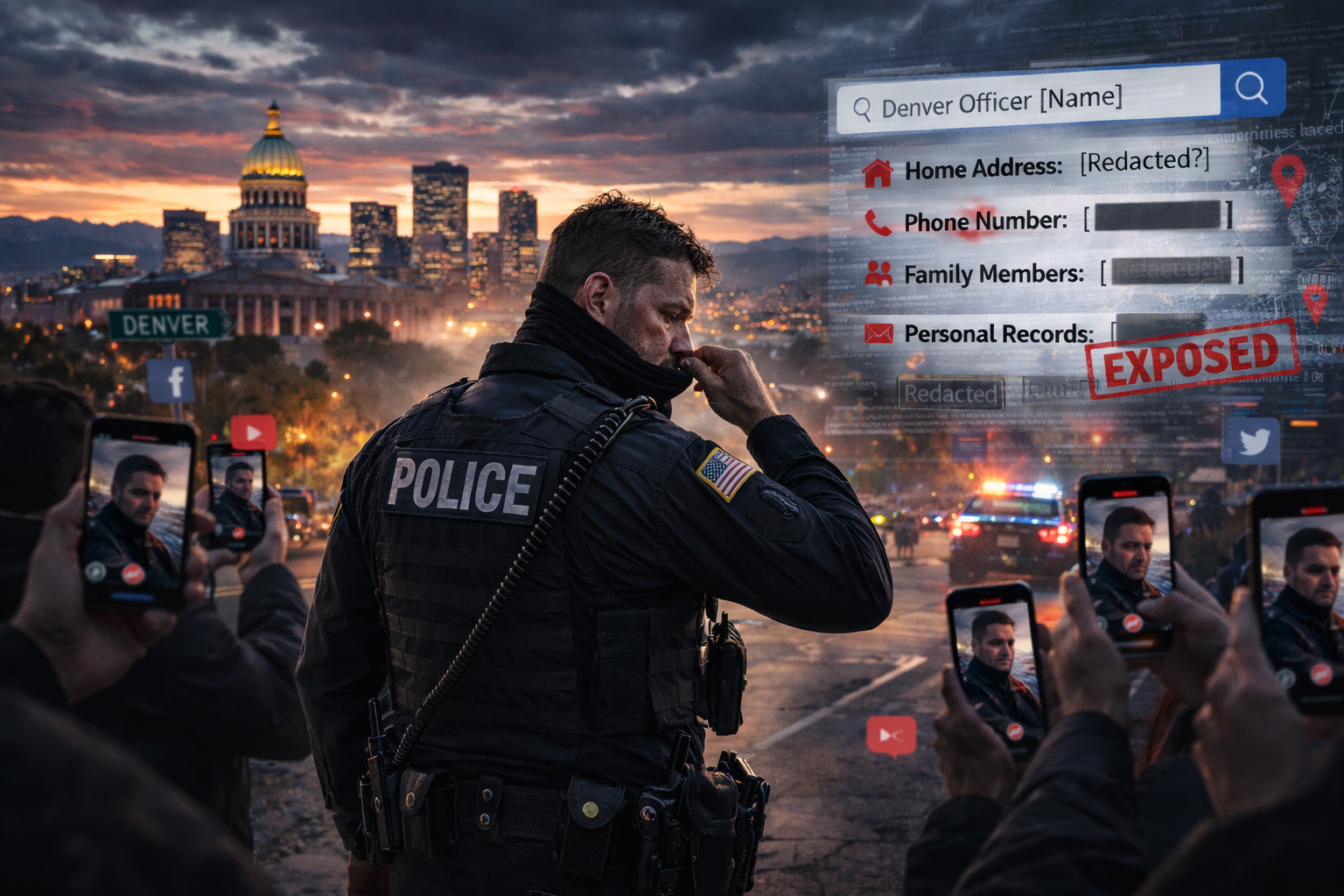
A policy debate unfolding in Denver is drawing national attention. City officials are considering restrictions that would prohibit certain law enforcement officers, including federal agents, from wearing face coverings during enforcement operations. Supporters argue that visible identification builds community trust and reinforces accountability. Critics warn that requiring officers to show their faces in volatile situations could expose them and their families to retaliation.
On the surface, this appears to be a local governance issue. In reality, it reflects a national tension that every police department, sheriff’s office, and federal agency must now confront.
How do we balance transparency with officer safety in an era where online exposure never fades?
For law enforcement officers and public officials across the country, that question is no longer theoretical. It is deeply personal.
The Core Question: Transparency or Protection?
Communities want to know who is policing them. That expectation is understandable. Visible badges, name tags, and uncovered faces have long symbolized legitimacy and public accountability.
In many routine interactions, identification strengthens trust. When a police officer responds to a neighborhood complaint or speaks with business owners, being clearly identifiable reinforces professionalism.
But today’s enforcement landscape is different than it was even ten years ago.
Body-worn cameras record interactions continuously. Bystanders film from multiple angles. Social media platforms amplify clips within minutes. News outlets publish names rapidly. Public records requests are processed quickly. Meanwhile, commercial data broker websites list home addresses, phone numbers, relatives, and property details for anyone with a searchable name.
Identification no longer ends at the scene.
It extends into search engines, mapping apps, and archived databases.
When a law enforcement officer’s name becomes public during a high-profile incident, the pathway from badge to backyard can be alarmingly short.
That is the modern tension policymakers must consider.
The Digital Ripple Effect of Public Identification
Supporters of face-covering bans argue that visible identity deters misconduct. Transparency can reinforce professionalism and discourage inappropriate behavior.
But what happens after the video circulates online?
Imagine this scenario:
An officer participates in a politically charged enforcement action. A bystander records the encounter. Within hours, footage spreads across platforms. The officer’s badge number is visible. Online communities crowdsource identification. Within a day, the officer’s name trends locally. By the end of the week, the officer’s home address is shared in online forums.
Across the country, doxxing incidents targeting police officers have increased in frequency and coordination.
Officers report:
- Home addresses shared publicly
- Spouses contacted through social media
- Children’s schools identified online
- Organized protests targeting residences
Requiring officers to remove face coverings during sensitive operations may satisfy a transparency objective. But it can also accelerate personal exposure in ways that extend far beyond the original encounter.
The issue is not whether accountability matters. It absolutely does.
The issue is whether policy discussions fully account for the digital aftershock that follows public identification.
Community Trust Requires Balance
Community trust rests on two pillars: accountability and safety.
If officers feel physically safe during enforcement but digitally vulnerable afterward, morale suffers. Recruitment suffers. Retention suffers.
Departments nationwide are already navigating staffing shortages. Many qualified candidates hesitate to enter a profession where one viral moment can make their private life searchable overnight.
Trust is not strengthened when officers feel disposable.
At the same time, communities deserve transparency from those who exercise authority. Concealed identities in certain contexts can fuel suspicion and erode confidence.
The solution is not concealment or exposure. It is balance.
Accountability at the Scene
Departments can ensure accountability through:
- Clearly displayed badge numbers
- Body-worn camera activation
- Independent oversight mechanisms
- Transparent review processes
These measures allow for traceability and professional standards without automatically expanding personal vulnerability.
Protection Beyond the Scene
What happens after identification?
Too often, departments focus on policy compliance but neglect digital safeguards. Once an officer’s name enters the public sphere, the risk multiplies if personal data is easily accessible online.
This is where leadership responsibility becomes critical.
The Overlooked Risk: Permanent Digital Exposure
Information posted online does not disappear when media coverage fades.
Court filings remain searchable. News articles remain indexed. Social posts are archived. Data broker platforms continuously scrape and republish personal details.
Years later, when a police officer transfers agencies, seeks promotion, or retires, that digital footprint remains attached to their name.
Officers involved in controversial operations may find:
- Their names permanently associated with a single incident
- Personal details resurfacing during unrelated events
- Family members encountering hostility long after the original controversy
Public accountability should not create permanent vulnerability.
If policies expand identification requirements, agencies must also expand privacy protections.
Federal Enforcement Adds Complexity
The Denver debate also highlights jurisdictional friction.
Federal agents may operate under operational guidelines that differ from local policies. Local ordinances may attempt to impose standards that conflict with federal protocols.
When agencies overlap, officers face inconsistent expectations. One directive may require face coverings for officer safety. Another may prohibit them for transparency reasons.
For the individual officer standing on a street corner, the risk is not theoretical.
It is personal.
If identification becomes mandatory, digital exposure must be addressed with equal seriousness.
Recruitment in a Searchable World
Today’s potential recruits evaluate risk differently than previous generations.
They understand that:
- Personal information is easily searchable
- Social media harassment is widespread
- Online reputation can follow a career indefinitely
When agencies cannot demonstrate meaningful privacy safeguards, candidates pay attention.
Departments working to strengthen community relationships must also demonstrate that they protect their own workforce from preventable harm.
Otherwise, transparency initiatives may unintentionally discourage recruitment.
Transparency and Privacy Can Coexist
Some frame this debate as accountability versus concealment. That framing oversimplifies a complex issue.
Transparency and privacy are not mutually exclusive.
A police officer can be accountable to supervisors, identifiable through official channels, and subject to review without having their home address circulating on commercial databases.
The real danger is unmanaged exposure.
When personal information is publicly accessible, even a well-intentioned transparency policy can trigger cascading risks.
Accountability should never extend to an officer’s front door.
Practical Leadership Steps
If identification requirements increase, agencies should act proactively.
- Require officers to enroll in privacy protection services that remove personal data from commercial broker sites. Acting before controversy occurs is critical.
- Conduct regular digital footprint audits so officers understand what is publicly searchable.
- Limit unnecessary personal details in press releases when legally permissible.
- Provide training on digital operational awareness and post-incident risk mitigation.
- Offer family preparedness guidance to address potential harassment.
These measures reinforce trust while strengthening resilience.
The Human Side of the Policy
Behind every headline is a household.
A law enforcement officer involved in a high-profile enforcement action does not leave that moment behind at the station. It follows them home in search results.
Spouses may receive hostile messages. Children may encounter classmates referencing online posts. Neighbors may draw conclusions based on incomplete narratives.
Community trust cannot thrive if officers’ families feel exposed.
Responsible governance requires anticipating these realities.
The First Step Officers Can Take Today
Regardless of how the Denver proposal evolves, one fact remains unchanged: personal information about law enforcement officers is widely accessible online.
That exposure exists whether face-covering policies change or not.
The most effective step any officer can take is to reduce their digital footprint before it becomes a vulnerability.
At Privacy for Cops, we work directly with law enforcement officers and public officials to remove home addresses, phone numbers, family associations, and other sensitive data from commercial data broker sites. We submit removal requests on your behalf and continue monitoring to prevent reappearance.
You cannot control every policy debate.
You cannot control every viral clip.
But you can control how much of your personal life is searchable.
If identification standards evolve across the country, officers who have secured their online presence will be far better positioned to navigate the risks.
Community trust and officer safety do not have to compete.
Start by protecting what matters most. Because transparency should strengthen your profession, not endanger your family.
Visit Privacy for Cops today to see what personal information about you is currently visible online, then enroll in our service to remove it before someone else finds it first.