
What San Francisco’s Violence Reduction Initiative Reveals About Online Exposure for Law Enforcement Officers
For many communities, reducing violence starts with what happens on the street.
Targeted enforcement. Focused outreach. Strategic partnerships.
These are the pillars behind programs like the San Francisco Violence Reduction Initiative (SF-VRI), a coordinated effort designed to reduce gun violence, lower recidivism, and strengthen trust between law enforcement and the communities they serve.
It’s a model that reflects a broader shift in public safety strategy. Instead of reacting after incidents occur, agencies are working to identify risks early, intervene strategically, and prevent violence before it escalates.
And in many ways, it’s working.
Programs like SF-VRI focus on individuals most at risk of being involved in violence, using a combination of enforcement, social services, and direct engagement. In some areas, these approaches have been linked to measurable reductions in shootings and violent incidents.
But while these initiatives are designed to reduce physical violence in communities, there is another layer of risk that often goes unaddressed:
The digital exposure of the officers and public officials doing this work.
Because while violence reduction may begin on the street…
Risk increasingly follows officers home.
A Closer Look at the Violence Reduction Model
Programs like SF-VRI are built on a focused and intentional approach.
Their goals are straightforward:
- Reduce gun violence
- Reduce repeat victimization and offending
- Strengthen trust between law enforcement and communities
To achieve this, agencies often:
- Identify individuals at highest risk of involvement in violence
- Conduct direct outreach and intervention
- Coordinate across law enforcement, social services, and community groups
- Review incidents regularly to prevent retaliation and escalation
This strategy is rooted in prevention.
Instead of casting a wide net, it concentrates resources where they are most needed. It recognizes patterns, prioritizes intervention, and works to interrupt cycles of violence before they continue.
It’s proactive. It’s data-informed. And it reflects how public safety continues to evolve.
But there is a parallel reality that receives far less attention.
The Overlooked Risk: Visibility Beyond the Badge
As violence reduction strategies become more targeted, so does visibility.
Officers involved in these initiatives often:
- Work closely with known offenders
- Engage directly with individuals connected to violent incidents
- Participate in ongoing intervention efforts
- Become recognizable figures within specific communities
That visibility does not stay confined to neighborhoods or patrol zones.
In today’s environment, it extends online.
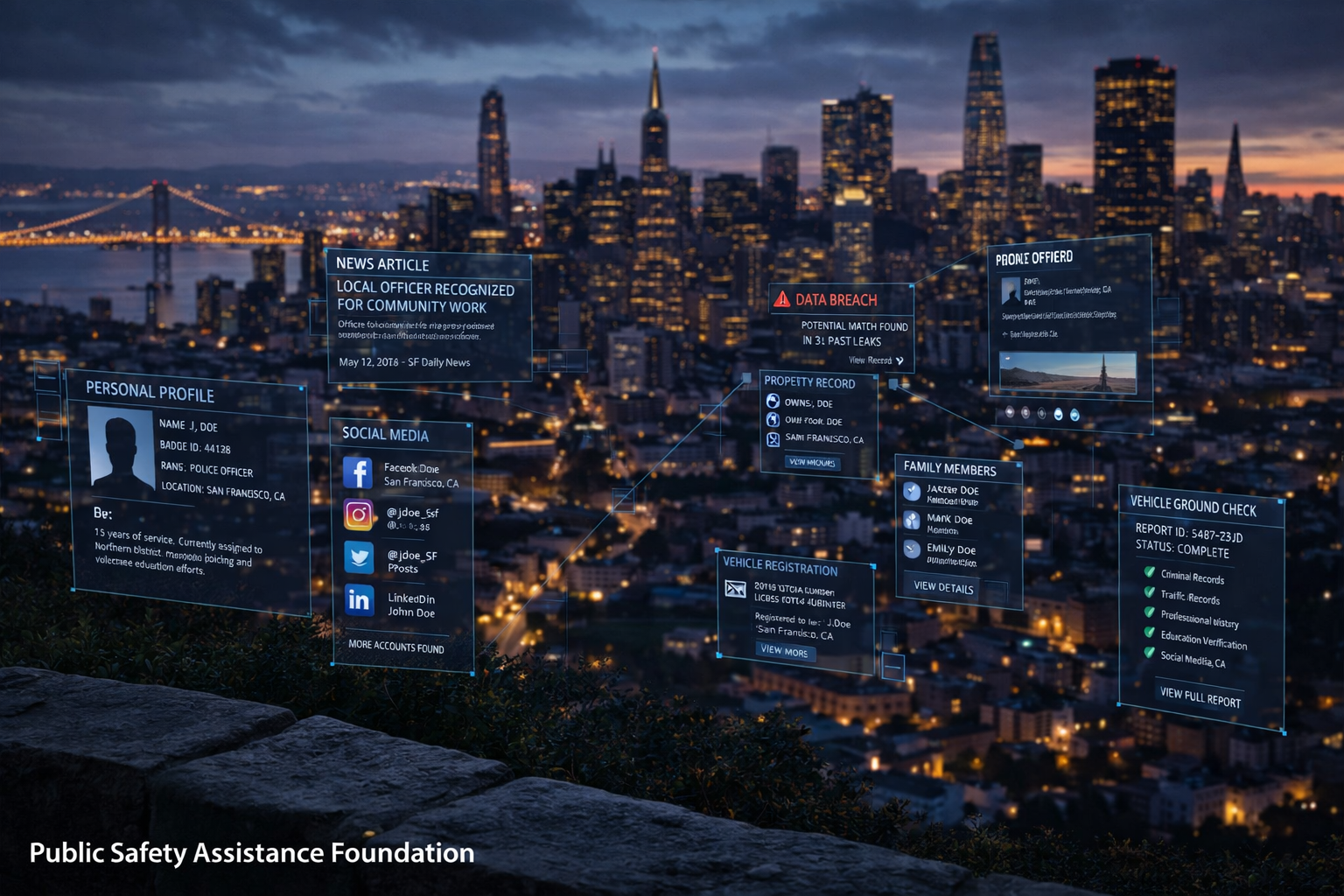
Names. Addresses. Phone numbers. Family connections.
This information can often be found in seconds through data broker and people-search websites.
And for officers working in violence reduction roles, that exposure carries real implications.
Because the same individuals who are being engaged through prevention efforts may also have access to publicly available personal information.
From Prevention to Exposure: How the Risk Evolves
Violence reduction initiatives are designed to prevent escalation.
But digital exposure can unintentionally create new vulnerabilities.
Consider how this plays out:
An officer participates in targeted outreach tied to a recent shooting.
Their name appears in public records, reports, or online discussions.
A simple search leads to a data broker listing.
Now, personal information that has nothing to do with the job becomes accessible.
This is where the nature of risk begins to shift.
It is no longer limited to professional interactions.
It becomes personal.
And once information is online, removing it becomes significantly more difficult over time.
Why Proactive Protection Matters More Than Ever
Programs like SF-VRI emphasize prevention for a reason.
Addressing risk early is far more effective than reacting after harm occurs.
The same principle applies to online privacy.
Waiting until personal information is discovered or misused is already too late.
By that point:
- Data may have been copied across multiple sites
- Information may have been archived or reshared
- Exposure may continue even after removal attempts
Proactive protection changes that equation.
It focuses on identifying and removing personal data before it becomes a problem.
It reduces the likelihood that someone can access that information in the first place.
And it helps ensure that professional responsibilities do not create unintended personal risk.
The Connection Between Public Safety Strategy and Online Privacy
There is a clear parallel between modern violence reduction efforts and online privacy protection.
Both are built on the same foundation:
Awareness + early action = reduced risk
Violence reduction initiatives:
- Identify patterns
- Focus on high-risk individuals
- Intervene before escalation
Online privacy protection:
- Identifies exposed personal data
- Targets high-risk sources (data brokers, people-search sites)
- Removes information before it can be used
In both cases, the goal is not just to respond.
It is to prevent.
And as public safety strategies continue to evolve, this connection becomes more important.
Because the reality is:
The digital environment is now part of the operational environment.
Trust, Transparency, and Personal Security
One of the core goals of SF-VRI is building trust between law enforcement and the community.
That trust is essential.
But it must be balanced with personal security.
Officers should be able to engage with communities, participate in outreach, and contribute to violence reduction efforts without increasing risk to themselves or their families.
Online exposure complicates that balance.
It creates a situation where increased visibility in the community can lead to increased accessibility online.
And without safeguards in place, that accessibility can extend far beyond what is appropriate or safe.
A Reality That Extends Beyond One City
While SF-VRI is specific to San Francisco, the broader trend is nationwide.
Cities across the country are adopting similar approaches:
- Focused deterrence strategies
- Community-based intervention programs
- Data-driven enforcement efforts
These initiatives are designed to reduce violence in meaningful ways.
But they also place officers in more direct and sustained contact with individuals connected to that violence.
Which makes digital privacy protection not just relevant, but necessary.
Because regardless of the city, the online landscape remains the same.
Personal information is widely available.
And without action, it remains exposed.
Turning Awareness Into Action
Violence reduction efforts show what is possible when proactive strategies are applied to public safety.
They demonstrate the value of early intervention, targeted focus, and coordinated action.
The same mindset can be applied to protecting personal information.
If your role involves visibility, engagement, or enforcement in today’s environment, it is worth asking a simple question:
What information about you is currently available online?
Because chances are, more than you expect is already out there.
And once it is discovered by the wrong person, the opportunity to prevent exposure has already passed.
Protect What Happens Beyond the Badge
Programs like SF-VRI are helping reduce violence where it happens.
But protection should not stop at the edge of a patrol area or jurisdiction.
It should extend to where officers and their families live, work, and spend their time.
Online privacy is part of that protection.
It is not separate from public safety. It is an extension of it.
Protective Shouldn’t Be Reactive
You already take proactive steps to protect your community. Your personal information deserves that same level of attention.
This isn’t about occasionally searching your name or hoping your information isn’t out there. It’s about having a system in place that actively removes your data, monitors for new exposure, and helps keep it from resurfacing over time.
Because once your information is found, you don’t get to control where it goes next.
Join Privacy for Cops today and put a dedicated privacy protection service to work for you, so your focus stays where it belongs, not on what’s exposed online.
Exclusive Privacy Plans