
The Line Between Speech and Safety Is Getting Clearer
A recent case out of Colorado is drawing national attention, and for good reason.
According to reporting from Police1, a woman was convicted after livestreaming outside a Denver police facility, asking viewers to locate a police commander’s home address, and then repeating that address publicly once it was found.
What followed was not just online commentary. It triggered real-world concern, including increased patrols around the officer’s home and additional security measures to protect his family.
The case is believed to be the first conviction under Colorado’s anti-doxxing law, marking a significant moment in how the legal system views the public exposure of personal information.
But beyond the legal milestone, this case highlights something much bigger.
It reflects the growing intersection between online behavior and real-world risk for law enforcement officers and public officials. It also underscores a reality that can no longer be ignored: digital exposure is no longer theoretical. It is actionable, traceable, and in some cases, criminal.
What Actually Happened and Why It Matters
The incident itself may seem straightforward on the surface, but the implications are far more complex.
During a livestream, the individual:
- Confronted a police commander
- Asked viewers to locate his home address
- Repeated that address once it was shared
- Made comments suggesting activity at the officer’s home
Supporters argued it was a form of protest.
The defense raised concerns tied to free speech protections.
However, the court and ultimately the jury, determined something critical.
There is a line between protected speech and behavior that creates a legitimate safety risk.
In this case, that line was crossed.
The officer testified that the situation raised concerns not only for his own safety, but for his family’s safety as well.
That distinction matters.
When personal information is exposed online, the impact rarely stops with the individual.
It extends to spouses, children, homes, and daily routines.
What begins as a digital action can quickly create real-world consequences.
The Bigger Issue: Information Is Already Accessible
One of the most important takeaways from this case is not how the address was shared, but how easily it was found.
The livestream did not uncover hidden or protected data. It relied on information that was already accessible online.
That is the reality in today’s digital environment.
Personal data for law enforcement officers and public officials can often be found across:
- Data broker websites
- People-search platforms
- Public records databases
- Social media accounts
- Aggregated online profiles
This is what makes online exposure particularly concerning.
The risk does not begin when someone shares your information publicly. The risk begins when that information is available to be found in the first place.
This case did not create the vulnerability. It exposed how quickly that vulnerability can be used.
From Online Exposure to Real-World Impact
Doxxing is dangerous because of how quickly it moves from digital to physical.
In the Colorado case:
- A home address was identified in real time
- It was broadcast to a public audience
- It prompted immediate safety measures
This type of escalation is becoming more common.
Across the country, there is a growing pattern where:
- Online information leads to in-person targeting
- Livestreams amplify reach instantly
- Audiences participate in real-time searches
- Situations evolve faster than agencies can respond
What makes this especially concerning is that the target is rarely just the officer.
Families become part of the risk.
Homes become points of vulnerability.
Daily routines become easier to track.
This is where the conversation shifts. It is no longer just about criticism of public officials.
It is about access to personal data that can be used in ways that create real-world consequences.
A Legal Turning Point, But Not a Complete Solution
This conviction represents an important shift.
It signals that courts are beginning to recognize the dangers of doxxing. Laws are evolving to address how personal information is used in a digital environment. There are now consequences when online actions create real-world threats.
But there is also a limitation that cannot be ignored.
Laws respond after exposure occurs. They do not prevent the exposure itself.
In this case:
- The address was already available
- It was located quickly
- It was shared instantly
The legal system stepped in, but only after the risk had already been created.
That gap is significant.
Why This Matters for Every Law Enforcement Officer
It would be easy to view this as an isolated situation involving one individual and one officer.
It is not.
This case reflects a broader shift in how information is accessed and used.
For law enforcement officers and public officials, this creates a new reality. Online privacy is now directly tied to personal and family safety.
Unlike traditional risks, digital exposure:
- Follows you off duty
- Exists at all times
- Expands continuously
The concern is not simply whether your name is available online.
It is whether your address can be found.
Whether your family members can be identified.
Whether your personal information can be connected across multiple platforms.
Whether that information can be shared in a way that draws attention to your home.
These are no longer hypothetical concerns. They are practical realities.
The Role of Anti-Doxxing Laws, And Their Limits
Colorado’s anti-doxxing law is designed to address a growing problem. It aims to protect individuals, especially those in public-facing roles, from having their personal information used in a way that creates harm or fear.
This case demonstrates that those protections can be enforced.
However, it also raises important questions that will likely continue to evolve:
- Where is the line between transparency and targeting?
- How should intent be measured in a digital environment?
- How do courts balance free speech with personal safety?
Legal challenges and continued debate are likely.
But regardless of how laws develop, one fact remains unchanged.
If personal information is accessible online, it can be found, shared, and used.
The Preventable Piece of the Problem
One of the most important aspects of this conversation is often overlooked.
Not all exposure is unavoidable.
In many cases, personal information appears online because:
- It is collected and sold by data broker websites
- It is pulled from public records
- It is aggregated across multiple platforms
- It is left unmonitored over time
This means there is an opportunity to reduce risk before it escalates.
Not by controlling what others say or do.
But by limiting what information is available to be used.
Reducing Digital Exposure Before It Becomes a Threat
Addressing online privacy is not about reacting to a single incident. It is about understanding how digital exposure builds over time.
Effective protection starts with awareness and continues with ongoing management.
1. Identifying What Is Already Public
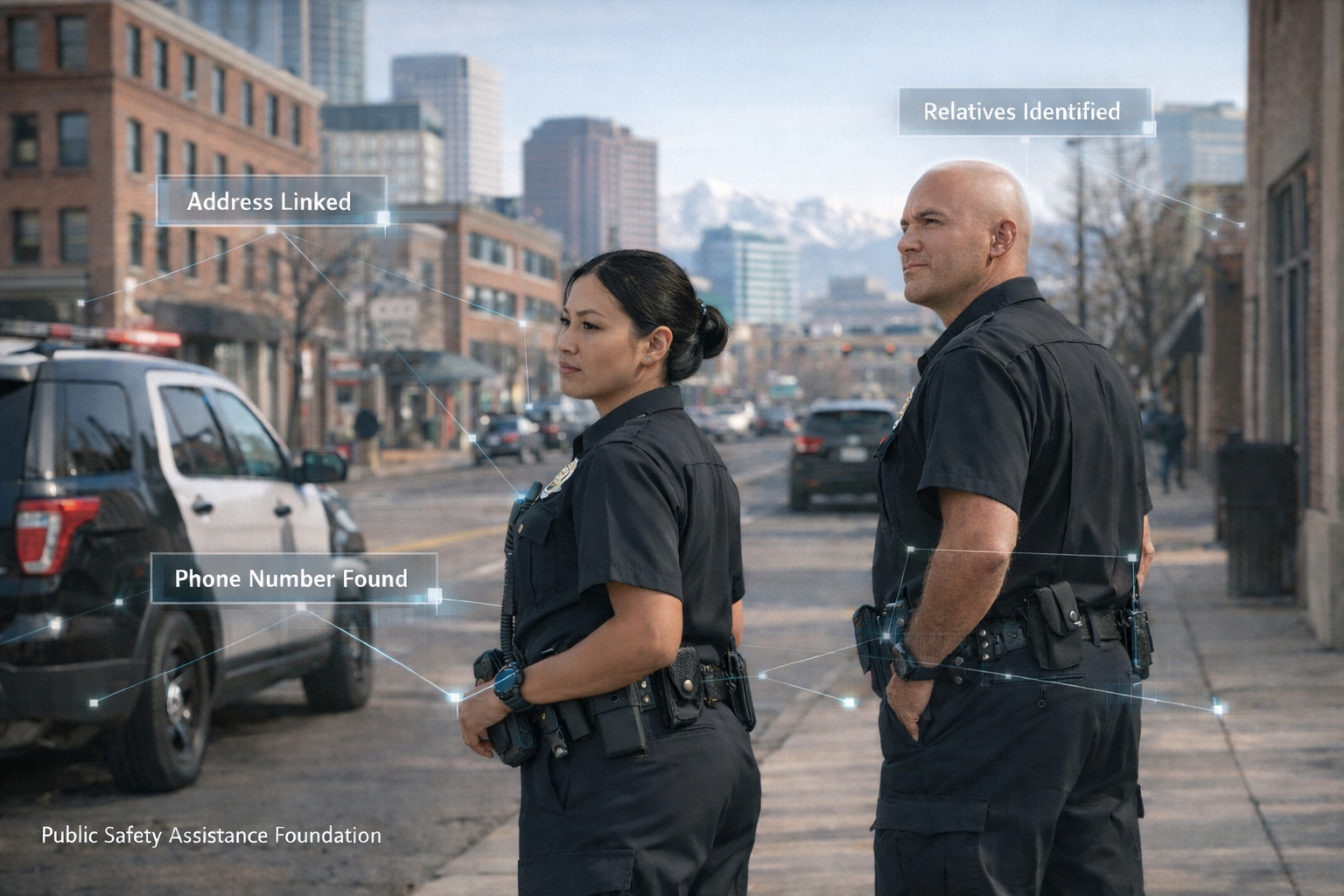
Many law enforcement officers are surprised by how much personal information is accessible online. Names, addresses, phone numbers, and relatives can often be found within minutes through simple searches.
2. Monitoring Data Broker and People-Search Sites
These platforms are among the most significant contributors to online exposure. They collect, organize, and distribute personal data at scale, making it easily accessible to anyone searching.
3. Limiting Ongoing Exposure
Social media activity, new public records, and data aggregation continue to expand an individual’s digital footprint. Without consistent monitoring, exposure grows over time.
What This Case Ultimately Reveals
The Colorado conviction is not just about one incident.
It reflects a broader shift in how online actions are viewed and how digital exposure is understood.
Courts are beginning to recognize the connection between online behavior and real-world consequences.
The risks tied to personal information are becoming more visible. The conversation around online privacy is evolving.
Most importantly, this case reinforces a critical point.
Exposure is the starting point of risk.
The livestream did not create the vulnerability. It revealed how quickly existing information can be used.
Control What Can Be Found
You cannot control who searches for your information. You cannot control how it might be used.
But you can control how much of it is available.
Privacy for Cops focuses on removing personal data from the platforms that fuel online exposure, helping reduce the visibility that makes situations like this possible.
Start by understanding what is currently tied to your name, and take steps to limit what others can access going forward.
Exclusive Privacy Plans