
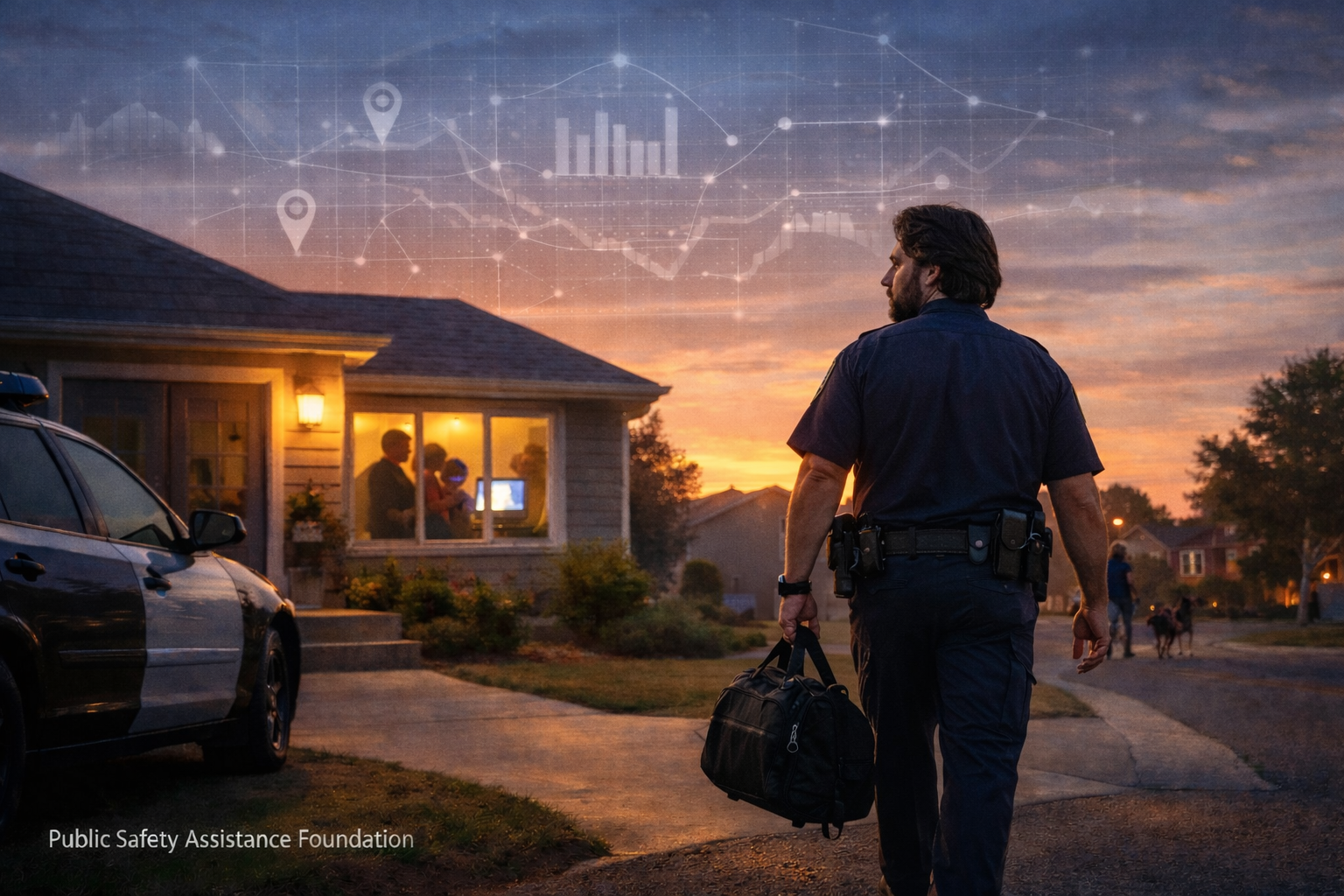
Public safety conversations often focus on response. Sirens, investigations, arrests, and courtroom outcomes are the visible parts of policing that the public sees most clearly. But the most meaningful measure of safety is often the absence of tragedy. When a serious crime does not occur, it rarely becomes a headline.
That is why a recent milestone in Lakewood, Washington stands out. For the first time in modern history, the city recorded an entire year without a homicide. Officials credited a combination of proactive patrol strategies, technology, follow-up investigations, and community cooperation for the achievement. The result was not luck. It was prevention working as intended.
Stories like this represent a broader shift in policing philosophy. Across the country, agencies are increasingly focused on stopping problems before they escalate. Prevention is safer for communities, less traumatic for families, and less dangerous for officers. It reduces harm instead of reacting to it.
Yet while departments have adopted proactive approaches to protect the public, there remains one area of officer safety that often remains reactive rather than preventative: personal digital exposure.
The Evolution of Public Safety Strategy
Modern policing has changed dramatically over the past decade. Agencies now deploy crime analysis tools, directed patrols, and focused follow-up efforts to intervene earlier in potential criminal behavior. Officers monitor patterns, build relationships, and address risk factors before violence occurs.
This shift matters because prevention lowers danger for everyone involved. Fewer violent encounters mean fewer opportunities for injury, escalation, or unintended outcomes. Officers can spend more time solving problems and less time responding to emergencies.
Prevention also improves trust. Communities notice when violence decreases. Residents feel safer. Officers encounter citizens under calmer circumstances rather than only during crises.
In many ways, modern public safety strategy is built on a simple principle: the best incident is the one that never happens.
Departments now routinely apply this thinking to patrol deployment, crime reduction initiatives, and officer training. However, the same philosophy has not always been applied to officers’ personal safety outside the patrol car.
The Overlooked Layer of Officer Safety
An officer can complete a shift safely, follow every tactical procedure correctly, and still face risk hours later at home. Increasingly, that risk originates online.
Personal information about law enforcement professionals has become widely available through public databases, aggregation websites, and archived records. Addresses, relatives, phone numbers, and historical residences can often be located within minutes using common search tools.
In past decades, off-duty safety risks typically required physical surveillance or intentional targeting. Today, exposure often begins with a search bar.
This shift changes the timeline of danger. Instead of confrontation occurring during an incident, vulnerability may exist continuously. An arrest, citation, or high-profile call can be followed by online research into the responding officer’s personal life. The officer may never know the search happened.
From a prevention perspective, this is important. If risk exists long before a threat becomes visible, then waiting to respond after harassment or intimidation occurs means the opportunity to prevent it has already passed.
Prevention Is a Mindset, Not a Location
Consider how agencies approach crime prevention. When data suggests burglaries are increasing in a neighborhood, departments increase patrol visibility and community engagement before more incidents occur. They do not wait for every home to be victimized before acting.
The same logic applies to officer exposure.
Online data availability does not always lead to harm. But when combined with anger, fixation, or grievance, it can provide a roadmap to an officer’s private life. The vast majority of citizens never misuse this information, yet prevention is not built around averages. It is built around possibility.
Modern policing already recognizes this principle in many other contexts. Officers wear protective equipment even when they hope never to need it. Agencies train for scenarios that rarely occur. Communities install lighting in areas that may never experience crime simply because the reduction in risk is worthwhile.
Digital privacy protection follows the same philosophy. It addresses vulnerability before a specific threat develops.
The Longevity of Information
One challenge unique to online exposure is permanence. Physical patrol patterns change daily. Digital records can remain accessible for years.
An officer may move to a new assignment, promote to a different role, or retire entirely while historical information about their residence remains searchable. Old addresses, family associations, and archived records often persist across multiple platforms long after they are relevant.
This longevity means exposure is not tied to a single incident. It becomes cumulative. Each year in a career adds additional data points that can be pieced together into a detailed profile.
Prevention in this environment requires ongoing maintenance rather than one-time action. Just as communities continually evaluate safety strategies, digital privacy requires periodic review and removal efforts to remain effective.
Families as Part of the Safety Equation
Officer safety discussions increasingly recognize the importance of family well-being. Support systems influence performance, wellness, and decision-making. When officers know their loved ones are secure, they can focus more fully on their responsibilities.
Online exposure can affect more than the officer. Public records and data aggregation frequently connect relatives, revealing shared addresses and personal contact information. Even when no direct threat exists, awareness of that exposure can create stress.
Preventative safety measures therefore extend beyond the individual officer. They contribute to household peace of mind. A secure home environment supports better readiness and resilience on duty.
In this way, privacy protection mirrors other safety initiatives. Departments invest in equipment, training, and wellness programs because each contributes to overall effectiveness. Personal information protection supports the same objective from a different angle.
A Natural Extension of Proactive Policing
The Lakewood milestone illustrates what happens when prevention becomes a priority. Violence decreases not because officers respond faster, but because intervention occurs earlier.
Officer privacy protection represents a comparable opportunity. It does not replace traditional safety practices. Instead, it addresses a category of risk that operates outside physical encounters.
Proactive policing strategies acknowledge that safety begins before an incident unfolds. Digital environments require the same perspective. By reducing publicly accessible personal data, officers remove pathways that could otherwise be misused.
This approach aligns closely with the broader evolution of public safety. Communities now understand that prevention is more effective than reaction. The same principle applies to personal security.
Supporting the People Behind the Badge
Every reduction in crime reflects many individual actions: careful patrol work, community relationships, investigative persistence, and professional dedication. Behind those actions are people with families, routines, and lives beyond their uniforms.
Officer safety recognizes that protection should extend beyond the shift. Addressing digital exposure acknowledges that the role of a law enforcement professional does not end when the patrol car is parked.
When agencies and officers consider safety as a continuous environment rather than a single location, prevention becomes more complete. Physical readiness, situational awareness, wellness support, and privacy protection form parts of the same goal.
Looking Forward
Public safety continues to evolve. Technology has expanded both protective capabilities and potential vulnerabilities. The same digital tools that help solve crimes also make personal information easier to locate.
The encouraging news is that the philosophy already guiding effective policing applies here as well:
Identify risk early.
Reduce opportunity.
Act before harm occurs.
Communities benefit when prevention succeeds. Officers benefit when protection is comprehensive. Families benefit when peace of mind extends beyond the workday.
The lesson from successful crime reduction efforts is clear: safety improves when we address problems before they escalate. Applying that mindset to personal privacy is simply the next stage of modern officer safety.
The safest incidents are the ones that never happen.