
Fraud has long been treated as a financial issue. It appears in audit reports, compliance reviews, and court filings. When fraud makes headlines, the focus is often on how much money was lost and who will be held accountable. While those questions matter, they no longer capture the full scope of the problem.
In recent years, fraud has evolved into something far more complex. Large-scale schemes now expose weaknesses in public systems, highlight gaps in oversight, and create downstream risks that extend beyond budgets and balance sheets. Increasingly, fraud is being discussed not only as a criminal offense, but as a concern tied to public safety and national security.
This shift in perspective matters, particularly for law enforcement officers and public officials who operate within these systems and often bear the consequences of heightened visibility when fraud occurs.
The Changing Nature of Fraud
Modern fraud is rarely simple or isolated. It often involves networks of individuals, layered transactions, falsified identities, and digital infrastructure designed to obscure accountability. These schemes may operate across jurisdictions, exploit public programs, and rely on speed and volume to overwhelm safeguards.
Technology has accelerated this evolution. Online applications, electronic payments, and digital records make it easier to scale fraud quickly. At the same time, they create permanent data trails that can persist long after a case is resolved.
As fraud schemes grow more sophisticated, their impact expands. What begins as a financial crime can quickly evolve into a broader issue affecting public trust, institutional integrity, and the safety of those responsible for enforcing the law.
Why Fraud Has National Security Implications
National security discussions have traditionally focused on physical threats, foreign adversaries, and acts of violence. However, modern security planning increasingly recognizes that systemic vulnerabilities can be exploited in less visible ways.
Fraud exposes weaknesses in how public funds are distributed, monitored, and audited. These weaknesses signal opportunities not just for financial gain, but for exploitation by organized criminal networks. Once money is diverted through fraudulent means, it becomes difficult to trace. Illicit funds can be moved, layered, or repurposed in ways that intersect with other criminal activity.
While not every fraud case is connected to broader threats, the structures that enable large-scale fraud are often the same ones exploited for more serious crimes. This is why fraud is now being discussed within the context of national security planning.
Public Sector Fraud and Increased Visibility
Fraud involving public programs brings intense scrutiny. Investigations often involve multiple agencies, audits, court proceedings, and public reporting. Transparency is essential, but it comes with side effects that are rarely discussed.
Law enforcement officers, investigators, and agency officials assigned to these cases may experience elevated visibility. Their names, roles, and professional details can appear in public documents, media coverage, and online databases. Even when information is accurate and lawfully disclosed, it can be aggregated in ways that were not possible a decade ago.
Once information enters the digital ecosystem, it is difficult to contain. Public records can be scraped, republished, and indexed by data brokers and search platforms. Over time, this can create detailed profiles that blend professional responsibilities with personal information.
The Overlooked Risk of Digital Exposure
Digital exposure is not typically part of fraud prevention discussions, yet it is one of the most persistent risks that emerges from high-profile cases. Officers and public officials may find that their involvement in major investigations follows them long after the work is complete.
This exposure can manifest in several ways:
- Personal addresses or contact details appearing online
- Family members being indirectly identified through data aggregation
- Increased risk of harassment or unwanted attention
- Long-term digital footprints tied to professional roles
These risks are not limited to leadership positions. Analysts, field investigators, and support staff may also find themselves more visible than expected.
The issue is not misconduct or error. It is the byproduct of operating in an environment where information spreads easily and remains accessible indefinitely.
How Information Lingers Long After a Case Ends
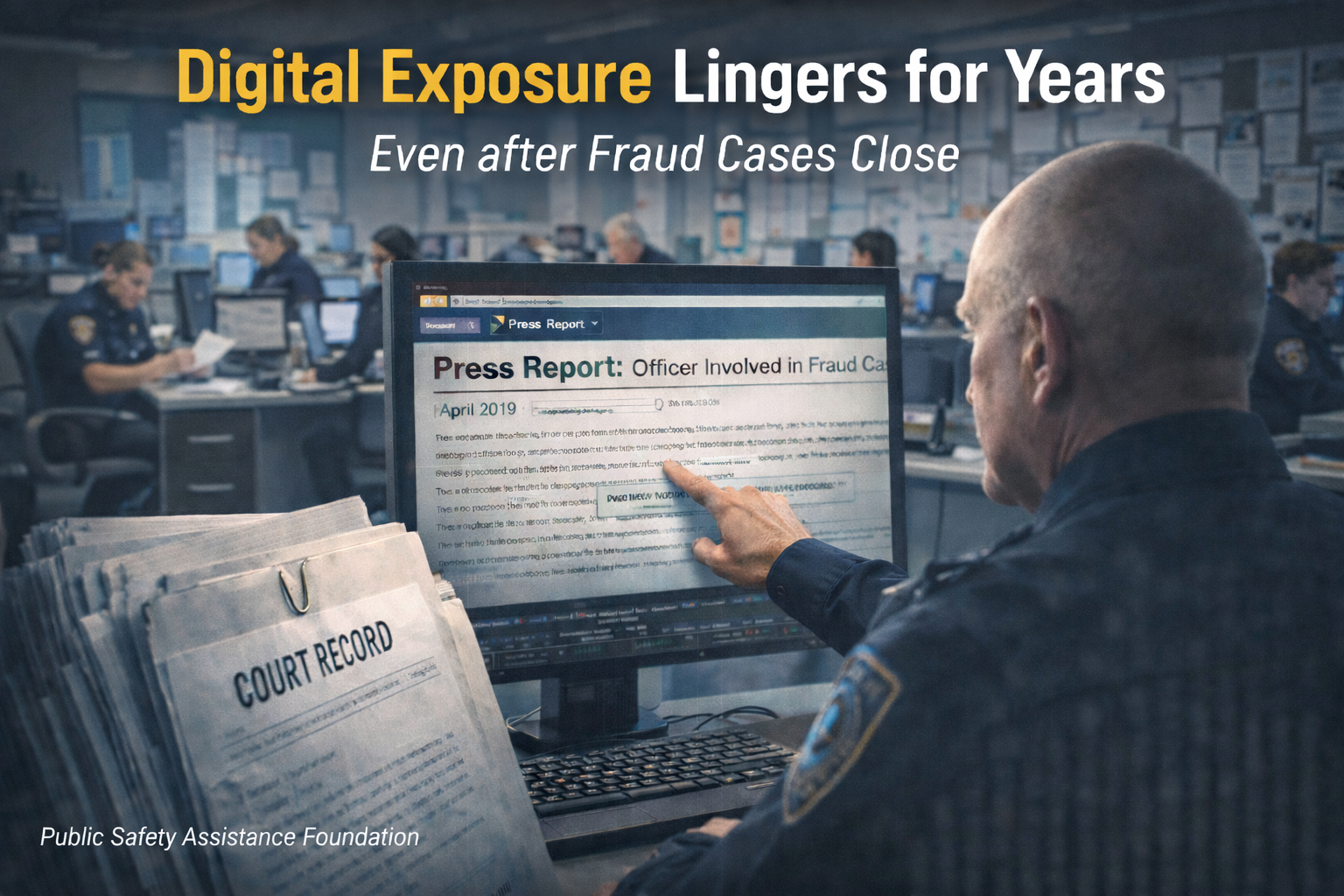
One of the least understood aspects of digital exposure is longevity. Fraud cases may close, prosecutions may conclude, and media attention may fade, but the information generated during those moments often remains searchable indefinitely. Court records, press releases, and secondary reporting can continue to surface years later, long after an officer or official has moved on to a new assignment or retired.
Unlike traditional paper records, online information is easily duplicated and redistributed. Data brokers and third-party websites routinely collect public details and repackage them in ways that make personal connections easier to identify. Over time, fragmented pieces of information can be combined to reveal patterns about where someone lives, who they are related to, or how they can be contacted.
For law enforcement officers and public officials, this persistence creates a long-term exposure challenge that extends well beyond any single investigation.
Fraud, Trust, and Institutional Strain
Fraud also affects public confidence. When large schemes come to light, communities question how systems failed and whether safeguards are sufficient. Law enforcement agencies are often tasked with restoring trust while simultaneously managing complex investigations.
This dual responsibility places additional strain on officers and agencies. It also increases the demand for transparency, which can further expand digital exposure.
Balancing accountability with safety is an ongoing challenge. While the public deserves clarity, those tasked with enforcing the law should not face unnecessary personal risk as a result of systemic failures.
Why This Matters for Officer Safety
Officer safety has traditionally focused on physical risks encountered on duty. That focus remains critical, but it is no longer complete. Modern officer safety also includes understanding how information, visibility, and online data can affect personal security.
Fraud investigations highlight this shift. As cases grow larger and more complex, the likelihood of public documentation increases. Officers involved may not have control over how or where their information appears online, yet they must live with the consequences.
Recognizing digital exposure as a legitimate safety concern allows agencies and individuals to take proactive steps. This includes monitoring online information, understanding how data brokers operate, and reducing unnecessary exposure where possible.
A Broader View of Protection
Fraud is often described as a “non-violent” crime, but its ripple effects can be significant. Financial losses weaken programs. Public trust erodes. And the people tasked with addressing these issues may face heightened visibility and risk.
Viewing fraud through a broader lens does not diminish the importance of financial recovery or prosecution. Instead, it acknowledges that modern threats are interconnected. Financial crime, digital exposure, and personal safety are no longer separate conversations.
This broader understanding is essential for agencies, policymakers, and officers navigating an increasingly complex landscape.
Preparing for the Long Term
Fraud prevention efforts continue to improve, but no system is immune. When fraud occurs, the response must extend beyond enforcement. It should also include consideration of how information is shared, stored, and accessed over time.
For law enforcement officers and public officials, preparation means being aware of digital exposure risks before they escalate. Small steps taken early can reduce long-term vulnerabilities and help protect families as well as careers.
Why Awareness Is the First Step
Awareness does not imply fear. It allows for informed decision-making. Understanding how fraud intersects with public safety and national security helps clarify why digital privacy matters in today’s environment.
As fraud schemes continue to evolve, so will the visibility of those working to stop them. Addressing that reality is part of supporting modern law enforcement.
Protecting Officers in a Changing Risk Landscape
Fraud is no longer confined to financial loss. It exposes systemic weaknesses, increases public scrutiny, and can create lasting digital footprints for those involved in enforcement and oversight.
At Privacy for Cops, we believe officer safety includes protecting personal information and reducing unnecessary online exposure. Our services are designed to support law enforcement officers and public officials as they navigate the realities of increased visibility.
See how taking steps to reduce digital exposure can help protect officers and the families who stand behind them.
Learn more about our privacy protection services and how to get started.
Exclusive Privacy Plans