
How Localized Policing Is Reshaping Privacy and Public Safety
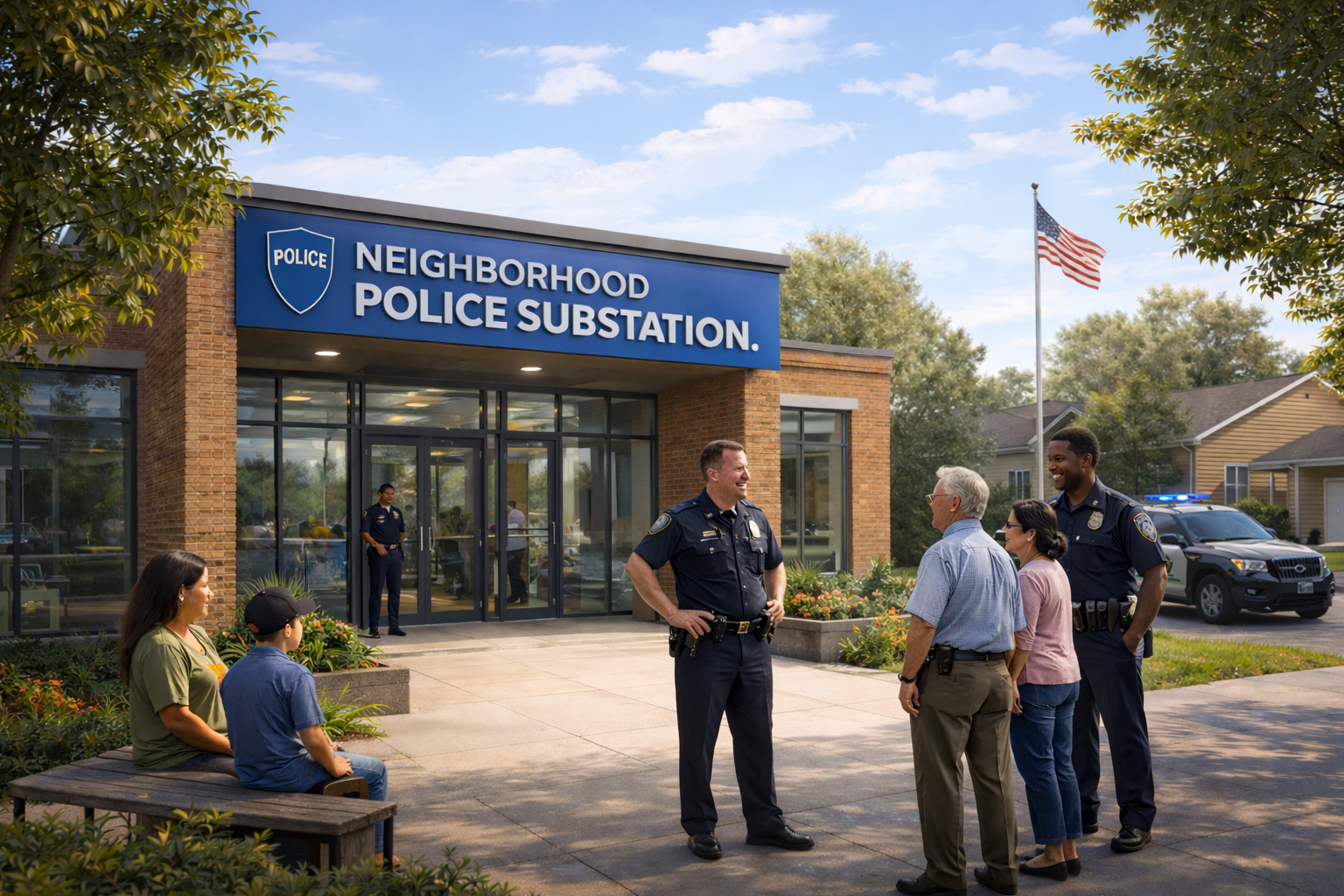
Across the country, police departments are rethinking how and where they operate. One increasingly common approach is the neighborhood substation: a small, localized police office embedded directly within a community rather than housed exclusively at a central headquarters. These substations are designed to increase visibility, improve response times, and make law enforcement more accessible to residents.
In late 2025, the Stockton Police Department opened a new neighborhood substation in the Sierra Vista area, marking the city’s first such expansion in nearly two decades. City leaders described the move as an investment in neighborhood safety, accessibility, and trust.
At face value, the concept is straightforward. When policing is closer to where people live and work, relationships can strengthen. But as public safety infrastructure moves closer to home, a deeper question emerges: how does localized policing change the privacy landscape for both communities and the officers assigned to these spaces?
That question deserves careful attention as localized policing continues to expand nationwide.
What Neighborhood Substations Are Intended to Accomplish
Neighborhood substations typically function as satellite offices. They may host patrol briefings, community meetings, report-taking, and neighborhood-specific problem solving. Unlike large precincts, substations are intentionally smaller and more visible. Their presence is meant to feel accessible rather than imposing.
This model reflects a broader shift toward community-oriented policing. Rather than relying exclusively on centralized enforcement, departments seek to build familiarity and trust at the neighborhood level. Substations are often introduced in areas where residents have called for increased presence, faster response times, or improved communication with law enforcement.
When implemented thoughtfully, these facilities can help officers better understand local dynamics and respond more effectively. However, the benefits of proximity come with tradeoffs that are not always discussed publicly.
Local Policing in a Digital Environment
While neighborhood substations are rooted in physical space, the data generated by policing is not. Modern law enforcement operates within an expansive digital ecosystem that includes records management systems, body-worn cameras, open data portals, and public records laws.
Officer names, assignments, and incident locations may appear in public documents within days of an interaction. Beyond official records, third-party data brokers routinely aggregate and republish personal information, including home addresses, phone numbers, and family associations. This information is often available with minimal effort.
When officers are assigned to a localized substation, patterns can become easier to identify. Predictable routines, repeated assignments, and sustained visibility within a single neighborhood can reduce anonymity in ways that were less pronounced under centralized models.
Transparency Versus Exposure
Transparency remains a cornerstone of public trust in policing. Communities have a right to understand how decisions are made and how public safety resources are deployed. Neighborhood substations can support transparency by creating spaces for dialogue, problem solving, and accountability.
However, transparency must be carefully distinguished from exposure.
Transparency refers to institutional openness. Exposure refers to personal vulnerability. When officer privacy is not adequately protected, transparency initiatives can unintentionally place individuals at risk. Families may be drawn into public scrutiny. Online harassment can escalate into real-world threats.
Effective public safety policy recognizes that transparency and privacy are not competing values. Responsible transparency requires guardrails that protect those tasked with enforcing the law.
The Officer Experience in Localized Policing
Public discussion of neighborhood substations often centers on community outcomes. Far less attention is paid to how these assignments affect the officers themselves.
Localized policing can foster pride and professional fulfillment. Officers often report stronger relationships with residents and a clearer sense of impact. At the same time, constant visibility can increase stress, scrutiny, and personal exposure.
Officers are public servants, but they are also private individuals. Their safety does not end when a shift concludes. Any policing model that brings officers closer to the community must account for how that proximity affects their personal security.
Digital Privacy as a Safety Strategy
Public safety strategies traditionally emphasize physical considerations such as staffing, patrol coverage, and response times. In today’s environment, digital privacy has become equally important.
Reducing the availability of personal information online lowers the likelihood that officers or their families will be targeted. Privacy protection helps prevent bad actors from exploiting publicly accessible data to intimidate or harass those serving in visible roles.
From this perspective, protecting officer privacy is not a peripheral concern. It is a proactive safety measure that supports the long-term success of community-based policing.
Policy Considerations for Localized Policing Models
As neighborhood substations become more common, departments and policymakers have an opportunity to be proactive rather than reactive. Decisions about where officers work should be accompanied by clear policies addressing how officer information is collected, stored, and shared. This includes reviewing public-facing databases, limiting unnecessary exposure of assignment details, and ensuring that transparency initiatives do not unintentionally reveal sensitive personal information.
Policy discussions should also account for how modern data ecosystems operate outside departmental control. Third-party data brokers, mapping tools, and social platforms often aggregate information in ways agencies never intended. Without safeguards, localized policing can make it easier for malicious actors to connect professional roles with private lives.
Departments that take privacy seriously can mitigate these risks by offering structured privacy support, regular exposure assessments, and clear guidance on managing digital footprints. Incorporating privacy considerations into operational planning sends a clear message that officer safety is not secondary to visibility. It is part of responsible governance.
Localized policing succeeds when it is sustainable. Sustainability requires protecting the people asked to serve in the most visible roles.
Planning for Expansion Without Increasing Risk
As departments consider expanding neighborhood substations, privacy planning should be integrated early rather than addressed reactively. This includes reviewing public records practices, assessing online exposure risks, and offering officers resources to manage their digital footprint.
Localized policing is likely to continue growing in 2026 and beyond. Departments that succeed will be those that recognize visibility must be paired with protection.
Public trust depends not only on access and accountability, but on ensuring that officers are not placed at unnecessary risk simply because of where they work.
When Proximity Becomes Policy
The rise of neighborhood substations reflects a broader evolution in policing. It acknowledges that public safety is most effective when it is rooted in the communities it serves. But proximity alone is not enough.
As policing moves closer to home, privacy must move to the forefront of the conversation. The challenge for agencies nationwide is clear: build trust without building risk.
A Note from Privacy for Cops
At Privacy for Cops, we believe privacy protection is a foundational element of public safety. As departments adopt more localized models like neighborhood substations, safeguarding officer privacy helps ensure these efforts strengthen communities rather than expose those who serve them.
If public safety truly starts at home, then protecting the people behind the badge must be part of the plan. Learn how proactive privacy protection supports safer neighborhoods, stronger trust, and a more sustainable future for policing.
In Closing
Neighborhood substations are reshaping how police departments engage with communities by increasing visibility and accessibility. While these localized offices can strengthen trust, they also introduce new privacy and data exposure risks for officers. Transparency and privacy are not opposing goals. Protecting officer privacy is a critical component of neighborhood safety, officer well-being, and long-term public trust. As localized policing expands, integrating privacy safeguards early will be essential.