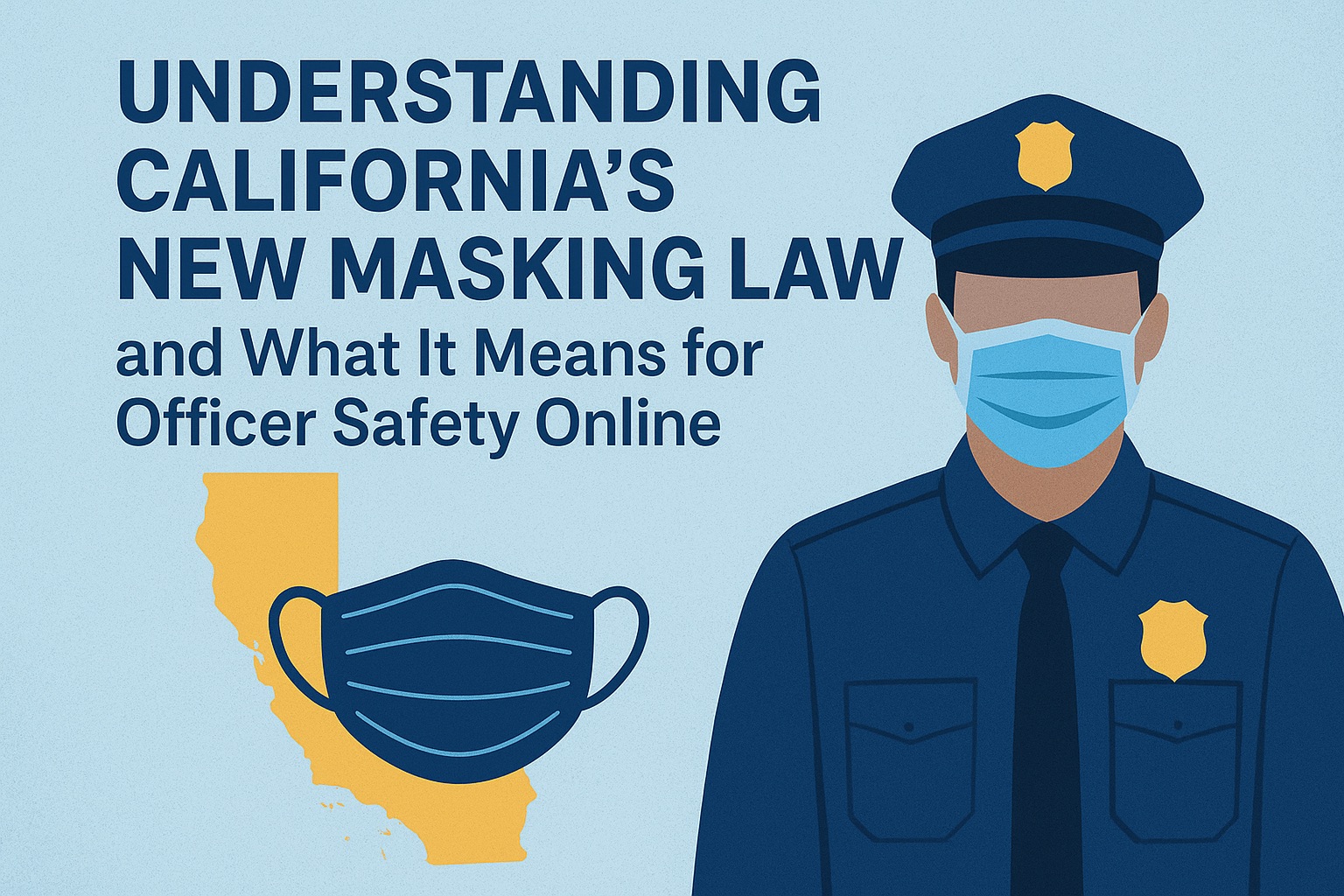
California’s recent passage of the No Secret Police Act (SB 627) has sparked major discussion within the law enforcement community. The law generally prohibits state and local officers from covering their faces while performing official duties and requires clear identification. Federal agencies, however, are not bound by this requirement and are currently challenging the law’s reach, highlighting the ongoing tension between transparency and officer safety. This legislation reflects a broader national conversation about accountability and public trust in law enforcement. While the goal is to make officers more accountable, the implications for personal privacy and security are significant. Being fully identifiable in public may increase risks not only on the streets but also in the digital world.
The Digital Threat Landscape for Officers
Regardless of where these legal debates land, one reality remains unchanged: when officers are more identifiable in public, they become more vulnerable online. Doxxing, harassment, and targeted threats continue to rise, and personal information is now easier than ever to access through data broker sites, social media, and even seemingly harmless apps. This information can include home addresses, family connections, daily routines, or other personal details. Malicious actors can combine seemingly small pieces of information to create a dangerous profile that puts officers and their families at risk.
Examples of Digital Vulnerabilities
Many apps and websites that seem harmless actually expose significant personal information: Fitness apps like Strava can reveal jogging routes, home locations, or routines. Real estate sites like Zillow or Redfin display property ownership and neighborhood data. Payment apps like Venmo can inadvertently connect transactions to real names and social circles. Even some social media platforms may allow location tagging or sharing of personal details that could be exploited. While these exposures might appear minor individually, when aggregated, they create a comprehensive map of an officer’s life that can be exploited.
Why Law Enforcement Officers Are at Higher Risk
Law enforcement officers face unique challenges when it comes to personal privacy online. Several factors contribute to this risk: Professional visibility: Being in uniform or participating in public events increases the likelihood of identification. Authority and accountability: Officers may face retaliation from individuals or groups affected by law enforcement actions. Family exposure: Threats often extend beyond officers themselves to spouses, children, or other dependents. Policy-driven visibility: Laws like SB 627 make officers more identifiable in public, increasing risk in both physical and digital spaces.
How to Stay Safe Online
At Privacy for Cops, we help law enforcement officers and public officials reduce their digital footprint and protect their families. Here are some ways to stay safe online:
1. Lock Down Non-Obvious Platforms
Apps like Venmo, Strava, Zillow, Amazon, and fitness apps often reveal home locations, routines, or other private information. Officers should review privacy settings, limit public visibility, and consider pseudonyms or private accounts where possible. Regularly auditing these apps helps prevent inadvertent exposure of personal information.
2. Use Alias Emails
Using alternate email addresses for shopping, newsletters, and app sign-ups can prevent your real identity from being linked across the web. Alias emails help compartmentalize your online presence, making it harder for malicious actors to connect multiple pieces of information back to you.
3. Secure Your Home Network
A Virtual Private Network (VPN) encrypts internet traffic and masks IP addresses, making it more difficult for hackers, advertisers, and data brokers to track your online activity. Combined with strong, unique passwords and two-factor authentication, a VPN is an essential tool for officers concerned about online privacy.
4. Red-Team Yourself
Search your own name and images to see what others can find. This helps identify exposures, such as old social media posts that reveal personal habits, property records or public documents linked to your name, and third-party data leaks or breaches. Understanding your digital footprint allows you to take targeted action and reduce risk.
5. Continuous Monitoring
Data leaks and online exposure happen constantly. Personal information that was removed months ago can reappear on new platforms or be republished by data brokers. Continuous monitoring ensures that sensitive information stays private and allows for timely removal when necessary.
Proactive Digital Privacy Is Personal Protection
As officers become more visible due to policy changes, proactive digital privacy is no longer optional — it’s personal protection. Failing to take action can have serious consequences: targeted harassment or threats online, exposure of family members and dependents, compromised home security through geolocation, and professional risk if personal information is linked to public duties. Taking a comprehensive approach to digital privacy helps officers maintain public accountability while protecting personal safety.
How Privacy for Cops Can Help
Our nonprofit organization is dedicated to helping law enforcement officers and their families reclaim control over their personal information online. We focus on identifying personal data on publicly accessible platforms and databases, submitting removal requests to data brokers and people-search websites, ongoing monitoring to prevent information from reappearing, and providing guidance on privacy best practices and online security. With these proactive measures, officers can focus on their professional responsibilities with confidence, knowing their personal information and that of their families is protected.
Taking Action
Take control of your online safety today: review your online presence and social media accounts, adjust privacy settings on apps and websites, remove personal information where possible, and monitor for reappearance of sensitive information. Every small step makes a difference in protecting your digital footprint and safeguarding your family.
Conclusion
The passage of SB 627 in California underscores a growing challenge for law enforcement officers: balancing transparency with safety. While public accountability is vital, visibility comes with new risks in the digital world. Proactive digital privacy measures are no longer optional—they are essential for personal protection, family safety, and peace of mind. By locking down apps, using alias emails, securing networks, monitoring exposure, and removing sensitive data, officers can safely navigate the modern landscape. At Privacy for Cops, we empower law enforcement officers to reclaim control over their personal information, enabling them to serve their communities without compromising their safety or that of their families.