As policing becomes increasingly politicized, protecting officer privacy is essential to maintaining legitimacy, safety, and community confidence.
Policing in a Polarized Era
Across the country, law enforcement agencies are operating in an environment unlike any they have faced before. Public expectations are higher, scrutiny is constant, and political tensions increasingly shape how policing is perceived and discussed. A recent commentary published by a retired police lieutenant argues that when policing becomes political, public safety suffers, not because officers abandon their mission, but because trust between police and the communities they serve begins to erode. That erosion has consequences that extend far beyond public debate or media narratives. It affects officer safety, community cooperation, and the effectiveness of policing itself.
Policing has always required a delicate balance between authority and legitimacy. Officers are granted significant responsibility and discretion, but that authority depends on public confidence that policing decisions are driven by law, professionalism, and community needs rather than political agendas. When law enforcement is pulled into partisan conflicts or becomes a symbol of broader political battles, officers on the street are left to absorb the consequences of decisions made far above their pay grade.
When Politics Overshadows Public Safety
The commentary highlights how political interventions, particularly those imposed without local consent or coordination, can undermine community-based policing efforts. When law enforcement is perceived as an extension of political power rather than a neutral protector of public safety, trust weakens. Residents may become less willing to cooperate, report crimes, or engage positively with officers. In turn, officers face greater hostility, skepticism, and resistance in their daily work.
This dynamic creates a lose-lose situation. Communities feel unheard or over-policed, while officers feel unsupported and exposed. The result is a widening gap between law enforcement and the public, precisely at a time when cooperation is most needed. What often goes unacknowledged is that politicization does not end at public perception. It seeps into officers’ personal lives as well, especially in a digital age where personal information is easily accessible.
The Human Cost of Public Distrust
 Behind every uniform is a person with a family, a home, and a life outside of work. When policing becomes politicized, individual officers often become targets of anger that has little to do with their own actions. Social media amplifies this effect, turning individual officers into symbols of broader political grievances.
In this climate, doxxing, harassment, and online intimidation are no longer rare occurrences. Officers have seen their home addresses posted online, their families targeted, and their private lives scrutinized by strangers. This is not accountability. It is exposure, and it places officers and their loved ones at risk.
Public trust is not only about how communities view police. It is also about whether officers can trust that they will be protected from retaliation simply for doing their jobs. When that trust breaks down, morale suffers, recruitment declines, and experienced officers leave the profession altogether.
Digital Exposure as a Hidden Threat to Legitimacy
One of the most overlooked aspects of modern policing is how digital exposure intersects with politicization. Data broker websites, people-search platforms, and social media networks routinely publish personal information without consent. Names, addresses, phone numbers, family connections, and even maps to residences are available with minimal effort.
When political tensions run high, this information becomes a tool. It allows critics, extremists, or agitators to move from abstract criticism to personal targeting. An officer who is perceived as representing a political stance, even unfairly, can quickly become the focus of harassment or threats. This exposure undermines not only safety but also legitimacy. Officers who fear for their families may limit engagement, avoid proactive policing, or withdraw from community activities, all of which weaken public trust further.
Community Trust Requires Officer Security
Effective policing depends on visibility, approachability, and engagement. Officers who feel secure are better able to build relationships, de-escalate conflicts, and serve as problem-solvers within their communities. Conversely, officers who feel exposed or targeted are forced into a defensive posture, not by choice, but by necessity.
Privacy protection is therefore not a personal luxury. It is a public safety issue. When officers can separate their professional role from their private lives, they are better positioned to act impartially and confidently. Protecting personal data helps ensure that disagreements over policy or politics do not spill over into threats against individual officers or their families.
The Role of Privacy for Cops
Privacy for Cops was created to address this growing vulnerability. Founded and operated by law enforcement officers, the organization understands that the risks officers face today extend beyond the streets and into the digital world. Since 2008, Privacy for Cops has worked to help sworn officers, public officials, and their families, remove personal information from online databases that expose them to harm.
The organization focuses on identifying where personal data appears online, submitting opt-out and removal requests to data broker sites, and monitoring to ensure information does not reappear. This work is grounded in existing state privacy laws and carried out with secure processes designed to protect sensitive information. For officers already navigating complex professional challenges, Privacy for Cops provides a practical way to reduce digital exposure without sacrificing transparency or accountability.
Privacy as a Foundation for Professional Neutrality
One of the key arguments in the commentary is that policing must remain rooted in service rather than politics. Privacy protection supports that goal. When officers are shielded from personal targeting, they are less likely to be drawn into political disputes that distract from their mission. They can engage with the public as professionals rather than as individuals whose private lives are open for scrutiny.
This separation reinforces the idea that policing is about upholding the law and serving communities, not advancing political agendas. It also helps restore balance in an era where officers are often expected to navigate political controversies that have little to do with their day-to-day responsibilities.
Strengthening Trust from Both Sides
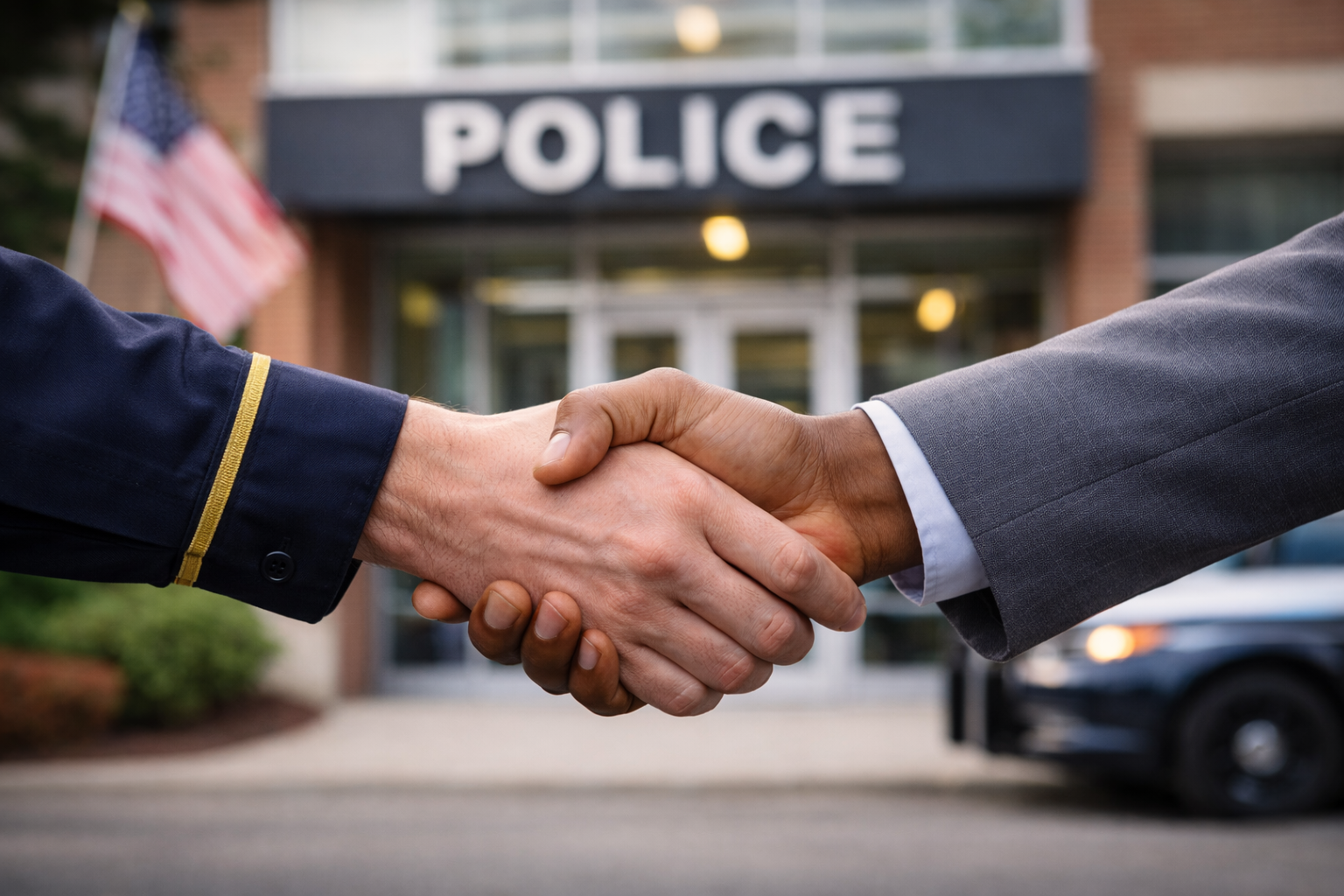
Trust is reciprocal. Communities need confidence that officers will act fairly and lawfully. Officers need assurance that they will not be personally endangered for fulfilling their duties. Privacy protection supports both sides of this equation. It reduces opportunities for harassment and intimidation while allowing officers to remain visible and engaged in their communities.
By addressing digital exposure proactively, organizations like ours help create conditions where constructive dialogue is possible. Officers can participate in community initiatives without fear that their personal information will be weaponized. Residents can interact with police knowing that the focus remains on public safety rather than personal conflict.
Looking Ahead: Policing Beyond Politics
The challenges facing law enforcement today are complex and deeply intertwined with broader social and political forces. While officers cannot control national debates or policy decisions, they can take steps to protect themselves and their families. Privacy protection is one of the most effective and often overlooked tools available.
As policing continues to evolve, maintaining public trust will require more than policy reforms or public statements. It will require practical measures that acknowledge the realities of the digital age. Protecting officer privacy is one such measure, and it plays a critical role in preserving the legitimacy and effectiveness of law enforcement.
Protect the People Behind the Badge
If you are a sworn law enforcement officer or public official, consider how exposed your personal information may be. Are your home address, phone number, or family details publicly available online? In a polarized environment, that exposure carries real risks.
Privacy for Cops exists to help you reduce those risks. As a nonprofit organization dedicated to protecting those who serve, we offer tools and support to help officers reclaim control over their personal data. Taking action to protect your privacy is not about disengaging from the public. It is about ensuring that you can continue to serve with confidence, professionalism, and safety.
Visit our site to learn more about eligibility, services, and how to begin protecting your personal information. In a time when trust is fragile and exposure is constant, safeguarding privacy is an essential step toward strengthening both officer safety and community confidence.
How it Works