
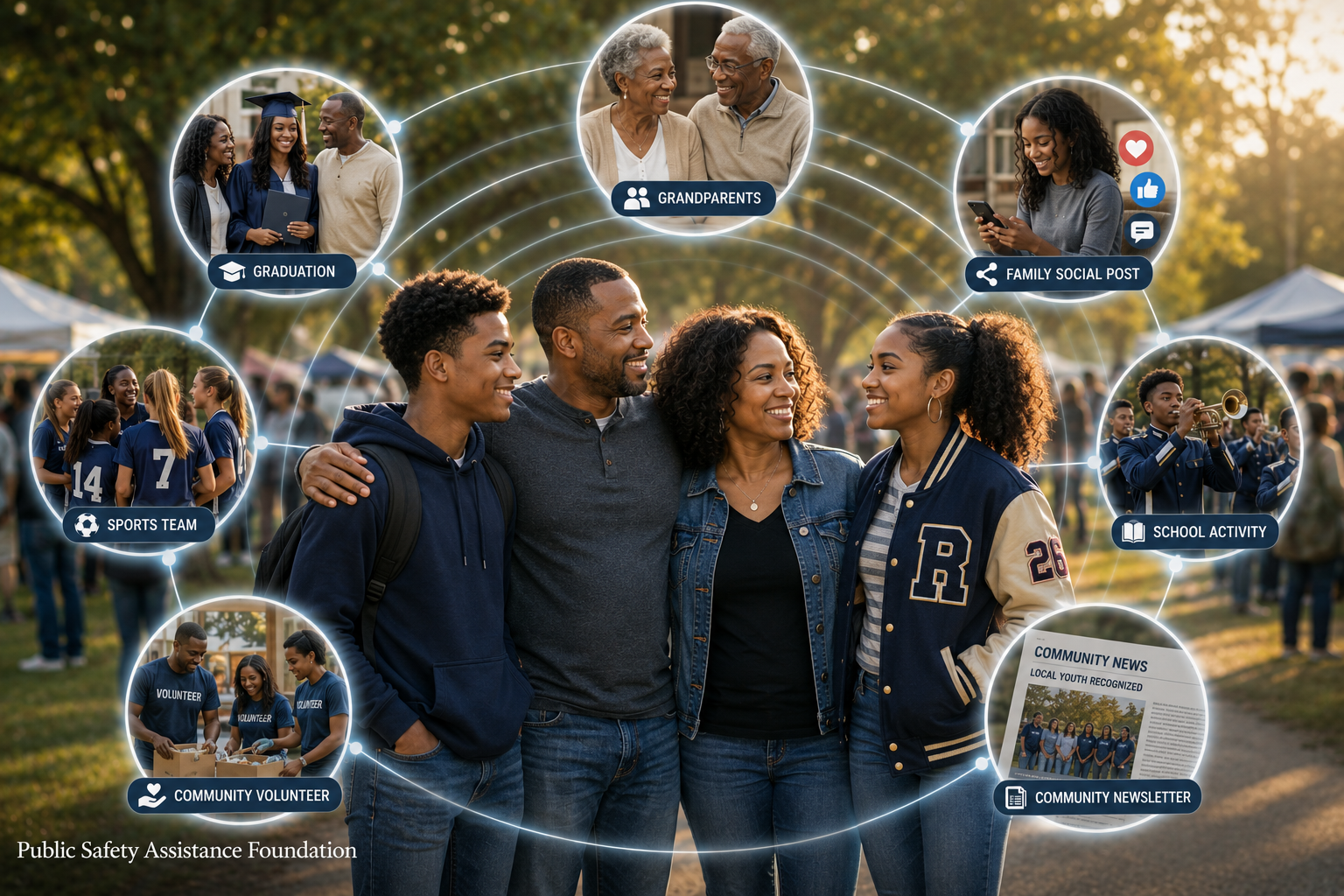
How Everyday Connections Can Expand Online Visibility
Most people think online exposure begins with something they personally shared.
A social media post. A public comment. A professional profile. A news article. A public record.
While those sources certainly contribute to online visibility, they are often only part of the story.
In reality, information frequently spreads through a series of connections that have little to do with an individual’s own online activity.
⭕️ A spouse posts family photos.
⭕️ A child joins a sports team.
⭕️ A relative shares a graduation announcement.
⭕️ A work friend posts a picture on their social media account.
⭕️ A volunteer organization publishes a newsletter.
⭕️ A community group recognizes a member for service.
Each action may seem small and harmless on its own.
But together, they can create a ripple effect.
Just as a single drop of water creates expanding circles across a pond, small pieces of information can travel outward through family members, friends, organizations, and community connections. Over time, those ripples can increase visibility in ways that are difficult to predict and even harder to control.
Understanding the ripple effect is an important part of understanding online privacy.
Every Ripple Starts Small
The interesting thing about online exposure is that it rarely begins with something dramatic.
Most visibility starts with ordinary moments:
⭕️ A family vacation photo.
⭕️ A youth sports registration.
⭕️ A school recognition program.
⭕️ A community fundraiser.
⭕️ A neighborhood event.
None of these activities are inherently risky. In fact, they are often positive experiences that strengthen families and communities.
The challenge is that each public mention, photograph, event listing, or organizational webpage can create additional pathways to personal information.
Someone searching for one piece of information may discover another. One reference can lead to a second. A second can lead to a third.
Over time, visibility expands.
Not because anyone intended for it to happen, but because information naturally spreads through connected networks.
This is the ripple effect in action.
Family Members Often Create Visibility Without Realizing It
For many law enforcement officers and public officials, some of the most significant online exposure comes through family members.
⭕️ Spouses maintain social media accounts.
⭕️ Children participate in school activities.
⭕️ Parents celebrate milestones.
⭕️ Relatives share photos from holidays, weddings, birthdays, and family gatherings.
Again, there is nothing wrong with these activities.
Families should be able to celebrate important moments and stay connected with the people they care about.
However, these posts can sometimes reveal more than intended.
⭕️ A photograph may identify a neighborhood.
⭕️ A tagged location may reveal a frequently visited destination.
⭕️ A school event may connect family members to a specific community.
⭕️ A public congratulations post may establish relationships that were previously difficult to identify.
Most of the time, the individuals sharing this information are simply enjoying life and documenting meaningful experiences.
They are not thinking about how someone else might interpret or connect the information.
Yet that is exactly how ripples form.
Information moves outward from one source and becomes visible to audiences that were never originally considered.
Community Involvement Creates Additional Connections
Many officers and public officials are deeply involved in their communities.
They volunteer.
They coach youth sports.
They serve on nonprofit boards.
They participate in civic organizations.
They support charitable causes.
These activities are valuable and often reflect the same commitment to service that drew them into public service careers in the first place.
But community involvement also generates visibility.
⭕️ A local organization may publish a board member directory.
⭕️ A nonprofit may post volunteer recognition photographs.
⭕️ A youth sports league may maintain coach listings.
⭕️ A school may publish event programs or newsletters.
⭕️ An alumni association may highlight member accomplishments.
Each mention appears innocent because it usually is.
The issue is not the content itself.
The issue is cumulative visibility.
The more references that exist online, the more opportunities there are for someone to discover information that was never intended to be widely distributed.
The Information You Never Posted
One of the biggest misconceptions about online privacy is the belief that exposure only comes from information we personally share.
In reality, many online references are created by other people.
⭕️ Friends upload photos.
⭕️ Organizations publish announcements.
⭕️ Local media cover events.
⭕️ Community groups recognize volunteers.
⭕️ Schools post newsletters.
⭕️ Professional associations maintain directories.
These references can remain online for years.
In some cases, people may not even realize the information exists.
That is one reason online privacy can feel confusing. An individual may be extremely careful about their own online habits while still accumulating visibility through sources they do not control.
The internet is filled with information created by third parties.
Often, those third parties have good intentions.
They are celebrating achievements, promoting events, recognizing contributions, or sharing community news.
Yet the resulting information can still contribute to online exposure.
Ripples Continue Long After the Original Moment
Unlike a conversation that fades with time, online information often remains accessible long after the original event has passed.
A youth sports roster from several years ago may still be searchable.
An archived newsletter may remain online indefinitely.
A community recognition page may continue appearing in search results years after publication.
An event photo gallery may remain available long after everyone has forgotten it exists.
This is where the ripple effect becomes particularly important.
The original post may seem insignificant today.
But online visibility is often cumulative.
Information builds over time.
➡️ One reference leads to another.
➡️ One mention supports another.
➡️ One connection helps establish a larger picture.
The result is not necessarily a single privacy risk. Instead, it is a growing collection of information that gradually increases visibility.
The Goal Is Awareness, Not Isolation
When discussing online privacy, it is important to avoid an all-or-nothing mindset.
The answer is not to stop participating in community life.
The answer is not to avoid family activities.
The answer is not to eliminate every online mention.
Law enforcement officers, public officials, and their families deserve to enjoy meaningful experiences, celebrate achievements, and remain connected to their communities.
The goal is awareness.
Understanding how information spreads allows people to make more informed decisions about what is shared, where it is shared, and how much information is made publicly available.
A little awareness today can help reduce unnecessary exposure tomorrow.
Just as ripples expand outward from a single point, thoughtful decisions can help limit how far those ripples travel.
Why Ongoing Privacy Protection Matters
One reason online privacy requires ongoing attention is that new information is constantly being created.
⭕️ Family members change schools.
⭕️ Organizations publish new content.
⭕️ Community involvement evolves.
⭕️ People move, change jobs, volunteer, join groups, and participate in new activities.
Each new connection has the potential to create additional visibility.
That does not mean people should live in fear of every online mention.
It simply means privacy is not a one-time event.
It is an ongoing process.
Reducing exposure often involves looking beyond a single source of information and understanding the broader network of references that can develop over time.
The internet is dynamic. Visibility changes. New ripples appear.
That is why ongoing monitoring and proactive privacy service can play an important role in helping LEOs and their families maintain stronger digital boundaries.
Looking Beyond the First Ripple
Most online exposure does not begin with a major event.
It begins with ordinary life.
A family photo. A school activity. A volunteer role. A community newsletter. A well-intentioned post from someone who simply wanted to share a meaningful moment.
Each of these actions creates a ripple.
Individually, the effects may seem small. Collectively, they can significantly increase online visibility over time.
Understanding the ripple effect is not about avoiding life’s important moments. It is about recognizing how information spreads and taking reasonable steps to reduce unnecessary exposure where possible.
Because when it comes to online privacy, the first ripple is rarely the last.
You can’t stop every ripple, but you can take steps to reduce how far they travel. Learn how our ongoing privacy services help limit online exposure over time.
The Law