
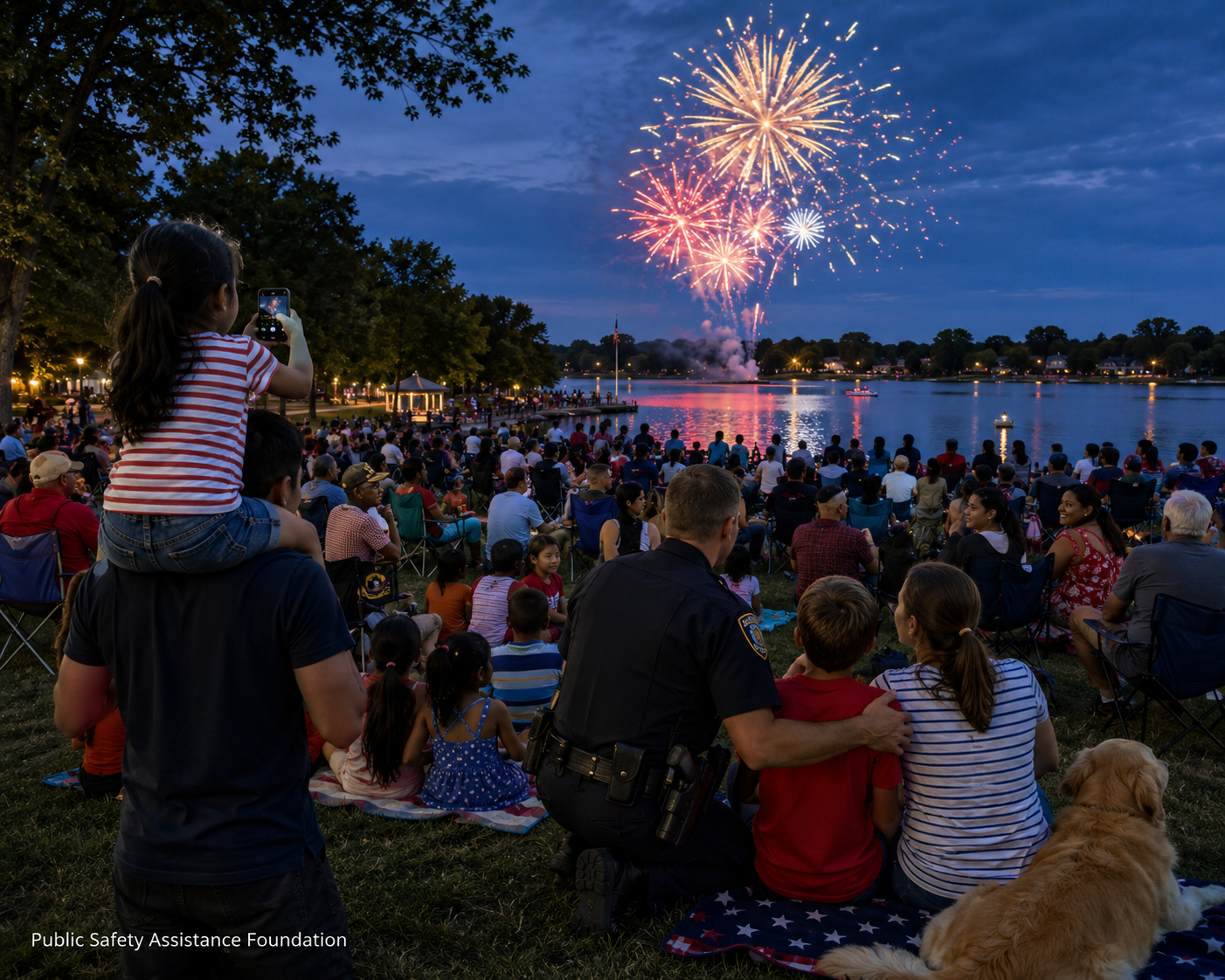
Independence Day celebrations create lasting memories, but they can also create lasting digital footprints that extend far beyond the holiday.
🎆 The Fourth of July is one of America’s most anticipated holidays. Across the country, families gather for backyard barbecues, neighborhood block parties, community parades, and spectacular fireworks displays. Cameras come out, phones capture every smile, and social media fills with images celebrating family, friendship, and freedom.
For many law enforcement officers, however, Independence Day often looks a little different.
While much of the country is relaxing, officers, deputies, dispatchers, federal agents, correctional professionals, and other public officials are frequently working some of the busiest shifts of the year. They manage traffic, respond to emergencies, patrol crowded events, and help ensure everyone else can celebrate safely.
Whether you’re spending the holiday in uniform or finally enjoying a well-earned day off with your family, Independence Day offers another reminder that protecting what matters most extends beyond physical safety.
It also includes protecting your family’s online privacy.
Most people understand traditional holiday safety. They secure their homes before leaving, designate sober drivers, keep an eye on children around fireworks, and stay aware of their surroundings in crowded public spaces.
Far fewer people think about the digital trail that holiday celebrations leave behind.
Ironically, much of that trail isn’t created by you.
Sometimes it’s created by everyone else.
Celebrations Are Meant to Be Shared
Community celebrations naturally bring people together.
Thousands of photos are taken every Independence Day.
Cities publish event galleries.
Local newspapers cover parades.
Neighborhood associations post pictures from block parties.
Youth sports organizations share tournament photos.
Volunteer groups recognize participants.
Friends tag one another on social media.
Parents proudly post family pictures.
None of these people are trying to expose anyone’s personal information.
They’re simply documenting moments worth remembering.
Yet every public photo, video, online album, or tagged image has the potential to become another small piece of someone’s digital footprint.
For most families, this may never create a noticeable concern.
For LEOs and public officials, however, online visibility often carries additional considerations.
The challenge isn’t that people are sharing memories.
The challenge is that information accumulates over time.
Exposure Doesn’t Always Begin With Your Own Social Media
One of the biggest misconceptions about online privacy is believing that personal exposure only comes from what you choose to post.
In reality, many online references originate somewhere completely different:
- Perhaps your spouse appears in a neighborhood Facebook album
- Your children are photographed during a community event
- A local nonprofit thanks volunteers on its website
- The city uploads photos from the annual fireworks celebration
- A friend posts a group picture from the backyard barbecue and tags everyone they recognize
- A community organization shares highlights from its Independence Day festivities
Suddenly, your family appears in multiple online locations without intentionally creating a public profile.
No single post seems particularly important.
Collectively, however, they begin telling a larger story.
That’s one reason online privacy isn’t simply about managing your own accounts.
It’s also about understanding how everyday moments can gradually increase online visibility through the actions of others.
Holiday Photos Often Reveal More Than We Notice
When most people look at a photograph, they naturally focus on the people in it.
What often goes unnoticed are the background details.
A single Fourth of July photo might unintentionally reveal:
- Street signs or recognizable landmarks
- House numbers
- Vehicle license plates
- Neighborhood layouts
- Children’s schools or sports teams
- Family relationships
- Community organizations
- Event locations
- Nearby businesses
- Recurring routines
None of these details may seem important individually.
However, when viewed alongside dozens of other publicly available photos over several years, they begin creating a much more complete picture.
This is how digital footprints often grow.
Not through one major mistake.
Through dozens of ordinary moments that gradually connect together.
The Internet Rarely Forgets a Celebration
Fireworks last only a few minutes.
Online content often lasts much longer.
Holiday photo galleries remain on community websites.
Local news archives preserve event coverage.
Volunteer organizations maintain annual recaps.
Social media memories automatically resurface every year.
Search engines continue indexing publicly available content long after the holiday has ended.
Many people are surprised to discover photos from community events that are still searchable years later.
Sometimes the original person who posted them has forgotten they even exist.
The internet, however, often remembers.
That doesn’t mean every old photo creates a risk.
It does mean that digital exposure tends to grow gradually rather than disappearing on its own.
Law Enforcement Families Face Different Considerations
Every family deserves privacy.
Law enforcement officers and public officials simply have additional reasons to think about it.
Their careers naturally create public references over time:
- Agency announcements
- Award ceremonies
- Training events
- Retirement recognitions
- Community outreach
- Volunteer activities
- Professional associations
- Local news stories
None of these are inherently negative.
In fact, many celebrate outstanding service to the community.
The challenge arises when these professional references become connected with years of personal information, family activities, neighborhood events, and archived online content.
Little by little, an increasingly complete online profile begins to form.
That’s why many officers think about privacy as an ongoing part of personal safety, not because they’re trying to disappear, but because they want greater control over what remains easily accessible online.
You Don’t Have to Stop Making Memories
One of the biggest myths surrounding online privacy is that it requires people to stop enjoying life.
Nothing could be further from the truth.
Celebrate the holiday.
Attend the parade.
Take family photos.
Enjoy the barbecue.
Watch the fireworks.
Create traditions your family will remember for years.
The goal isn’t to stop making memories.
The goal is simply to become more aware of how those memories are shared.
A few thoughtful habits can go a long way.
Consider waiting until you’ve returned home before posting vacation photos.
→ Take a quick look at what’s visible in the background before sharing images publicly.
→ Review your social media tagging preferences.
→ Encourage family members to think about privacy as well.
These small decisions aren’t about fear.
They’re about creating healthier digital boundaries over time.
Online Exposure Often Grows Quietly
Many people imagine online privacy risks as dramatic events.
A hacked account.
Identity theft.
A viral social media post.
In reality, online exposure often grows much more quietly.
A charity event here.
A community newsletter there.
An archived newspaper article.
A neighborhood Facebook album.
A Fourth of July celebration.
Each individual reference may seem harmless.
Together, they gradually create a larger online presence than many people ever intended.
That’s one reason ongoing privacy matters.
The internet changes constantly.
New information appears.
Older information remains searchable.
Additional websites collect and republish publicly available data.
Managing online exposure isn’t a one-time task, because the digital environment never stops evolving.
Protecting What Matters Beyond Independence Day
The Fourth of July celebrates freedom, family, and community.
It reminds us why LEOs dedicate themselves to protecting others, even during holidays spent away from home.
As you enjoy this Independence Day, take a moment to think beyond traditional safety.
Consider the lasting digital footprint that celebrations can create.
Photos.
Community event galleries.
Tagged family members.
Archived news stories.
Volunteer recognition pages.
Neighborhood posts.
Each one may contribute another small piece to your family’s online presence.
That doesn’t mean avoiding celebrations or living cautiously.
It simply means recognizing that protecting your family today includes both the physical and digital worlds.
At the Public Safety Assistance Foundation, we believe law enforcement officers, public officials, and their families deserve ongoing support that extends beyond the badge. Through our nonprofit privacy services and continuous monitoring, we help reduce unnecessary online exposure while supporting safer digital boundaries over time.
This Independence Day, enjoy the fireworks, celebrate with the people who matter most, and create memories that last a lifetime.
Just remember that while you’re watching the fireworks, someone else may be watching, and sharing them too.
Explore our online Exclusive Privacy Plans and discover how Privacy for Cops supports safer digital boundaries throughout the year.